Villes africaines: Environnement et enjeux de développement durable (Coursera)

Villes africaines: Environnement et enjeux de développement durable (Coursera)

Le cours propose une lecture de l’environnement urbain en Afrique à travers les thématiques les plus pertinentes pour mesurer le niveau de développement d’un pays : eau et vie urbaine, assainissement (eaux usées et pluviales), gestion des déchets solides, agriculture urbaine. Après avoir analysé les différents enjeux de celles-ci, nous aborderons les liens entre environnement urbain et santé.

Class Deals by MOOC List - Click here and see Coursera's Active Discounts, Deals, and Promo Codes.

Pour chacune des thématiques énoncées, nous présenterons une étude de cas. L’entrée du cours n’est pas disciplinaire, mais thématique. Le cours articule différents échelles de lecture de la ville (régional, inter urbain et intra urbain) pour dégager les caractéristiques et les disparités.

Syllabus

WEEK 1
Eau et vie urbaine
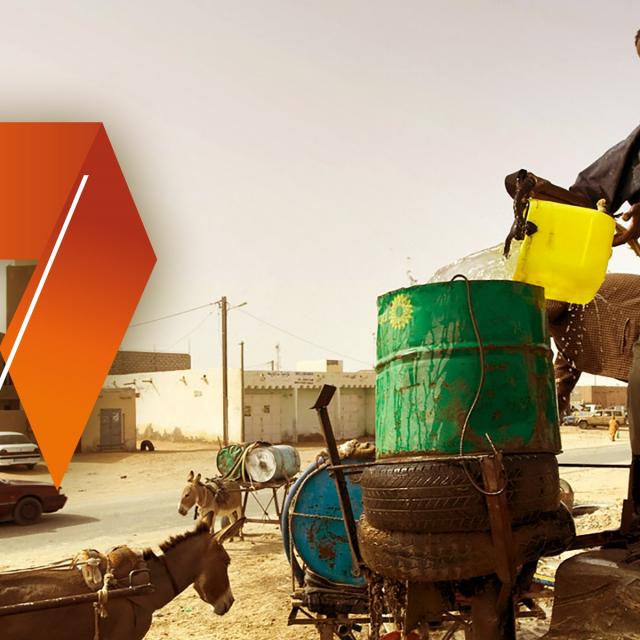
L’accès à l’eau potable et à l’assainissement constitue un bon indicateur du niveau de développement d’un pays. En Afrique, la situation se caractérise par une diversité de modes d’accès à ces services de base et par une disparité de situation selon les pays, les villes et à l’intérieur des villes. Cette thématique traite de ces problématiques avec une étude de cas d’une ville secondaire et termine par l’analyse du cadre législatif, réglementaire et institutionnelle de la gestion du secteur.

WEEK 2
Gestion des déchets solides
La gestion des déchets solides et le « plus municipal » des services urbains de base. Cette thématique aborde les questions clés liées à sa gestion (caractérisation, cadre législatif et institutionnel, organisation de la filière, financement) et propose une approche de gestion adaptée aux villes africaines.

WEEK 3
Agriculture urbaine
L’agriculture urbaine en Afrique est un enjeu important de gestion et de planification urbaine. Traiter de cette thématique nous renvoie à des questions de définitions et des fonctions de celle-ci, mais aussi à des analyses sur ses diverses formes ainsi que les enjeux fonciers pour sa survie.

WEEK 4
Environnement urbain, santé et développement
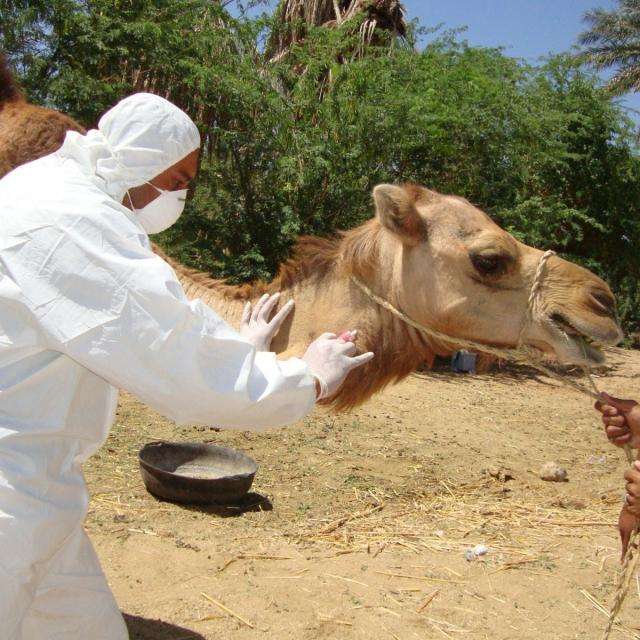
L’environnement aussi bien physique que socio-économique des villes africaines interagissent avec la santé des populations. Pour ces villes, en cours de transition sanitaire, la compréhension des enjeux et les solutions à mettre en œuvre pourront contribuer à améliorer le profil sanitaire des populations urbaines et réduire les taux de morbidité et de mortalité liés notamment à la double charge des maladies infectieuses et parasitaires et maladies chroniques.

WEEK 5
Finalisation
Durant cette semaine, vous devez évaluer l'exercice d'application de vos camarades et répondre au Quiz final.
Go to Class
MOOC List is learner-supported. When you buy through links on our site, we may earn an affiliate commission.

Related Courses

Health Care IT: Challenges and Opportunities (Coursera) Coursera
Icahn School of Medicine at Mount Sinai

Health Care IT: Challenges and Opportunities (Coursera)

A strong argument can be made that the health care field is one of the most information-intensive sectors in the U.S. economy and avoidance of the rapid advances in information technology is no longer an option. Consequently, the study of health care information technology and systems has become central to health care delivery effectiveness. This course covers the modern application of information technology that is critical to supporting the vision and operational knowledge of the health care leaders in managing the health care organization.

Jun 8th 2026
5-12 Weeks
Paleontology: Early Vertebrate Evolution (Coursera) Coursera
University of Alberta

Paleontology: Early Vertebrate Evolution (Coursera)

Paleontology: Early Vertebrate Evolution is a four-lesson course teaching a comprehensive overview of the origin of vertebrates. Students will explore the diversity of Palaeozoic lineages within a phylogenetic and evolutionary framework .This course examines the evolution of major vertebrate novelties including the origin of fins, jaws, and tetrapod limbs. Students also explore key Canadian fossil localities, including the Burgess Shale (British Columbia), Miguasha (Quebec), and Man On The Hill (Northwest Territories).

Jun 10th 2026
4 Weeks
Genomics: Decoding the Universal Language of Life (Coursera) Coursera
University of Illinois at Urbana-Champaign

Genomics: Decoding the Universal Language of Life (Coursera)

What is a genome? A genome contains all of the information that a cell needs to develop, function, and reproduce itself, and all the information needed for those cells to come together to form a person, plant, or animal. Genomes contain an organism’s complete set of genes, and also the even tinier genetic structures that help regulate when and how those genes are used. The ability to regrow a torn ligament, the clues that might predict the onset of mental illness, the nutritional potential of crops, and even the history of life itself, are all encoded in genomes. By taking this course, you will discover how scientists are deciphering the language of genomes to learn how to develop sustainable food and fuel supplies, improve disease treatment and prevention, and protect our environment.

Jun 8th 2026
5-12 Weeks
Introduction to Sustainability (Coursera) Coursera
University of Illinois at Urbana-Champaign

Introduction to Sustainability (Coursera)

This course introduces the academic approach of Sustainability and explores how today’s human societies can endure in the face of global change, ecosystem degradation and resource limitations. The course focuses on key knowledge areas of sustainability theory and practice, including population, ecosystems, global change, energy, agriculture, water, environmental economics and policy, ethics, and cultural history.

Jun 8th 2026
5-12 Weeks
Water Supply and Sanitation Policy in Developing Countries Part 1: Understanding Complex Problems (Coursera) Coursera
University of Manchester

Water Supply and Sanitation Policy in Developing Countries Part 1: Understanding Complex Problems (Coursera)

Our course explores what can be done to solve the complex problem that half a billion people worldwide do not have improved water supplies and two billion do not have improved sanitation. We look forward to you joining us. We want to help you develop the skills you need to address this major global challenge of the 21st century.

Jun 8th 2026
5-12 Weeks
HI-FIVE: Health Informatics For Innovation, Value & Enrichment (Social/Peer Perspective) (Coursera) Coursera
Columbia University

HI-FIVE: Health Informatics For Innovation, Value & Enrichment (Social/Peer Perspective) (Coursera)

HI-FIVE (Health Informatics For Innovation, Value & Enrichment) Training is an approximately 10-hour online course designed by Columbia University in 2016, with sponsorship from the Office of the National Coordinator for Health Information Technology (ONC). The training is role-based and uses case scenarios. Our nation’s healthcare system is changing at a rapid pace. Transformative health care delivery programs depend heavily on health information technology to improve and coordinate care, maintain patient registries, support patient engagement, develop and sustain data infrastructure necessary for multi-payer value-based payment, and enable analytical capacities to inform decision making and streamline reporting.

Jun 8th 2026
4 Weeks
Public Involvement in Research (Coursera) Coursera
Imperial College London

Public Involvement in Research (Coursera)

This course focuses on participatory approaches in research, known as 'public involvement' in the UK. You'll specifically, consider why citizens and patients would be involved in research and explore participatory approaches across and within the research cycle in more detail, diving into questions such as: What kinds of participation can be undertaken at each of the 7 stages of the cycle? How can you utilise participation in research? What examples of using participatory approaches exist in research?

Jun 10th 2026
4 Weeks
Health Across the Gender Spectrum (Coursera) Coursera
Stanford University

Health Across the Gender Spectrum (Coursera)

This course offers an intimate, story-based introduction to the experiences of six transgender children and their families. Through illustrated stories and short teaching videos, learners will gain a better understanding of gender identity and the gender spectrum. Stanford physicians, K-12 educators, and transgender faculty members offer practical tips for parents, teachers, healthcare providers and anyone who wants to help create a more gender-expansive environment - one in which all people can live authentically. As a global community of unique individuals, we can begin to build a world that is ready to nurture and love each and every child.

Jun 8th 2026
3 Weeks
Understanding Clinical Research: Behind the Statistics (Coursera) Coursera
University of Cape Town

Understanding Clinical Research: Behind the Statistics (Coursera)

If you’ve ever skipped over`the results section of a medical paper because terms like “confidence interval” or “p-value” go over your head, then you’re in the right place. You may be a clinical practitioner reading research articles to keep up-to-date with developments in your field or a medical student wondering how to approach your own research. Greater confidence in understanding statistical analysis and the results can benefit both working professionals and those undertaking research themselves.

Jun 8th 2026
5-12 Weeks