African cities : An Introduction to Urban Planning (Coursera)

African cities : An Introduction to Urban Planning (Coursera)

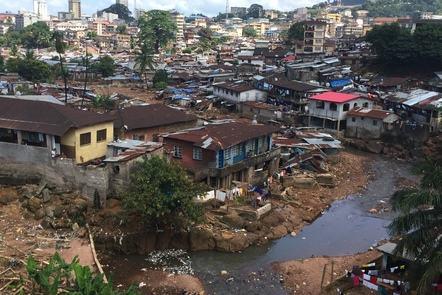
This course teached the basics of urban planning in Africa through technical, environmental, social and economical dimensions. It focuses on African cities only. Although, they exemplify well cities in the Global South, and potentially all cities, we will make the African context highly topical.

Class Deals by MOOC List - Click here and see Coursera's Active Discounts, Deals, and Promo Codes.

The course is provided by the Urban and Regional community at the Swiss Federal Insitute of Technology in Lausanne (EPFL).

Syllabus

Week 1
Introduction to African Cities and Urban Planning (Part I)
The state of urbanized zones. What are the big issues and challenges? A first approach to urban planning.

Week 2
Introduction to African Cities and Urban Planning (Part 2)
Following the first week, we will continue to explore African cities by their issues, the challenges they represent, and the urban models which they are issued.

Week 3
Urban Themes
Urban planning relies on tools in order to organize transportation, amenities, spaces, and housing. The result is a channeling of urban forms.

Week 4
Urban Functions
Here we will learn to establish subdivisions step by step.

Week 5
Urban Planning and its Tools
Cities finance themselves; They require resources which are acquired through diverse means.

Week 6
The Future of Cities, or How to Plan?
Combating climate change and changing our manners of making the city.

Week 7
Tool and Methods
Governing contemporary African cities.

Week 8
The Actions of Operational Urbanism : Subdivisions
The zones which are the most important in contemporary African cities are subdivisions, so we will dedicate an entire week covering it.

Week 9
The Actions of Operational Urbanism: Restructuring and Urban Projects
This week, we will plunge into the heart of precarious zones in trying to understand their role in the city.

Week 10
The Costs and Funding of Cities
Financing of the city, addressing, and land registry.

Week 11
Governance: Which Partnerships?
This week will be composed of a first part dealing with methodology and a second part on urban governance.

Week 12
Conclusions
Measuring the real impact of planning on urban functions; Synthesis and reminders; Conclusions
Go to Class
MOOC List is learner-supported. When you buy through links on our site, we may earn an affiliate commission.

Related Courses

Cities are back in town : sociología urbana para un mundo globalizado (Coursera) Coursera
Sciences Po

Cities are back in town : sociología urbana para un mundo globalizado (Coursera)

Los procesos de globalización y europeización respaldan el rápido desarrollo de las ciudades en distintas partes del mundo. En el mundo contemporáneo, el proceso de urbanización está alcanzando un nuevo pico con el incremento de las megalópolis (más de 15 millones de habitantes) como Calcuta, Los Ángeles, Daca, El Cairo, Tokio, Nueva York, Shanghái, Ciudad de México. o Seúl. Más allá de las metrópolis modernas, los investigadores intentan entender estas grandes zonas urbanas con el uso de distintos conceptos, tales como "posmetrópolis", "ciudades globales" y "ciudades-regiones globales".

Aug 3rd 2026
5-12 Weeks
Ethical Cities: Shaping the Future of Your City (FutureLearn) FutureLearn
RMIT University

Ethical Cities: Shaping the Future of Your City (FutureLearn)

Understand the problems cities face and learn how they can be resolved with ethical solutions. On our urbanizing planet, we need inclusive city economies that work for all. Who runs your city? What makes your city liveable? Using stories from cities around the world, this course will introduce you to the importance of ethics in civic leadership, planning, and business, and citizen engagement.

Self Paced
5-12 Weeks
Sustainable Urban Development (edX) EdX
Wageningen University,Delft University of Technology,DelftX,WageningenX

Sustainable Urban Development (edX)

Learn why cities are key in resolving global urbanization and sustainability challenges and how you can engineer tomorrow’s cities today. Did you know that cities take up less than 3% of the earth’s land surface, but more than 50% of the world’s population live in them? And, cities generate more than 70% of the global emissions? Large cities and their hinterlands (jointly called metropolitan regions) greatly contribute to global urbanization and sustainability challenges, yet are also key to resolving these same challenges.

Self Paced
Self-Paced
Urban Design for the Public Good: Dutch Urbanism (edX) EdX
Delft University of Technology,DelftX

Urban Design for the Public Good: Dutch Urbanism (edX)

Through a unique Dutch approach learn how to design landscapes and cities in response to social and environmental challenges. Are you an urban planner, designer, policy maker or involved or interested in the creation of good living environments? This course will broaden your scope and diversify your take on the field of urban planning and design.

Self Paced
Self-Paced
Development and Planning in African Cities: Exploring theories, policies and practices from Sierra Leone (FutureLearn) FutureLearn
University College London,Sierra Leone Urban Research Centre,Njala University

Development and Planning in African Cities: Exploring theories, policies and practices from Sierra Leone (FutureLearn)

As African cities grow, learn how development and planning help urban actors to make cities just and sustainable for all. In the next 35 years, Africa will need to accommodate almost 900 million new urban dwellers. Hundreds of smaller cities are doubling in size every 20 years, half of Africa’s urban dwellers live in informal settlements in precarious conditions, and 75% of these are younger than 35. Our course will explore African cities through the lenses of spatial justice and social diversity, challenging myths and assumptions about urban development and demonstrating how different processes interact and shape the development of a city.

Self Paced
4 Weeks
Arctic Development (Coursera) Coursera
University of Alberta

Arctic Development (Coursera)

Welcome to Arctic: Development! In this third in a series of Arctic MOOCs, brought to you by a unique partnership between the University of Alberta and UiT The Arctic University of Norway, we will be exploring regional development in a changing arctic. In this 4-week course, you will investigate the role that natural resources play across the Indigenous, Nordic, Russian and North American Arctics, different strategies for resource management in different regions, and how these affect community planning and development efforts in an increasingly populated part of the world.

Aug 10th 2026
4 Weeks
Urbanisation and Health - Promoting Sustainable Solutions (Coursera) Coursera
University of Copenhagen

Urbanisation and Health - Promoting Sustainable Solutions (Coursera)

More than half of world’s population lives in cities while only 5% did so in the 18th century. The rapid urbanisation has resulted in for example inadequate infrastructure, physical inactivity, gentrification, air pollution, and growing numbers of slum dwellers. All factors challenging health and wellbeing of the people living in the cities. In addition, when addressing climate change it has become of paramount importance to look at mitigation and adaptation investments tailored to the urban context.

Aug 10th 2026
5-12 Weeks
Planning for Climate Change in African Cities (Coursera) Coursera
Erasmus University Rotterdam,United Cities and Local Governments of Africa,African Local Government Academy,Institute for Housing and Urban Development

Planning for Climate Change in African Cities (Coursera)

Climate change poses a threat to economic growth and long-term prosperity of many countries around the world. Africa is not an exception, considering the actual and potential impacts of climate change and climate variability that will threaten its vulnerable sectors and human populations. African countries are projected to experience changing rainfall patterns, rising sea levels, and higher temperatures that will affect food security, agricultural production, water availability, and public health, among others. These climate change impacts and climate variability can further produce social and political problems, such as rural-urban migration and water resource disputes.

Jul 20th 2026
5-12 Weeks
Cities are back in town : urban sociology for a globalizing urban world (Coursera) Coursera
Sciences Po

Cities are back in town : urban sociology for a globalizing urban world (Coursera)

Urbanization is reaching a new peak in the contemporary world with the rise of mega cities. Researchers try to make sense of these large urban areas using a variety of concepts. The class will review debates and present social science models of cities to analyse and compare contemporary developments. The class will review debates and present social science models of cities and metropolis to analyse and compare contemporary developments.

Jul 27th 2026
5-12 Weeks
Villes africaines: Mobilités et transports urbains (Coursera) Coursera
École Polytechnique Fédérale de Lausanne

Villes africaines: Mobilités et transports urbains (Coursera)

Les villes africaines, en particulier les grandes agglomérations, sont marquées depuis la 2ème moitié du XXème siècle par une croissance démographique et spatiale sans précédent, ce qui accroit les besoins de mobilité pour relier des lieux de plus en plus éloignés. Il s’agira durant le cours, dans un premier temps, de documenter le contexte de mobilité dans les villes africaines.

Jul 20th 2026
5-12 Weeks