Villes africaines: Mobilités et transports urbains (Coursera)

Villes africaines: Mobilités et transports urbains (Coursera)

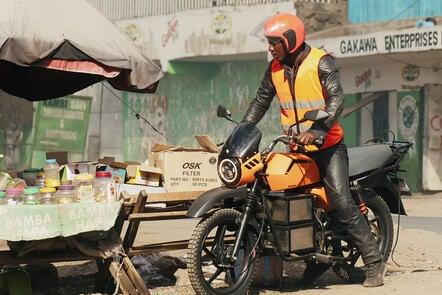
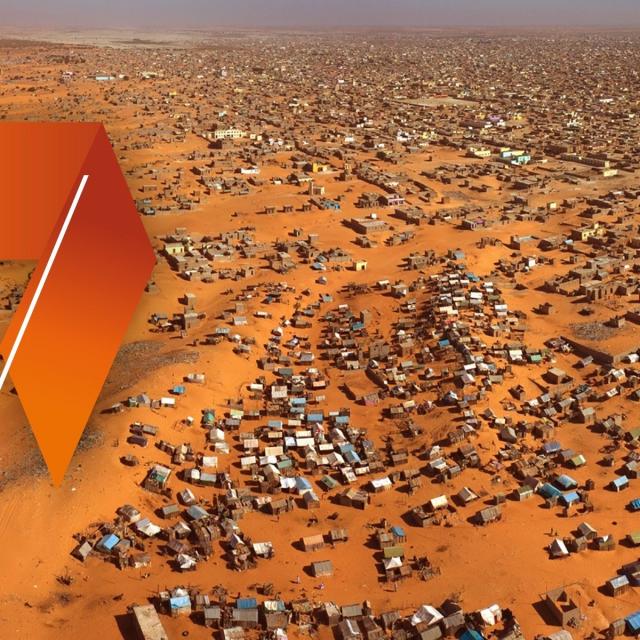
Les villes africaines, en particulier les grandes agglomérations, sont marquées depuis la 2ème moitié du XXème siècle par une croissance démographique et spatiale sans précédent, ce qui accroit les besoins de mobilité pour relier des lieux de plus en plus éloignés. Il s’agira durant le cours, dans un premier temps, de documenter le contexte de mobilité dans les villes africaines.

Class Deals by MOOC List - Click here and see Coursera's Active Discounts, Deals, and Promo Codes.

Celui-ci est marqué depuis les indépendances par des crises climatiques et économiques qui entrainent des mouvements de migration des campagnes vers les villes, l’entrée de l’informel dans l’économie urbaine et une réduction des ressources budgétaires des Etats qui impacte l'investissement dans les services sociaux de base y compris le transport. Dans un second temps, le cours va explorer la théorie de la mobilité comme stratégie d’accès à la ville. Pour ce faire il analysera les stratégies de mobilité dans les villes africaines aussi bien résidentielles que quotidiennes et selon les catégories socioéconomiques. La troisième partie du cours est axée sur les politiques de gestion de la mobilité urbaine. Il s’agira de mettre en rapport les éléments du contexte identifiés avec les stratégies de mobilité analysées pour apprécier l’efficience des politiques de gestion urbaine et ressortir les forces et faiblesses en vue de l’action.

Syllabus

WEEK 1
Contexte et rappels conceptuels
Cette première partie a un double objet : d’une part, rappeler brièvement quelques concepts de base et, d’autre part, camper le décor à la fois spatial, politique, économique et spatial dans lequel se déroulent les mobilités dans les villes africaines au début du 21ème siècle.

WEEK 2
Le système de transport urbain : l’offre de services et le jeu des acteurs
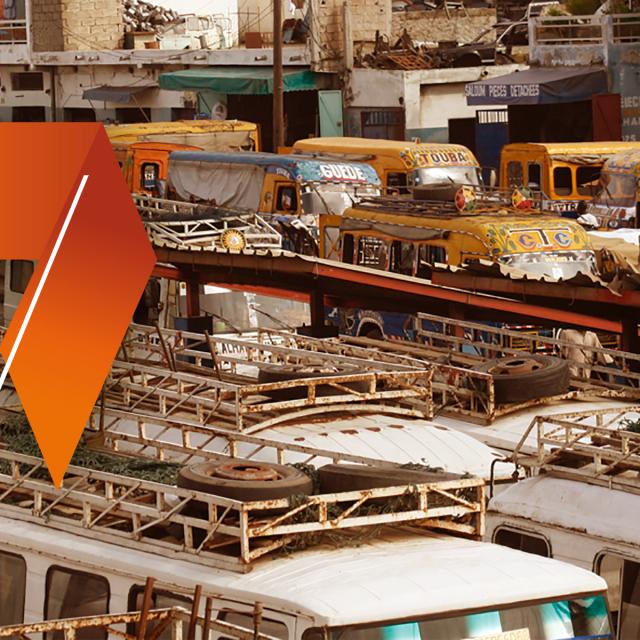
La deuxième partie porte sur l’évolution de l’offre de service de transport dans les villes africaines passant des mains du public au privé. Elle met l’accent sur les processus et le jeu des acteurs.

WEEK 3
Pratiques de mobilité urbaine
Dans cette troisième partie sur les pratiques de mobilités urbaines en Afrique, nous abordons les comportements et stratégies de mobilités. Ils sont étudiés selon les déterminants des ruptures de la vie quotidienne : le sexe, le cycle de vie, le niveau de vie et le lieu de résidence.

WEEK 4
Politiques de mobilité urbaine
Cette quatrième partie est consacrée aux stratégies développées par les politiques pour répondre aux besoins de mobilité urbaine. Elle appréhende l’action publique dans ses rapports avec les interventions des partenaires au développement et les acteurs locaux.

WEEK 5
Finalisation
Durant cette semaine, vous devez évaluer l'exercice d'application de vos camarades et répondre au Quiz final.

Go to Class
MOOC List is learner-supported. When you buy through links on our site, we may earn an affiliate commission.

Related Courses

International migrations: a global issue (Coursera) Coursera
Sciences Po

International migrations: a global issue (Coursera)

The world is moving, but not all opinions and governments are willing to accept this poorly understood reality. The issue affects both states and the planet, in a process of globalization and of regionalization of migrations, and raises new questions for international relations, now including the South. This course aims at improving knowledge of the subject, addressing the key issues raised by international migration, and assessing the trends of tomorrow.

Jul 27th 2026
5-12 Weeks
Robotics: Mobility (Coursera) Coursera
University of Pennsylvania

Robotics: Mobility (Coursera)

How can robots use their motors and sensors to move around in an unstructured environment? You will understand how to design robot bodies and behaviors that recruit limbs and more general appendages to apply physical forces that confer reliable mobility in a complex and dynamic world. We develop an approach to composing simple dynamical abstractions that partially automate the generation of complicated sensorimotor programs.

Jan 6th 2025
4 Weeks
Electric Cars: Technology (edX) EdX
Delft University of Technology,DelftX

Electric Cars: Technology (edX)

Get an in-depth understanding of the technology behind electric cars. Electric cars are more than a novel means of mobility. They have been recognized as an essential building block of the energy transition. Fulfilling their promise will imply a significant change in the technical, digital and social dimensions of transport and energy infrastructure. If you are interested in learning about the state-of-the-art technology behind electric cars, then this is the course for you!

Self Paced
Self-Paced
Road safety in the Caribbean region: safe urban mobility (edX) EdX
Inter-American Development Bank - IDB,IDBx

Road safety in the Caribbean region: safe urban mobility (edX)

Learn about the so call “vulnerable users” and get a good understanding of some of the main challenges and effective interventions for safe urban mobility. Do you know that in most of the Latin America and the Caribbean countries more than half of the road traffic fatalities are “vulnerable users”? Studies have shown that most of the world’s traffic deaths and injuries occur in low- and middle-income countries—and the share is rising; more than half of the victims will be pedestrians and cyclists in urban areas. Low- and middle-income countries also have higher levels of traffic deaths among pedestrians, bicyclists, and motorcyclists.

Self Paced
Self-Paced
Global Intimacies: Sex, Power, Gender and Migration (FutureLearn) FutureLearn
National Tsing Hua University

Global Intimacies: Sex, Power, Gender and Migration (FutureLearn)

Law

Study the evolution of intimacy in the context of global capitalism and probe the intersections of sex, love, labour and mobility. Explore how freedom of movement impacts sex, gender and our ideas of intimacy. In this time of global capitalism, travelling between countries for work and leisure is common. Global mobility has blurred the boundary between strangers and changed the meaning of intimacy.

Self Paced
4 Weeks
City Liveability: The Intersections of Place, Mobility, and Health (FutureLearn) FutureLearn
RMIT University,EIT Urban Mobility

City Liveability: The Intersections of Place, Mobility, and Health (FutureLearn)

Understand how places, urban mobility and health impact each other, and use your knowledge to design sustainable cities. Create urban spaces with maximum liveability. A key issue in a city’s liveability is the availability of mobility options. This two-week course from RMIT University and EIT Urban Mobility will explain how transport impacts the overall liveability of urban spaces. By the end, you’ll have a clear understanding of how mobility relates to the social determinants of health in a city.

Self Paced
2 Weeks
Hydrogen for Mobility (IFP School) Other Providers
IFP School

Hydrogen for Mobility (IFP School)

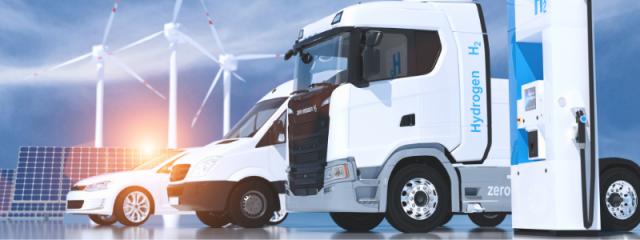
Hydrogen is a hot topic nowadays. Why? Because society must find solutions to reduce its impact on climate change and because there is now a political will (in Europe) to develop a hydrogen economy. The mobility sector, and in particular the heavy mobility, is concerned by this transformation. After some general information about hydrogen production and the hydrogen economy, you will gain a deep understanding of the hydrogen solution for mobility. We will explore both the fuel cells and the hydrogen thermal engine solutions as a mean to reduce the environmental footprint of heavy mobility.

Jan 16th 2023
1 Week
Strong sustainability and Europe (FUN) FUN
Université Clermont Auvergne

Strong sustainability and Europe (FUN)

Sustainable development, popularized by the Brundtland Report, was defined at the end of the 1980s in three spheres (economic, environmental and social). It is this representation that continues today to be disseminated to the public and to large companies. The objective of this MOOC is to question the major challenges of development for Europe in a perspective of strong sustainability (energy, climate, biodiversity, food, mobility, agriculture, natural resources, education...) and to propose alternatives.

Sep 12th 2022
5-12 Weeks
Fundamentals of Semiconductor Characterization (Coursera) Coursera
Arizona State University

Fundamentals of Semiconductor Characterization (Coursera)

The goal of this course is to review the fundamentals of semiconductor materials, p-n junction diodes, and MOS capacitors. There are many semiconductor technologies based on different material systems, but the most important is complementary metal-oxide-semiconductor, or CMOS for short. This course will focus on semiconductor materials and devices relevant to CMOS manufacturing, but the concepts can be applied much more broadly.

Aug 3rd 2026
4 Weeks
People, Technology and the Future of Mobility (Coursera) Coursera
University of Michigan

People, Technology and the Future of Mobility (Coursera)

Welcome to the People Technology & Future of Mobility course! This course provides a lay-person’s introduction to some of the major technological innovations currently underway in the mobility space and asks learners to apply a variety of social science concepts to understand the likely social impacts of these technologies. The course is appropriate for learners from all backgrounds and does not require prior training in engineering or social science.

Aug 17th 2026
5-12 Weeks
Migrations internationales : un enjeu mondial (Coursera) Coursera
Sciences Po

Migrations internationales : un enjeu mondial (Coursera)

Le monde bouge, mais les opinions et les gouvernements ne sont pas tous prêts à accepter cette réalité mal connue. La question affecte à la fois les Etats, mais aussi la planète, dans un processus de mondialisation et de régionalisation des migrations, et pose de nouvelles questions aux relations internationales, en y incluant le sud. Ce cours cherche à la fois à parfaire la connaissance sur le sujet, à traiter les thèmes essentiels induits par les migrations internationales et à dresser les tendances de demain.

Jul 27th 2026
5-12 Weeks
Digital Skills: Mobile (FutureLearn) FutureLearn
Accenture

Digital Skills: Mobile (FutureLearn)

Learn about mobile design, development and creating mobile experiences, as well as bigger concepts related to mobile technology. Understand the importance of mobile in the digital world. In 2018, over half of global website traffic was generated through mobile phones. On this course, you will explore what mobile is, the growth of mobile technology and benefits associated with it.

Self Paced
2 Weeks