Migrations internationales : un enjeu mondial (Coursera)

Offered by Sciences Po,
Migrations internationales : un enjeu mondial (Coursera)

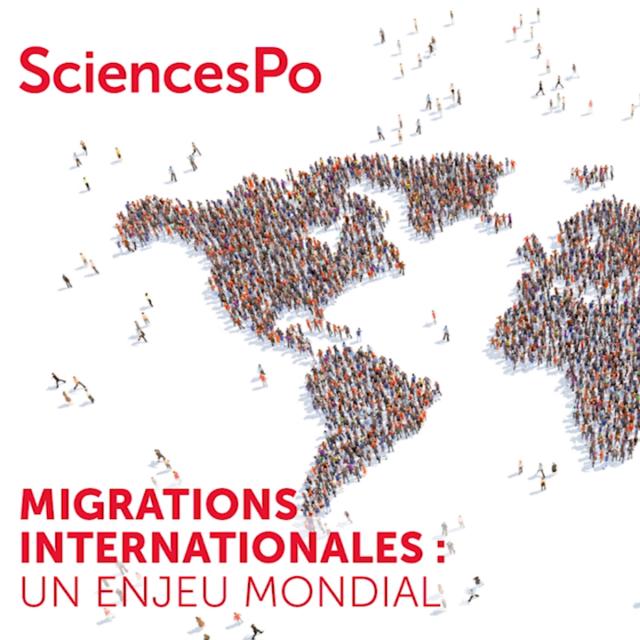
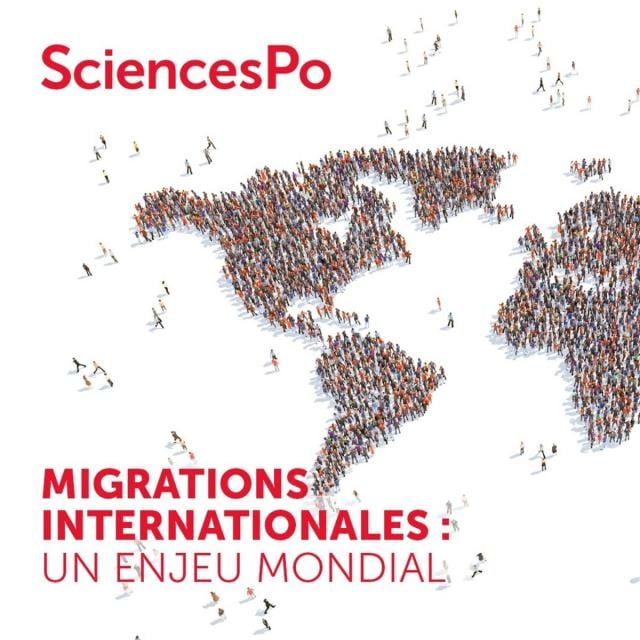
Le monde bouge, mais les opinions et les gouvernements ne sont pas tous prêts à accepter cette réalité mal connue. La question affecte à la fois les Etats, mais aussi la planète, dans un processus de mondialisation et de régionalisation des migrations, et pose de nouvelles questions aux relations internationales, en y incluant le sud. Ce cours cherche à la fois à parfaire la connaissance sur le sujet, à traiter les thèmes essentiels induits par les migrations internationales et à dresser les tendances de demain.

Class Deals by MOOC List - Click here and see Coursera's Active Discounts, Deals, and Promo Codes.

Syllabus

Séance 1 : Mondialisation des Migrations
Introduction
Mondialisation des migrations
Les facteurs de la mobilité mondialisée
Le glissement des catégories de migrants
Une régionalisation des flux qui dessine des systèmes migratoires complexes
Les enjeux migratoires d’une globalisation contradictoire
Le contexte démographique
Les nouveaux champs migratoires d’influence
Les relations entre migration et développement
Migrations et développement : un phénomène auto-entretenu
Une série de situations très différenciées selon les régions du monde

Séance 2 : Réfugiés et déplacés environnementaux
L’explosion de l’asile dans les années 1990 et sa redéfinition
Harmonisation ou externalisation
Dissuasion, prévention, sécurisation des flux.
En Europe, le plus grand mouvement de réfugiés depuis 1945
Le cas de Calais
Le réfugié, un intrus dans l’ordre étatique, une confirmation de celui-ci, une notion à revoir ?
Les déplacés environnementaux : migrants de demain ?
Les apatrides
Qu’est-ce qu’un apatride ?
Les politiques nationales et internationales

Séance 3 : L’Europe
Le contexte historique
L’Union européenne mise au défi de la question migratoire
L’Europe, un continent d’immigration et d’asile malgré lui
Des réponses peu lisibles
La Méditerranée: L’une des plus grandes lignes de fracture et de proximité au monde
La crise des migrants en Méditerranée
Un système européen de contrôle des frontières marqué par la fermeture au sud
La sécurité intérieure et extérieure
L'évolution de l’espace Schengen
Les effets de l’espace Schengen

Séance 4 : France et flux migratoires internationaux
Introduction et aperçu historique
Au XIXème siècle la France devient une terre d’immigration
Au XXe siècle la France devient le premier pays d’immigration en Europe
Les chiffres des migrations et Les statistiques ethniques
Une population difficile à nommer
Une population qui peine à se définir elle-même :
Loyalisme et appartenances : une logique d’inclusion /exclusion
De nouveaux enjeux : Islam, ethnicité, multiculturalisme et identité « à la française »
Les mobilités à l’horizon 2050

Séance 5 : Citoyenneté et migrations
Citoyenneté évolutive confrontée à la migration
Une dissociation entre la nationalité, la citoyenneté et la double nationalité
Le multiculturalisme et la citoyenneté transnationale
L’immigration : un agent de transformation
La citoyenneté en France : les droits civils
La citoyenneté en France : la question de la laïcité
De nouveaux enjeux : l’Europe, la mondialisation, les discriminations
La mondialisation et la citoyenneté

Séance 6 : Frontières
Frontières : ordre ou désordre ?
La construction des frontières
L’Europe, un laboratoire
L’Europe, nouvelles frontières, nouvelles mobilités
Des frontières oubliées
Europe et frontières
La mondialisation des flux ou la mise en échec des frontières nationales
Les murs-frontières dans le monde : des points de tension
De nouvelles frontières: la Méditerranée, l’image de l’Autre
La mise en question des frontières

Séance 7 : Droit à la mobilité et gouvernance globale
L’émergence d’une gouvernance globale des migrations : Le multilatéralisme, une lente prise de conscience
L’émergence d’une gouvernance globale des migrations : les migrations internationales s’installent timidement
L’Emergence du Forum Mondial sur la Migration et le Développement
Le Forum Mondial sur la Migration et le Développement : vers un modèle « gagnant-gagnant-gagnant » ?
Le Forum Mondial sur la Migration et le Développement : l’évolution des objectifs
L’avenir du Forum
Le droit à la mobilité, un droit fondamental de l’homme
Pour ou contre la liberté de circulation
La société civile et la gouvernance globale de la migration
Les OIG et les ONG


Go to Class
MOOC List is learner-supported. When you buy through links on our site, we may earn an affiliate commission.

Related Courses

Supply Chain Management: A Learning Perspective (Coursera) Coursera
Korea Advanced Institute of Science and Technology - KAIST

Supply Chain Management: A Learning Perspective (Coursera)

As a human being, we all consume products and/or services all the time. This morning you got up and ate your breakfast, e.g., eggs, milk, bread, fresh fruits, and the like. After the breakfast, you drove your car to work or school. At your office, you used your computer, perhaps equipped with 27” LCD monitor. During your break, you drank a cup of coffee and played with your iPhone. So on and so forth. You probably take it for granted that you can enjoy all of these products. But if you take a closer look at how each of these products can be made and eventually delivered to you, you will realize that each one of these is no short of miracle.

Jul 27th 2026
5-12 Weeks
Water Resources Management and Policy (Coursera) Coursera
University of Geneva

Water Resources Management and Policy (Coursera)

Water management today is faced with new challenges such as climate change or the effects of human activity. Public and private stakeholders who are active in this field must develop new ways to better manage the water cycle "as a whole". The objective of this MOOC is to develop an understanding of the problems related to water management. Firstly, this course will define a resource and, more specifically, the resource of water.

Aug 3rd 2026
5-12 Weeks
Arctic Economy (Coursera) Coursera
University of Alberta,UiT The Arctic University of Norway

Arctic Economy (Coursera)

Arctic communities have diverse histories and roles in local, regional and global economies. However, the scope and scale of globalization has increased so quickly that vulnerable Arctic communities are facing new kinds of challenges to their survival. In this 3-week MOOC, a unique collaboration between the University of Alberta and UiT The Arctic University of Norway, you will investigate the challenges faced by Indigenous, North American, Russian and Nordic Arctic communities in a modern world. So join us as we venture above the 60th parallel North, and explore how these fascinating communities adjust to change while maintaining their ways of life, socio-economic histories, and cultural traditions.

Aug 17th 2026
4 Weeks
Fundamentals of International Business (Coursera) Coursera
University of London

Fundamentals of International Business (Coursera)

Studying international business is essential for everyone who wants to be a well-rounded modern individual. Understanding the main features of the international business environment, mechanisms of cross-border business activities, and motivations to engage in these activities, will help you to make sense of contemporary business context and navigate yourself in our complex world. This MOOC provides essential knowledge about international business, its key actors and recent trends. It combines relevant theoretical frameworks with contemporary business cases and practitioner-oriented learning materials.

Aug 3rd 2026
4 Weeks
Cultural intelligence: Become a global citizen (Coursera) Coursera
Macquarie University

Cultural intelligence: Become a global citizen (Coursera)

We now live in a truly global, interconnected world in which every manager requires a high level of cultural intelligence. In a diverse work environment, a successful leader must understand the cultural backgrounds, beliefs and attitudes of the people around them – or run the risk of failing to achieve the organisation’s goals. This course, via structured learning activities (video lectures, quizzes, discussion prompts, industry interviews and written assessments), will teach you that those with high ‘cultural intelligence’ – are good at spotting cultural differences and adapt their behaviour accordingly.

Jul 30th 2026
5-12 Weeks
Trade, Immigration and Exchange Rates in a Globalized World (Coursera) Coursera
IE Business School

Trade, Immigration and Exchange Rates in a Globalized World (Coursera)

This is the second of the three courses part of the Globalization, Economic Growth and Stability Specialization. This course will focus on facets of globalization that affect a country´s economic perspectives and decisions. Globalization has recently been the predominant subject in many political debates, and this course will go into the determinants of globalization.

Aug 3rd 2026
5-12 Weeks
Politics and Economics of International Energy (Coursera) Coursera
Sciences Po

Politics and Economics of International Energy (Coursera)

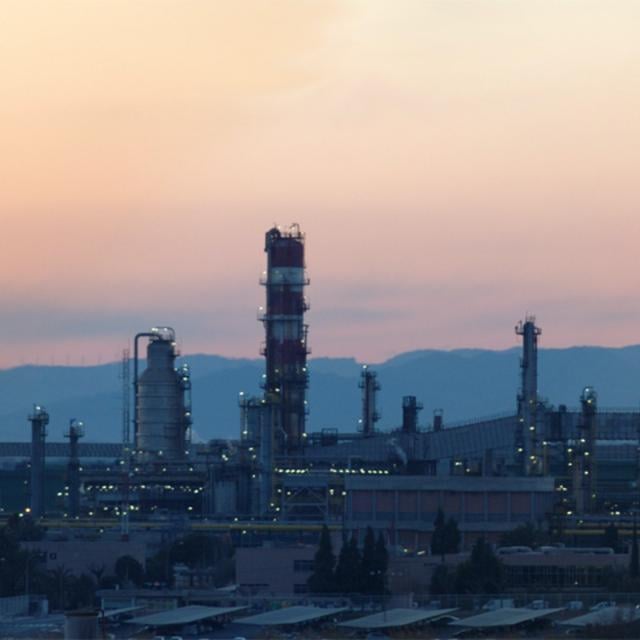
Energy issues have always been important in international relations, but in recent years may have become even more important than in the past due to the widespread awareness of existing limits to energy sources and negative climate impacts. The course discusses global trends in energy consumption and production, various available scenarios for potential developments in the coming decades, the availability of oil reserves and the evolution of the oil industry.

Aug 10th 2026
5-12 Weeks
Villes africaines: Mobilités et transports urbains (Coursera) Coursera
École Polytechnique Fédérale de Lausanne

Villes africaines: Mobilités et transports urbains (Coursera)

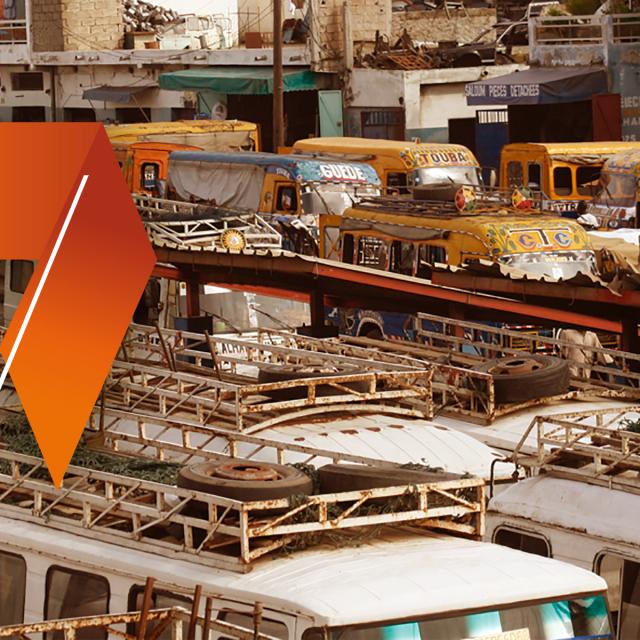
Les villes africaines, en particulier les grandes agglomérations, sont marquées depuis la 2ème moitié du XXème siècle par une croissance démographique et spatiale sans précédent, ce qui accroit les besoins de mobilité pour relier des lieux de plus en plus éloignés. Il s’agira durant le cours, dans un premier temps, de documenter le contexte de mobilité dans les villes africaines.

Aug 17th 2026
5-12 Weeks
Introduction to Political Citizenship (Coursera) Coursera
University of Geneva

Introduction to Political Citizenship (Coursera)

This course provides a comprehensive introduction to political citizenship from both a theoretical and empirical perspective, with a particular emphasis on its participatory dimension. Participants will engage with fresh teaching materials, alongside insightful interviews and case studies, thanks to contributions from researchers in the Department of Political Science and International Relations at the University of Geneva as well as international experts on political participation, citizenship, and migration. The various components of the MOOC offer a diverse and well-rounded approach to understanding citizenship.

Aug 10th 2026
4 Weeks
Relações Internacionais (Coursera) Coursera
FIA Business School

Relações Internacionais (Coursera)

Nossas boas-vindas ao Curso Relações Internacionais. Este curso tem o objetivo de apresentar os tipos de acordos e instituições que constituem o comércio internacional. O participante também compreenderá os mecanismos de classificação fiscal, as medidas protecionistas e as tradicionais etapas de internacionalização de empresas.

Aug 3rd 2026
4 Weeks