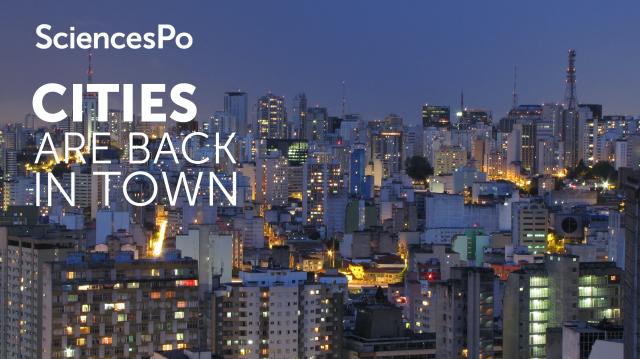
Cities are back in town : urban sociology for a globalizing urban world (Coursera)

Offered by Sciences Po,
Cities are back in town : urban sociology for a globalizing urban world (Coursera)

Urbanization is reaching a new peak in the contemporary world with the rise of mega cities. Researchers try to make sense of these large urban areas using a variety of concepts. The class will review debates and present social science models of cities to analyse and compare contemporary developments. The class will review debates and present social science models of cities and metropolis to analyse and compare contemporary developments.

Class Deals by MOOC List - Click here and see Coursera's Active Discounts, Deals, and Promo Codes.

How can do we study those cities when they become mega urban regions, does size matter and for what? Do we see the making of a vast urban world or by contrast beyond the apparent convergence of complex globalisation processes understood in relation to globalised capitalism, is it possible to identify masked differentiations and the strengthening of different urban worlds?
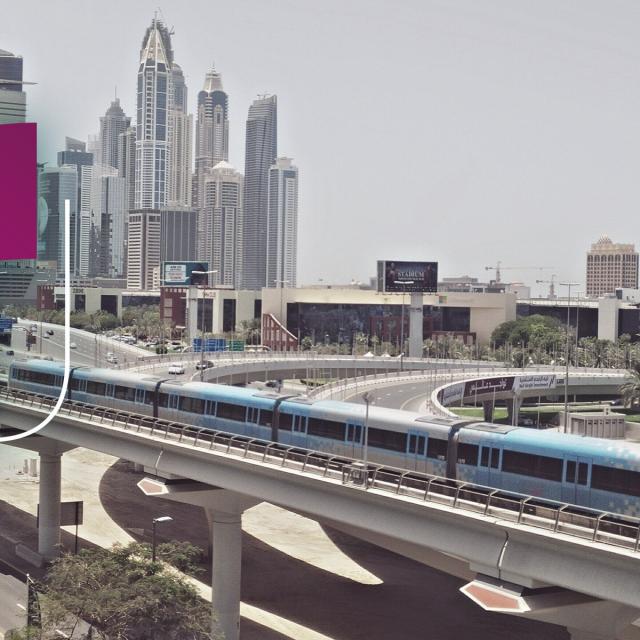
Globalization, Europeanization processes support the rapid developments of cities in different part of the world. Urbanization is reaching a new high in the contemporary world with the rise of mega cities (beyond 15 million inhabitants) such as Calcutta, Los Angeles, Dhaka, Cairo, Tokyo, New York, Shanghai, Mexico or Seoul. Beyond the modern metropolis, researchers try to make sense of these large urban areas using a variety of concepts such as the ‘postmetropolis’, ‘global cities’, and ‘global city-regions’. How do we make sense of this urban world when cities are not independent units but have to be understood both in terms of territories, rootedness, and at the same time in terms of relations to take into account flux, mobility, circulations ? What is the relevance of social science concepts developed in the Western world to analyse the transformation of Lagos? To what extent may the systematic development of new forms of comparison between northern cities and cities from the South change social sciences and contribute to overcome the bias towards national comparison? For the time being, given current conditions of capitalism, political, economic, cultural and social questions are increasingly becoming urban questions. In the modern conception of the world/globalcity, characterised by size, the aggregation of housing, differentiated divisions of labour, and the density of interaction, several conceptions of cities exist which have become entangled and sometimes opposed to each other. These different conceptions underline different processes of integration: the material city of walls, squares, houses, roads, light, utilities, buildings, waste, and physical infrastructure; the cultural city in terms of imaginations, differences, representations, ideas, symbols, arts, texts, senses, religion, and aesthetics; the politics and policies of the city in terms of domination, power, government, mobilisation, public policies, welfare, education; the social city of riots, ethnic, economic and gender inequalities, everyday life and social movements; and the economy of the city : the division of labour, scale, production, consumption, trade..... Classic urban questions about inequalities, housing, government, integration, are combined with issues about the urban fabric, questions of mobility and rootedness, sustainable development and risks, the making of the cyborg cities, questions of social control and riots, urban culture, innovation and urban economic development.

Syllabus

Week 1: Introduction to urban sociology - Introduction, definition, urban questions and the use of models
Week 2: Introduction to urban sociology - European cities and the weberian model of integration
Week 3: Colonial city model - Colonial and post colonial cities
Week 4: Industrial city model - Industrial cities (and Socialist cities) and Marxist models
Week 5: Metropolis model - The American metropolis and the Chicago School,
Week 6: Global city model - Post metropolis, fragments and differences
Week 7: Post metroplis model - Global cities and mega cities
Week 8: Digital city model - Smart cities and the sociology of science and technology

Go to Class
MOOC List is learner-supported. When you buy through links on our site, we may earn an affiliate commission.

Related Courses

China’s Economic Transformation Part 1: Economic Reform and Growth in China (Coursera) Coursera
The Hong Kong University of Science and Technology - HKUST

China’s Economic Transformation Part 1: Economic Reform and Growth in China (Coursera)

In 1978, after nearly 30 years of socialist planning under Mao Zedong, China was one of the world’s poorest countries, saddled with an inefficient, inward-looking economy. Today, China is an upper-middle income country and the world’s largest trading nation, contributing more to global economic growth than any other nation. How could such a remarkable transformation take place? This course will examine in detail the reforms that have contributed to China’s economic development and the current challenges facing the Chinese economy.

Jul 27th 2026
5-12 Weeks
Cities are back in town : sociologie urbaine pour un monde globalisé (Coursera) Coursera
Sciences Po

Cities are back in town : sociologie urbaine pour un monde globalisé (Coursera)

La mondialisation et l'européanisation favorisent le développement rapide des villes à travers le monde. L'urbanisation atteint de nouveaux sommets aujourd’hui avec l'essor des mégacités (plus de 15 millions d'habitants) comme Calcutta, Los Angeles, Dhaka, Le Caire, Tokyo, New York, Shanghai, Mexico ou Séoul. Au-delà de la métropole moderne, les chercheurs tentent de donner un sens à ces grandes régions urbaines au moyen de concepts divers tels que « post-métropoles », « villes globales », et « régions métropolitaines globales ».

Jul 27th 2026
5-12 Weeks
Foundations of Teaching for Learning: Developing Relationships (Coursera) Coursera
Commonwealth Education Trust

Foundations of Teaching for Learning: Developing Relationships (Coursera)

The Foundations of Teaching for Learning programme is for anyone who is teaching, or who would like to teach, in any subject and any context - be it at school, at home or in the workplace. With dynamic lessons taught by established and respected professionals from across the Commonwealth, this eight course programme will see you develop and strengthen your skills in teaching, professionalism, assessment, and more. As you carry on through the programme, you will find yourself strengthening not only your skills, but your connection with colleagues across the globe. A professional development opportunity not to be missed.

Jul 27th 2026
5-12 Weeks
"Making" Progress Teach-Out (Coursera) Coursera
Emory University

"Making" Progress Teach-Out (Coursera)

What is “progress”? How do we decide when we’re moving forward and not taking steps backward? And how do we explore the idea of progress around public sites of memory? This Teach-Out is an invitation to think about what progress means, and how you can look for it wherever you are—in your city, community, or neighborhood—and reflect upon your own ideas about the place you live in.

Jul 27th 2026
2 Weeks
Paradoxes of War (Coursera) Coursera
Princeton University

Paradoxes of War (Coursera)

The Paradoxes of War teaches us to understand that war is not only a normal part of human existence, but is arguably one of the most important factors in making us who we are. Through this course, I hope that you will come to appreciate that war is both a natural expression of common human emotions and interactions and a constitutive part of how we cohere as groups. That is, war is paradoxically an expression of our basest animal nature and the exemplar of our most vaunted and valued civilized virtues.

Jul 27th 2026
13-24 Weeks
Basic Statistics (Coursera) Coursera
University of Amsterdam

Basic Statistics (Coursera)

Understanding statistics is essential to understand research in the social and behavioral sciences. In this course you will learn the basics of statistics; not just how to calculate them, but also how to evaluate them. This course will also prepare you for the next course in the specialization - the course Inferential Statistics. In the first part of the course we will discuss methods of descriptive statistics. You will learn what cases and variables are and how you can compute measures of central tendency (mean, median and mode) and dispersion (standard deviation and variance). Next, we discuss how to assess relationships between variables, and we introduce the concepts correlation and regression.

Aug 3rd 2026
5-12 Weeks
University Teaching (Coursera) Coursera
University of Hong Kong

University Teaching (Coursera)

University Teaching is an introductory course in teaching and learning in tertiary education, designed by staff at the Centre for the Enhancement of Teaching and Learning at the University of Hong Kong. With input from instructors, guests and interviewees, including teaching award winners, students, and experts in the fields, you will be exposed to research evidence in relation to effective university teaching and practical instructional design strategies. You will also be exposed to multiple examples of effective teaching, and hear the views of teachers whose teaching has been judged to be excellent.

Aug 3rd 2026
5-12 Weeks
Cities are back in town : sociología urbana para un mundo globalizado (Coursera) Coursera
Sciences Po

Cities are back in town : sociología urbana para un mundo globalizado (Coursera)

Los procesos de globalización y europeización respaldan el rápido desarrollo de las ciudades en distintas partes del mundo. En el mundo contemporáneo, el proceso de urbanización está alcanzando un nuevo pico con el incremento de las megalópolis (más de 15 millones de habitantes) como Calcuta, Los Ángeles, Daca, El Cairo, Tokio, Nueva York, Shanghái, Ciudad de México. o Seúl. Más allá de las metrópolis modernas, los investigadores intentan entender estas grandes zonas urbanas con el uso de distintos conceptos, tales como "posmetrópolis", "ciudades globales" y "ciudades-regiones globales".

Aug 3rd 2026
5-12 Weeks
International Law in Action: A Guide to the International Courts and Tribunals in The Hague (Coursera) Coursera
Leiden University

International Law in Action: A Guide to the International Courts and Tribunals in The Hague (Coursera)

International Law in Action explains the functions of each international court and tribunal present in The Hague, and it looks at how these institutions address contemporary problems. On the basis of selected cases, and through interviews with judges and lawyers, you will explore the role of these courts and tribunals and their potential to contribute to global justice. The first module of the course will investigate how judicial settlement is different from other more political forms of dispute settlement, such as negotiation and mediation. It offers a brief historical overview and introduces the judicial and arbitral bodies based in The Hague.

Aug 3rd 2026
5-12 Weeks
A Law Student's Toolkit (Coursera) Coursera
Yale University

A Law Student's Toolkit (Coursera)

Whether you are an advanced law student looking to review the basics, or an aspiring law student looking for head start, this course will help you build the foundation you will need to succeed in law school and beyond. This course will introduce you to terminology, concepts, and tools lawyers and legal academics use to make their arguments. It will help you follow these arguments—and make arguments of your own.

Aug 3rd 2026
3 Weeks
Global Systemic Risk (Coursera) Coursera
Princeton University

Global Systemic Risk (Coursera)

What is globalization and how does it work? How can we understand the process as a whole? How are the parts of the world linked? What are the risks of living in a world where “no one is in charge”? This course introduces students to systems thinking, network theory, and risk analysis and uses these tools to better understand the process of globalization. Focusing on trade, finance, and epidemiology, it analyzes potential challenges to the current global order.

Aug 3rd 2026
5-12 Weeks
America Through Foreign Eyes (Coursera) Coursera
Rice University

America Through Foreign Eyes (Coursera)

The United States has always been a source of fascination — both attraction and repulsion — for the people of France, Mexico, China, and African countries such as Nigeria, Ghana, and Sudan. "America Through Foreign Eyes" is a rich, interdisciplinary, international course that features Rice University faculty from a variety of disciplines and area studies. Focused on perceptions of America abroad, the course is a cross between World Cultures and American Studies. The course features five core modules, each covering the perceptions and interactions of particular regions with America, Americans and Americanization.

Jul 27th 2026
5-12 Weeks