Data Use for Disease Control & Global Health Decision-Making (Coursera)

Data Use for Disease Control & Global Health Decision-Making (Coursera)

This informative three-week course will prepare you to meet the challenges of conducting epidemiologic surveillance to gather data to inform decision-making and planning. Using the polio eradication effort as a case study, you’ll address the application of surveillance systems in a wide variety of settings.

Class Deals by MOOC List - Click here and see Coursera's Active Discounts, Deals, and Promo Codes.

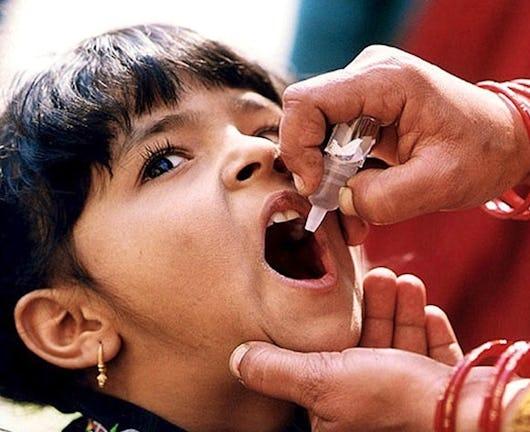
Throughout the course, you’ll reflect on and apply the lessons learned from the global polio eradication initiative, an effort led by the World Health Organisation resolved to eradicate the disease poliomyelitis. You will learn lessons from this initiative - the largest of its kind in history -and will apply data for decision-making going forward. You’ll also discuss the challenges and strategies that can be presented when applying data.
You will identify various different epidemiological systems in countries, such as the Democratic Republic of Congo and Nigeria, and on how to conduct data collection in remote areas. Then, you will discuss the best practices for conducting epidemiologic surveillance in a wide range of locations and will come to a range of solutions for the conclusion of how to conduct and use data in a variety of different situations.

  • Conduct epidemiologic surveillance to inform decision-making
  • Apply best practices for healthcare data collection and analysis
  • Apply the lessons learned from the polio eradication effort

Syllabus

Polio eradication basics
This course considers polio as a case study for addressing viruses and vaccines. This module will begin with an overview of the Global Polio Eradication Initiative and Implementation Science. Then, we will go into some details about the polio virus and vaccine, and eradication as a strategy for global disease control. It's important to think about how the characteristics of a disease, and the strategies chosen to control it, determine what data are collected and how.

Field Epidemiology and Outbreak Response
In this module, we will begin with an overview of surveillance systems - a core component of disease control and eradication. We will learn about surveillance as a decision support system for planned as well as outbreak responses. We will then consider various strategies for quality and complete surveillance in diverse contexts, and end the week with a roundtable discussion on conducting surveillance in hard to reach areas.

Data for Decision-making
In this module, we will begin with an overview of the different types of data collected by the polio program. We will then consider how these data are used to make critical decisions for the program. We will discuss strategies for collecting quality and complete data, and end the week with a roundtable discussion on incentivizing quality data.
Go to Class
MOOC List is learner-supported. When you buy through links on our site, we may earn an affiliate commission.

Related Courses

Case studies in business analytics with ACCENTURE (Coursera) Coursera
ESSEC Business School

Case studies in business analytics with ACCENTURE (Coursera)

This course is RESTRICTED TO LEARNERS ENROLLED IN Strategic Business Analytics SPECIALIZATION as a preparation to the capstone project. During the first two MOOCs, we focused on specific techniques for specific applications. Instead, with this third MOOC, we provide you with different examples to open your mind to different applications from different industries and sectors. The objective is to give you an helicopter overview on what's happening in this field. You will see how the tools presented in the two previous courses of the Specialization are used in real life projects.

Jun 1st 2026
3 Weeks
América Latina en los cambios internacionales: amenazas y oportunidades. (Coursera) Coursera
Universidad de Chile

América Latina en los cambios internacionales: amenazas y oportunidades. (Coursera)

El curso busca que comprendas y analices la mayor participación de América Latina en la política internacional. Además, te ayudará a conocer el entorno macro-estratégico en el cual se desarrolla la región, incluyendo la dimensión política, económica, cultural, social, además de las nuevas amenazas y oportunidades. El curso entrega un mapa general de las diferencias entre las distintas regiones de América Latina y sus contribuciones en sus políticas exteriores con los centros de poder mundial.

Jun 1st 2026
4 Weeks
Fixing Healthcare Delivery (Coursera) Coursera
University of Florida

Fixing Healthcare Delivery (Coursera)

Isn’t it time to end the loss of life from preventable medical errors? Each year 100,000 patients die from preventable errors in the U.S. How can you help to change this intractable problem? Knowledge is power, and this course will provide you with a deep understanding of the problems and the solutions. You can become part of the solution.

Jun 1st 2026
5-12 Weeks
Ebola: Essential knowledge for health professionals (Coursera) Coursera
University of Amsterdam,Universiteit Utrecht

Ebola: Essential knowledge for health professionals (Coursera)

March 2014 marked the starting point of the largest outbreak of Ebola virus disease in history. Although the disease seems to be on a decrease, we are not there yet and new outbreaks will surely emerge. New efforts to combat the outbreak are necessary. This is why we developed this online course about Ebola, targeted at health professionals across the world. In this course you will cover the fundamental knowledge any health professional should have with expected or confirmed cases or a general interest in the Ebola disease.

Jun 1st 2026
5-12 Weeks
Corporate Financial Decision-Making for Value Creation (Coursera) Coursera
University of Melbourne

Corporate Financial Decision-Making for Value Creation (Coursera)

In this course, participants will learn about the key financial decisions modern corporations face, as well as the alternative methods that can be employed to optimize the value of the firm’s assets. This is part of a Specialization in corporate finance created in partnership between the University of Melbourne and Bank of New York Mellon (BNY Mellon).

Jun 1st 2026
4 Weeks
Clinical Epidemiology (Coursera) Coursera
Universiteit Utrecht

Clinical Epidemiology (Coursera)

Evidence forms the basis of modern medicine. Clinical research provides us with this evidence, guiding health professionals towards solutions to problems that they face in daily practice. Transferring existing problems in medical practice to a research setting is a challenging process that requires careful consideration. The practice of clinical epidemiology aims to address this through the application of established approaches for research in human populations, while at all times focussing on the problem at hand from a clinical perspective.

Jun 2nd 2026
5-12 Weeks
Strategy Formulation (Coursera) Coursera
Copenhagen Business School

Strategy Formulation (Coursera)

The purpose of this course is to present, analyze and discuss the different facets of business strategy formulation. Emphasizing that strategy can be seen as a unified theme that provides coherence and direction to the actions and decisions of a firm, we will cover a variety of business strategy topics concerned with firm positioning in the context of different markets, industries and locations.

Jun 1st 2026
5-12 Weeks
Health Coaching Conversations (Coursera) Coursera
Imperial College London

Health Coaching Conversations (Coursera)

Are you a healthcare practitioner or student in a healthcare field? Do you want to learn how to have more empowering conversations with your patients and support them to take control of their own health and wellbeing? Are you looking for a course to start learning these skills that also fits with your busy life? If so, this is the course for you!

Jun 3rd 2026
4 Weeks
Dealing With Missing Data (Coursera) Coursera
University of Maryland, College Park

Dealing With Missing Data (Coursera)

This course will cover the steps used in weighting sample surveys, including methods for adjusting for nonresponse and using data external to the survey for calibration. Among the techniques discussed are adjustments using estimated response propensities, poststratification, raking, and general regression estimation. Alternative techniques for imputing values for missing items will be discussed. For both weighting and imputation, the capabilities of different statistical software packages will be covered, including R®, Stata®, and SAS®.

Jun 1st 2026
4 Weeks