Lean or Toyota Production System (TPS) is responsible for revolutionizing the auto industry by creating highly reliable and safe cars and trucks. In this course healthcare providers, administrators, engineers, and healthcare professional students will be taught how to apply the principles and tools of Lean to health care. They will learn how to identify and remove of waste, design standardized work, apply 5S, map Value streams, create process maps, conduct rapid improvement events (RIEs), level workflow, use A3 forms and Paredo charts, apply error proofing, and create effective visual controls.
Class Deals by MOOC List - Click here and see Coursera's Active Discounts, Deals, and Promo Codes.
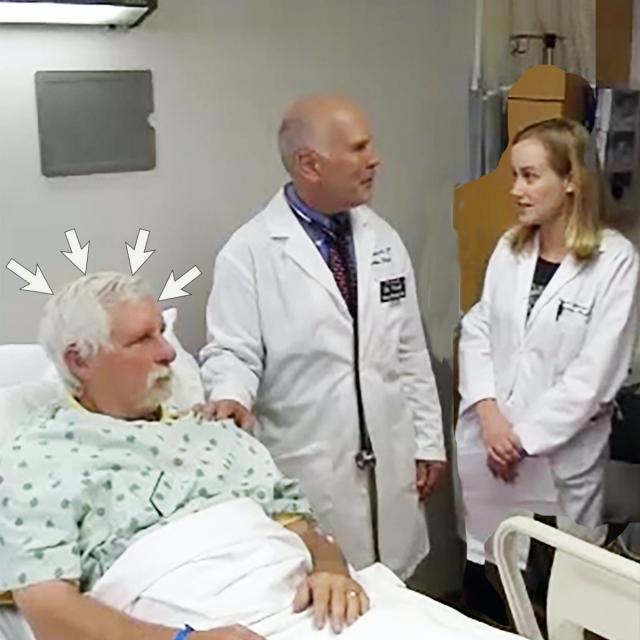
The instructional videos minimize Lean technical language, and include patient cases to make the lessons more appealing to students in healthcare. Acknowledging that patients are very different from cars we have carefully adapted Lean to health care and call our system: Patient-centered Healthcare Delivery System (PHDS). The name and abbreviation emphasize two key principles taught in our course: 1. Just like PhDs the scientific method must be continually applied when creating plans to improve our systems of care. 2. All improvements must be made looking through the eyes of patients. Armed with this new knowledge students will be able to design and implement sustainable healthcare delivery system improvements.
Syllabus
WEEK 1
Introduction to Applying TPS or Lean to Healthcare
Toyota Production System (TPS) or Lean has allowed Toyota to become the number one automobile manufacturer in the world by progressively improving the quality and reliability of their products. The System of Profound Knowledge developed by the American, W. Edward Deming is the basis for TPS or Lean. This system has now been adapted to healthcare by Virginia Mason Medical Center and Denver Health with exciting results. You will be introduced to the 4 principles of TPS, as well as the TPS House that illustrates how the various tools of TPS fit together to continually add value to the care of patients. The challenges faced by both health systems will be discussed and their approaches to transforming their delivery systems described. When Lean is applied to healthcare, patient care improves, and both patient mortality and the cost of care decrease. Applying Lean to healthcare systems can revolutionize how healthcare is delivered.
WEEK 2
Waste Reduction
Waste is a huge problem in modern health care. It has been estimated that 30-60% of all that we do is wasteful and is not of value. Lean has categorized 8 forms of waste allowing everyone on the front lines to recognize waste and work to remove it. 5S is a very helpful tool that can be used early in the implementation of lean and can remove clutter and quickly improve efficiency. A major form of waste is the excessive use of diagnostic tests, as well as delayed or missed diagnosis. In this session you will be introduced to the 8 forms of waste, the use of 5S, how illness scripts can be used to create a tiered diagnostic list, and how Bayes Theorem can be used to select the highest yield tests. Using this approach diagnosticians can more quickly and cost effectively arrive at diagnoses. Waste is the foundation of Lean and by removing waste we can progressively increase the value of patient care.
WEEK 3
Standardized Work and Preparing for Value Stream Mapping
Standardized work is an absolute necessity for improvement. Without standardized work there can be no improvement. This is one of the most difficult concepts to relay to those on the front lines particularly physicians, who call this "cookbook medicine". In this module the philosophy behind creating standardized work is reviewed, and the importance of everyone on the front line participating in creating and continually modifying standardized work emphasized. You will be introduced to tools that will help you to effectively design standardized work: the spaghetti diagram and the Time Observation Sheet. Lead Time, Cycle Time and Takt Time will be defined. You will learn how time the individual steps of a work process. You will also learn how to use a percentage load chart to calculate how many workers are required to meet production demand.
WEEK 4
Value Stream & Process Mapping, RIEs, and Leveling Flow
Value stream mapping is at the heart of TPS or Lean. Using the Time Observation Sheets you will learn how to fill out a Value Stream Map, including determining WIP (work in progress) depicting physical movement and process flow along with information flow, and assessing when work is value-added and when it is non-value added. Value stream maps are used to identify bottlenecks and wasteful steps in a work process and then process mapping and rapid improvement events (RIEs) can be used to remove these wasteful processes and impediments to workflow. Finally you will be introduced to the principles of leveling both under elective and emergency treatment conditions. Applying these tools can dramatically improve efficiency and productivity without increasing overall manpower.
WEEK 5
Error Proofing and Visual Controls
Preventable medical errors are estimated to kill 100,000 to 440,000 people per year in the U.S. and similar levels of harm due to medical errors have also been observed in other countries. In order to effectively eliminate errors, we must first be able to recognize and report them and different types of error reporting are described. Secondly there must be a culture in place that deals fairly with errors by differentiating systems errors from individual human errors. This can be accomplished by applying a Just Culture. Additional tools for eliminating errors and improving processes are introduced including: the Pareto Chart, Failure Mode and Effects Analysis (FMEA), an expanded Plan, Do, Study, Adjust cycle, and the A3 form. There are 6 levels of error proofing and their effectiveness in preventing errors from reaching patients is assessed using clinical examples. Visual controls can be helpful for reducing errors and for following the progress of work process improvements. In the final video the major topics covered in this course are summarized, and a new name for TPS or Lean adapted to healthcare is proposed: Patient-centered Healthcare Delivery System (PHDS). This name emphasizes the importance of applying the scientific method, like PhDs, to continually improve healthcare delivery while always focusing on the needs of patients.