FUN

Dans le secteur alimentaire, le digital : c’est primordial! (FUN)

Dans le secteur alimentaire, le digital : c’est primordial! (FUN)

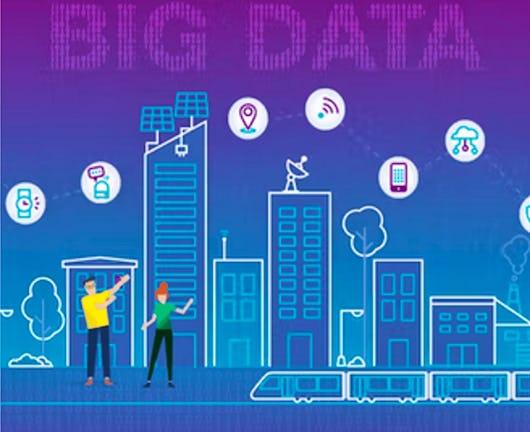
Les entreprises du secteur alimentaire ont entamé la digitalisation de leurs activités. Toutefois les mises en œuvre sont variables en fonction de la maturité des fonctions. Les approches sont toujours «silotées». Les stratégies globales ne sont pas toujours bien définies ou explicites. La difficulté de prise en main du sujet en est souvent la raison : méthode, vision prospective des organisations, des métiers et des besoins en compétences, gestion du projet dans l’entreprise. Pour permettre à chacun de ses adhérents de passer en mode digital et agile, Opcalim développe des voies d’accompagnement multiples permettant à chacun de ne pas rester isolé face aux enjeux et impacts du numérique, de saisir les opportunités, d’anticiper les menaces et de réussir ses transformations. Ce MOOC s’inscrit dans ce contexte.

A la fin du MOOC, je serai capable de ...

  1. Comprendre l’importance et les enjeux de la transformation digitale,
  2. Savoir définir une stratégie et un plan d’actions,
  3. Connaitre les outils et solutions,
  4. Déclencher des mises en œuvre opérationnelles,
  5. M'orienter pour trouver les ressources nécessaires au projet de digitalisation de l'entreprise.

Prérequis
Cette formation s’inscrit dans un parcours de 5 semaines constitué de deux MOOC ouverts simultanément: un MOOC intitulé “TPE-PME: Le numérique c'est tout de suite !” qui constitue le référentiel de base nécessaire à la digitalisation des activités quel que soit le secteur professionnel et ce MOOC intitulé “Dans le secteur alimentaire, le digital: c’est primordial !” qui est spécifique à l'alimentaire.
Il est donc recommandé de suivre le tronc commun avant d'accéder au tronc spécifique.

Plan du cours

Module 1
Les standards digitaux
Ce module vous permettra de connaître les bonnes pratiques digitales sur les prérequis nécessaires aux activités spécifiques du secteur alimentaire.

  • Séquence 1 Répondre efficacement et qualitativement aux obligations réglementaires
  • Séquence 2 Améliorer les modalités d’achat
  • Séquence 3 Optimiser vos process de production
  • Séquence 4 Passer du contrôle des coûts à la création de services supplémentaires en supply chain

Module 2
Les opportunités de développement qui peuvent bénéficier du volet digital
Ce module permet de comprendre les tendances émergentes et d'être en mesure de se les approprier simplement et concrètement.

  • Séquence 1 Améliorer la gestion des ressources humaines
  • Séquence 2 Rester compétitif dans le champ concurrentiel
  • Séquence 3 Développer son attractivité salariale
  • Séquence 4 Compléter vos modes de relations clients

Go to Class
MOOC List is learner-supported. When you buy through links on our site, we may earn an affiliate commission.

Related Courses

The New Nordic Diet - from Gastronomy to Health (Coursera) Coursera
University of Copenhagen

The New Nordic Diet - from Gastronomy to Health (Coursera)

The New Nordic Diet is a new food culture developed in 2009-13 with key emphasis on gastronomy, health, and environment. Major research in its effect on acceptability, behaviour and learning skills, and disease prevention have been conducted by the OPUS centre at the University of Copenhagen and the people behind the award-winning restaurant Noma in Copenhagen. This course will give the participants the opportunity to experience a healthy and palatable new food and eating concept diet “The New Nordic Diet” and an understanding of how food and diets can affect mental and physical health and ensure the foundation for a healthier life style for future generations with a regional based diet and food culture.

Aug 31st 2026
5-12 Weeks
Digital Business Strategy (Coursera) Coursera
University of Virginia

Digital Business Strategy (Coursera)

Develop your ability to design and implement strategies that will help your company prosper in the digital age. In this course, developed by the Darden School of Business at the University of Virginia, Professor Mike Lenox will help you understand the critical function of strategic thinking in the digital age, the role of data and analytics in creating value, the challenge of establishing a dominant platform, the impact of digital technologies on competition, and the importance of appropriating value from innovation.

Sep 7th 2026
4 Weeks
Comprendre l’économie collaborative (FUN) FUN
Institut Mines-Telecom

Comprendre l’économie collaborative (FUN)

L'objectif du MOOC "Comprendre l'économie collaborative" est de permettre d'appréhender les grands principes de la transition numérique de l'économie et d'en décoder les principaux mécanismes sociaux-économiques. Tout au long de ce cours, vous décrypterez l'économie collaborative à travers des clés de lecture.

Sep 23rd 2021
5-12 Weeks
Banque, assurance, assistance : le digital, une opportunité à saisir! (FUN) FUN
Université Jean Moulin Lyon 3

Banque, assurance, assistance : le digital, une opportunité à saisir! (FUN)

Cette formation d’une durée de 2 semaines vous accompagne dans la digitalisation de vos activités. Démystifions ensemble ce qu’on appelle “la transformation numérique” et étudions comment les agents des secteurs Banques et Assurances peuvent profiter pleinement des opportunités du numérique.

No sessions available
2 Weeks
Healthcare Data Management and Information Systems (Coursera) Coursera
Northeastern University

Healthcare Data Management and Information Systems (Coursera)

This course is the continuation of the Health Informatics for Healthcare Professionals course. If you have not yet taken the introductory course, it is recommend that you complete that course prior to this course. The foundational knowledge from the introduction is carried through in this deeper dive into informatics in healthcare.

Sep 14th 2026
4 Weeks
Feeding the World (Coursera) Coursera
University of Pennsylvania

Feeding the World (Coursera)

This course will explore the concepts driving current food production science (population growth, urbanization, emerging affluence, resource constraints, and underlying biological limits) with the main focus on livestock production. Each of the major food animal species (dairy, swine, beef, and poultry) will be covered in terms of their universal life cycles, constraints to production and emerging societal issues.

Sep 14th 2026
5-12 Weeks
New Technologies for Business Leaders (Coursera) Coursera
Rutgers University

New Technologies for Business Leaders (Coursera)

This introductory course is developed for high-level business people (and those on their way) who want a broad understanding of new Information Technologies and understand their potential for business functions (e.g. marketing, supply change management, finance). This is not a course for people looking for guidance on how to become a deep technical expert or implement these technologies.

Aug 31st 2026
5-12 Weeks
Chicken Behaviour and Welfare (Coursera) Coursera
University of Edinburgh

Chicken Behaviour and Welfare (Coursera)

This course explains the general principles of chicken behaviour and welfare, and the behavioural and physiological indicators that can be used to assess welfare in chickens kept in hobby flocks through to commercial farms. The focus is primarily on laying hens and meat chickens (broilers) although many of the principles are relevant to other types of poultry. The course is likely to be of interest to people who own chickens as pets or keep a small hobby flock, commercial egg and chicken meat producers, veterinarians and vet nurses.

Sep 7th 2026
5-12 Weeks
Impact from digital transformation: A Nano course (Coursera) Coursera
EIT Digital

Impact from digital transformation: A Nano course (Coursera)

You believe that a lot of industries will fundamentally change due to digital power the upcoming 5 to 10 years? You believe that what often today have been called "disruption" might happen to an industry of your specific interest? You believe in the value of becoming able to predict how that kind of change will evolve in order to do digital transformation and thereby avoid ending up with big problems in the future? Then this course is for you.

Aug 31st 2026
4 Weeks
Public Health Perspectives on Sustainable Diets (Coursera) Coursera
Johns Hopkins University

Public Health Perspectives on Sustainable Diets (Coursera)

What we eat and how we produce that food have significant effects on human health and the sustainability of our planet. But what is a ‘sustainable’ diet? A sustainable diet, as defined by the FAO, promotes health and well-being and provides food security for the present population while sustaining human and natural resources for future generations. This short course looks at the urgent need to address the sustainability of our food systems, including better understanding the complex relationship between diet and climate change. We’ll explore current research on dietary shifts needed in high, middle, and low-income countries to achieve both sustainability and food security goals and discuss evidence-based strategies to promote sustainable diets.

Sep 7th 2026
3 Weeks
Perspectives in Digital Transformation: Agribusiness (Coursera) Coursera
Inter-American Development Bank - IDB

Perspectives in Digital Transformation: Agribusiness (Coursera)

In this course, you will be learn how to apply the best practices that have been tested by global companies to make the most of the potentialities of digital transformation and its application to your business. Discover what the level of digital maturity is for your organization by identifying current trends in digital transformation, the use of technologies, and the impact on sustainability in the agribusiness sector in Latin America.

Sep 14th 2026
3 Weeks