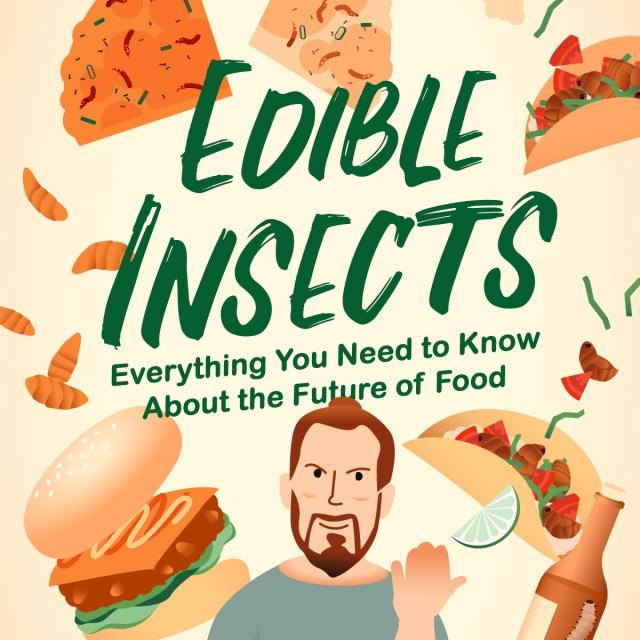
Edible Insects (Coursera)

Edible Insects (Coursera)

This English language course covers the science and sociology of insects as food and feed. Increasing media, investment, and public policy attention has been given over the years to the role insects may play in the future of food. Can eating insects really save the world from famine and environmental destruction? Are there health costs or benefits to adding insects to the diet? Will all people accept insects as food? Can we feed them to livestock? Should we be promoting edible insects at all, and if so, how best do we do it? What species will we eat and how shall we raise them?

Class Deals by MOOC List - Click here and see Coursera's Active Discounts, Deals, and Promo Codes.

This class examines all aspects of the edible insects question, with students taught a broad but thorough overview of the field and asked to consider questions in class about what role they think insects will play in their own food futures, and why they think this way.

What You Will Learn

  • Think critically about why we eat certain things and not others, and the cultural influences that shape these views.
  • Describe and evaluate the arguments driving the edible insect movement.
  • Know examples of edible insects and other insect products worldwide.
  • Be able to apply Diffusion of Innovations theory to food-related innovations.
  • Understand in what directions the edible insect field is going, and perhaps decide what role they want to play in it.

Syllabus

WEEK 1
Welcome to Edible Insects!
Hello, everyone! Welcome to Edible Insects! This English language course covers the science and sociology of insects as food and feed. Increasing media, investment, and public policy attention has been given over the years to the role insects may play in the future of food. Can eating insects really save the world from famine and environmental destruction? Are there health costs or benefits to adding insects to the diet? Will all people accept insects as food? Can we feed them to livestock? Should we be promoting edible insects at all, and if so, how best do we do it? What species will we eat and how shall we raise them? This class examines all aspects of edible insects, with students taught a broad but thorough overview of the field and asked to consider questions in class about what role they think insects will play in their own food futures, and why they think this way.

WEEK 2
Why do we eat what we eat?
This lecture has students think deeply about what influences our ideas of “food,” challenging their previously held assumptions. Why do we eat some animals and not others? Why some parts of animals and not others? We will then introduce the concept of eating insects specifically, and a basic overview of Diffusion of Innovations theory, which will be applied throughout the course when discussing why insect eating has or has not been adopted in different parts of the world.

WEEK 3
Edible Insects Around the World
This lecture provides a broad overview of traditional and modern edible insects from around the world, and how these are changing with time.

WEEK 4
The Benefits (and Costs) of Edible Insects
In this lecture, students will learn and analyze the environmentalist argument in favor of eating insect protein, and debate the ethical issues of insect consumption. Students will also learn about the nutrition and safety of edible insects. By the end, students should be able to make a fact-based decision on whether eating insects is acceptable for them, and justify their choice.

Go to Class
MOOC List is learner-supported. When you buy through links on our site, we may earn an affiliate commission.

Related Courses

The People, Power, and Pride of Public Health (Coursera) Coursera
Johns Hopkins University

The People, Power, and Pride of Public Health (Coursera)

The People, Power, and Pride of Public Health provides an engaging overview of the incredible accomplishments and promise of the public health field. The first module includes interviews with legendary public health figures whose work led to millions of lives saved with vaccines, air bags and car seats, and the federal Women Infants and Children (WIC) nutrition program.

Sep 21st 2026
3 Weeks
Equine Welfare and Management (Coursera) Coursera
University of California, Davis

Equine Welfare and Management (Coursera)

This unique course was developed by veterinarians at the world-renowned University of California, Davis School of Veterinary Medicine. The course will address horsemanship from a welfare perspective, within the context of “The Five Freedoms” of animal welfare. We’ll explore equine physiology, behavior and basic needs including housing, nutrition, hygiene and disease management.

Sep 14th 2026
5-12 Weeks
Nutrition and Lifestyle in Pregnancy (Coursera) Coursera
Ludwig-Maximilians-Universität München

Nutrition and Lifestyle in Pregnancy (Coursera)

Nutrition and Lifestyle in Pregnancy offers an overview of the latest research findings and international recommendations on a variety of nutrition-related aspects and outcomes of pregnancy. Ensuring a healthy nutritional status and lifestyle prior to and during pregnancy is one of the best ways to help support the healthy growth and development of the unborn child. We will look at how a healthy diet and lifestyle should ideally be achieved prior to conception and provide recommendations for pre-conception counselling of women.

Sep 21st 2026
4 Weeks
Family Spirit Nurture (Coursera) Coursera
Johns Hopkins University

Family Spirit Nurture (Coursera)

This course is designed for health educators and home visitors serving families with infants 0-6 months old. Learners will gain knowledge and skills to make a positive impact on healthy infant nutrition and growth as well as maternal and family nutrition. This course is uniquely tailored towards Indigenous families and approaches nutrition through a strengths-based lens connecting to Indigenous foods and Native Foodways.

Sep 21st 2026
4 Weeks
Nutrición y obesidad: control de sobrepeso (Coursera) Coursera
Universidad Nacional Autónoma de México

Nutrición y obesidad: control de sobrepeso (Coursera)

En este curso, ofrecido por la UNAM, reconocerás una herramienta para evitar, manejar y controlar el sobrepeso y la obesidad, al destacar la importancia del autocuidado y el apoyo familiar en el manejo de este padecimiento. Te mostrará el verdadero valor de los alimentos como compañeros de tu vida, te alejará de los kilos de más y te forjará hábitos saludables que marcarán una senda de salud perdurable.

Sep 14th 2026
4 Weeks
Introduction to Food and Our Environment (Coursera) Coursera
Stanford University

Introduction to Food and Our Environment (Coursera)

This course is designed to help learners around the world become more sustainable eaters. Together, we’ll explore key topics, like how food production impacts the environment and why meat production and protein consumption are often at the center of the debate around sustainability. We’ll introduce the pros and cons of different kinds of agriculture, fishing and food packaging, with a focus on how we can make more environmentally friendly decisions on a daily basis. We’ll also look ahead and explore some of the technology innovations that could become increasingly important as we look at the future of food for a growing global population.

Sep 14th 2026
4 Weeks
Food & Beverage Management (Coursera) Coursera
Università Bocconi

Food & Beverage Management (Coursera)

Managing a company in the food and beverage industry is a fascinating task. The objective of this course is twofold: first, we will focus on contemporary challenges that managers and entrepreneurs in food and beverage businesses should be able to face; and second, we will provide models and tools to design and implement appropriate courses of action to satisfy customers and build an advantage over the competition.

Sep 21st 2026
5-12 Weeks
The New Nordic Diet - from Gastronomy to Health (Coursera) Coursera
University of Copenhagen

The New Nordic Diet - from Gastronomy to Health (Coursera)

The New Nordic Diet is a new food culture developed in 2009-13 with key emphasis on gastronomy, health, and environment. Major research in its effect on acceptability, behaviour and learning skills, and disease prevention have been conducted by the OPUS centre at the University of Copenhagen and the people behind the award-winning restaurant Noma in Copenhagen. This course will give the participants the opportunity to experience a healthy and palatable new food and eating concept diet “The New Nordic Diet” and an understanding of how food and diets can affect mental and physical health and ensure the foundation for a healthier life style for future generations with a regional based diet and food culture.

Sep 28th 2026
5-12 Weeks
Dairy Production and Management (Coursera) Coursera
Pennsylvania State University

Dairy Production and Management (Coursera)

With the world's first MOOOOO-C, you will gain a broad and comprehensive understanding of all aspects of dairy management such as genetics, nutrition, reproduction, animal health, farm economics, and sustainability of dairy production systems. There's something here for everyone whether you are just looking for the basics or have years of experience in the dairy industry.

Sep 21st 2026
5-12 Weeks
Feeding the World (Coursera) Coursera
University of Pennsylvania

Feeding the World (Coursera)

This course will explore the concepts driving current food production science (population growth, urbanization, emerging affluence, resource constraints, and underlying biological limits) with the main focus on livestock production. Each of the major food animal species (dairy, swine, beef, and poultry) will be covered in terms of their universal life cycles, constraints to production and emerging societal issues.

Sep 14th 2026
5-12 Weeks
Measuring and Modeling Impact in Evaluations (Coursera) Coursera
Johns Hopkins University

Measuring and Modeling Impact in Evaluations (Coursera)

We want to provide you some information about our course “Measuring and Modeling Impact in evaluations”. The purpose of this course is to give you a better understanding of different measures of impact that could be used in the evaluation of a program in the areas of maternal and child health and nutrition. For each of the measures presented, we will discuss current sources of data you might draw on as well as describe the methods that can be used to measure these. When we describe the methods, we also try to identify the strengths and weakness of the methods as well as their suitably for use in an evaluation.

Sep 21st 2026
4 Weeks