Rebuilding Our Relationship with Food (Coursera)

Offered by Stanford University,
Rebuilding Our Relationship with Food (Coursera)

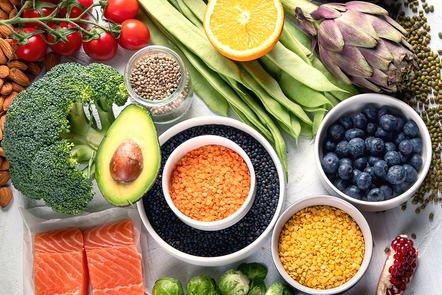
Have you ever made a conscious effort to change the way you eat (for health or other reasons) and then felt frustrated when your plans were derailed? You’re not alone. The best laid plans are often sabotaged by a food environment that makes it increasingly hard to make healthier food choices. This can leave many people feeling mistrustful of food or feeling that our relationship with food is somehow broken. In this course, we’ll explore the history of our changing food environment, the science behind cravings for unhealthy foods AND most importantly, you’ll learn some concrete strategies for rebuilding your relationship with food.

Class Deals by MOOC List - Click here and see Coursera's Active Discounts, Deals, and Promo Codes.

You’ll learn to practice mindful eating and self-compassion (proven strategies for supporting healthier food choices) as well as designing a customized plan to protect your relationship with food and improve the health of your greatest asset - you! I can’t wait to start on this adventure together.

What You Will Learn

  • How to practice mindful eating or food mindfulness.
  • How to practice self-compassion and rebuild your relationship with food.

Course 2 of 3 in the Food Sustainability, Mindful Eating, and Healthy Cooking Specialization

Syllabus

WEEK 1
What Happened to Our Relationship with Food?
In this module, we’ll examine how the commercial food industry separates us from our food and how this impacts our long-term health. We’ll explore how attitudes towards food can differ across different global regions and different cultures and how our attitudes toward food can affect our health. Finally, we’ll examine the ways in which food can support our optimal performance at work or at play.

WEEK 2
Moderation, Balance, and Food
In this module, we’ll learn about why traditional, restrictive “diets” often fail us, how to begin reframing our thinking about food from “Am I allowed to eat this?” to “Is this food

WEEK 3
How to Practice Self-Compassion and Moderation
In this module you’ll learn about the components of self-compassion, a practice that can be used to support healthier food choices and eating behaviors. You’ll also learn about how our taste receptors respond to quantity vs quality and how we can use this knowledge to maximize our eating experience while protecting our health!

WEEK 4
Practicing Mindful Eating (Loving the Foods That Will Love You Back)
In this module, we’ll explore some of the ways in which we can rebuild a longstanding relationship with our food, by observing our own behaviors and developing customized strategies for letting go of habits that don’t serve us well. We’ll also learn more about the practice of mindful eating and how we can incorporate that practice into our daily lives.


Go to Class
MOOC List is learner-supported. When you buy through links on our site, we may earn an affiliate commission.

Related Courses

Food and Mood: Improving Mental Health Through Diet and Nutrition (FutureLearn) FutureLearn
Deakin University,Food & Mood Centre

Food and Mood: Improving Mental Health Through Diet and Nutrition (FutureLearn)

Explore the relationship between nutrition and brain health, why it matters, and how to work towards positive food changes. Learn how healthy dietary choices can improve your mental and brain health. Poor diet and poor mental health are the leading causes of mortality and morbidity worldwide. We now know that diet quality is a modifiable factor that is linked to mental and brain health across all stages of our lives. We will explore how our daily diets may affect our mental and brain health, including the role of our immune system and gut microbiome.

Self Paced
3 Weeks
Introduction to Environmental Science (edX) EdX
DartmouthX,Dartmouth College

Introduction to Environmental Science (edX)

A scientific study of the natural world and how it is influenced by people. Major topics include: food, energy, human population, biodiversity and global change. Environmental science is the study of patterns and processes in the natural world and their modification by human activity. To understand current environmental problems, we need to consider physical, biological and chemical processes that are often the basis of those problems.

Self Paced
4 Weeks
Innovación agroalimentaria (Coursera) Coursera
Universidad Nacional Autónoma de México

Innovación agroalimentaria (Coursera)

Este curso fue desarrollado por el Instituto Interamericano de Cooperación para la Agricultura (IICA) en colaboración con la Universidad Nacional Autónoma de México (UNAM) con el propósito de introducir el tema de Innovación y su importancia en el sector Agroalimentario. En un mundo donde la globalización de los mercados es imperante y el cambio climático afecta las prácticas agrícolas, la competitividad sin innovación no es procedente. Por ello, durante el curso se analiza y reconoce la innovación como un agente que promueve la competitividad.

Jun 5th 2023
4 Weeks
Small and Mighty: Introduction to Microbiology (FutureLearn) FutureLearn
University of Reading

Small and Mighty: Introduction to Microbiology (FutureLearn)

Understand the basics of microbiology and explore the diversity of microbial life in our world. Discover the fascinating world of microbes. Microbes may be invisible to the eye, but they dominate every environment on Earth – including you. Microbes are often associated with disease yet the majority of species help to keep us alive. How can you distinguish the good from the bad?

Self Paced
3 Weeks
Unravelling solutions for Future Food problems (Coursera) Coursera
Universiteit Utrecht

Unravelling solutions for Future Food problems (Coursera)

Our society depends on the availability of food and accessibility to it. According to the United Nations nearly 800 million people are hungry and on the other hand, over 650 million people are obese. While many people in developing countries experience food shortage, in industrialized countries people are throwing food away. These facts show how paradoxical and complex the world’s food problem is.

May 3rd 2026
5-12 Weeks
Mindfulness and Well-being: Living with Balance and Ease (Coursera) Coursera
Rice University

Mindfulness and Well-being: Living with Balance and Ease (Coursera)

This is the sequel course to Foundations of Mindfulness that will continue to provide a broad overview of the fundamental concepts, principles, and practices of mindfulness. With interactive exercises to help students explore their own attitudes, mental habits and behaviors, Foundations of Mindfulness series offers a pathway for living with more freedom, authenticity and ease. Featured components of the course include experiential exercises, guided meditations, personal reflection and interactive discussions.

Aug 17th 2026
4 Weeks
Public Health Perspectives on Sustainable Diets (Coursera) Coursera
Johns Hopkins University

Public Health Perspectives on Sustainable Diets (Coursera)

What we eat and how we produce that food have significant effects on human health and the sustainability of our planet. But what is a ‘sustainable’ diet? A sustainable diet, as defined by the FAO, promotes health and well-being and provides food security for the present population while sustaining human and natural resources for future generations. This short course looks at the urgent need to address the sustainability of our food systems, including better understanding the complex relationship between diet and climate change. We’ll explore current research on dietary shifts needed in high, middle, and low-income countries to achieve both sustainability and food security goals and discuss evidence-based strategies to promote sustainable diets.

Aug 10th 2026
3 Weeks
The Economics of Agro-Food Value Chains (Coursera) Coursera
Technische Universität München - TUM

The Economics of Agro-Food Value Chains (Coursera)

In this course, you learn how the agro-food value chain approaches the challenge of constantly improving its competitiveness by producing high quality food and products and also aiming to attain greater sustainability. Some of the topics of this course are: the notion of quality for food and agricultural products and consumer value; how to conduct market research in this field; labelling, branding and pricing strategies, as-well as innovation in the agro-food sector; how sustainability can be used as a competitive advantage through corporate social responsibility: the role and different types of industrial standards; the different forms of coordination in the chain, in particular with regard to the retailing and distribution sector.

Jul 22nd 2026
5-12 Weeks
Chicken Behaviour and Welfare (Coursera) Coursera
University of Edinburgh

Chicken Behaviour and Welfare (Coursera)

This course explains the general principles of chicken behaviour and welfare, and the behavioural and physiological indicators that can be used to assess welfare in chickens kept in hobby flocks through to commercial farms. The focus is primarily on laying hens and meat chickens (broilers) although many of the principles are relevant to other types of poultry. The course is likely to be of interest to people who own chickens as pets or keep a small hobby flock, commercial egg and chicken meat producers, veterinarians and vet nurses.

Aug 10th 2026
5-12 Weeks
Act on Climate: Steps to Individual, Community, and Political Action (Coursera) Coursera
University of Michigan

Act on Climate: Steps to Individual, Community, and Political Action (Coursera)

Are you concerned about climate change? Would you like to learn how to address and respond to this challenge? If so, this course is for you. Act on Climate: Steps to Individual, Community, and Political Action is intended to help learners understand, address and respond to climate change as individuals and in partnership with their communities and political leaders.

Aug 10th 2026
5-12 Weeks