Healthy and Sustainable Foods (Coursera)

Healthy and Sustainable Foods (Coursera)

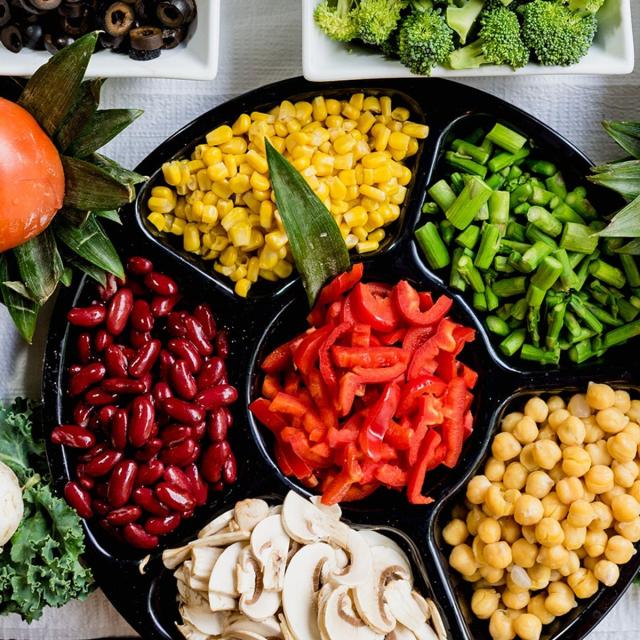
This course focuses on healthy and sustainable foods. After reviewing the crucial role of food for both health and the environment, we first look at the carbon footprint and environmental impacts of multiple ingredients and more complex foods. We also detail a health-based approach to quantify the impact of 5000+ individual foods on health, expressed in minutes of life lost and gain per serving.

Class Deals by MOOC List - Click here and see Coursera's Active Discounts, Deals, and Promo Codes.

We then analyze trade-offs and targeted changes that can bring substantial health and environmental benefits with less than 10% caloric change. We finally address the health and sustainable performances of various diets, looking at disparities between gender, races and diets.

Syllabus

WEEK 1
Introduction to Healthy and Sustainable Foods
Welcome! This module will introduce you to our course. The introductory lesson will provide an overview of the topics we will explore and outline the expectations and procedures. You will be introduced to utilizing spreadsheets as a tool for evaluating different types of foods. The module will conclude by introducing methods that can be used to measure the environmental impact of various food choices.

WEEK 2
Nutritional Evaluations and Diet Choices
This module focuses on evaluating the nutritional impact of food on individuals' health and how a combination of multiple evaluations can help us make changes to our diet that will result in positive impacts. You will be introduced to Dietary Risk Factors (DRF) and the Health Nutritional Index (HENI) as usable measurements. We will then move on to discuss the various trade-offs that one should consider when prioritizing a given measurement to inform their food choices. We conclude this module by thinking through how to make targeted changes to our diet to result in better nutritional and environmental outcomes.

WEEK 3
Analyzing Complex Dishes and Comparing Diets
This final module examines the dietary impacts of multiple foods to then analyze trade-offs and targeted changes that can bring substantial health and environmental benefits with less than 10% caloric change. Then, you will utilize the calculations skills you've practiced to complete the End-of-Course Assessment. This assessment will be similar to the previous end-of-week quizzes, but it will instead cover concepts from the entire course rather than just one week. Lastly, we ask you to reflect on how your meal choices have changed since you began the course. If you elect to do so, you will revisit our initial meal sharing Gallery exercise to share your most recent meal as you complete our course!
Go to Class
MOOC List is learner-supported. When you buy through links on our site, we may earn an affiliate commission.

Related Courses

Principles of Sustainable Finance (Coursera) Coursera
Erasmus University Rotterdam

Principles of Sustainable Finance (Coursera)

Finance is widely seen as an obstacle to a better world. Principles of Sustainable Finance explains how the financial sector can be mobilized to counter this. Using finance as a means to achieve social goals we can divert the planet and its economy from its current path to a world that is sustainable for all. Throughout this course, you will learn about the UN Sustainable Development Goals, how social and environmental factors should not be regarded as externalities, you will learn more about sustainable banking and asset management, about effective engagement, sustainable scenario analysis and long-term value creation.

Sep 28th 2026
5-12 Weeks
Genomics: Decoding the Universal Language of Life (Coursera) Coursera
University of Illinois at Urbana-Champaign

Genomics: Decoding the Universal Language of Life (Coursera)

What is a genome? A genome contains all of the information that a cell needs to develop, function, and reproduce itself, and all the information needed for those cells to come together to form a person, plant, or animal. Genomes contain an organism’s complete set of genes, and also the even tinier genetic structures that help regulate when and how those genes are used. The ability to regrow a torn ligament, the clues that might predict the onset of mental illness, the nutritional potential of crops, and even the history of life itself, are all encoded in genomes. By taking this course, you will discover how scientists are deciphering the language of genomes to learn how to develop sustainable food and fuel supplies, improve disease treatment and prevention, and protect our environment.

Sep 28th 2026
5-12 Weeks
Natural Attenuation of Groundwater Contaminants: New Paradigms, Technologies, and Applications (Coursera) Coursera
Rice University

Natural Attenuation of Groundwater Contaminants: New Paradigms, Technologies, and Applications (Coursera)

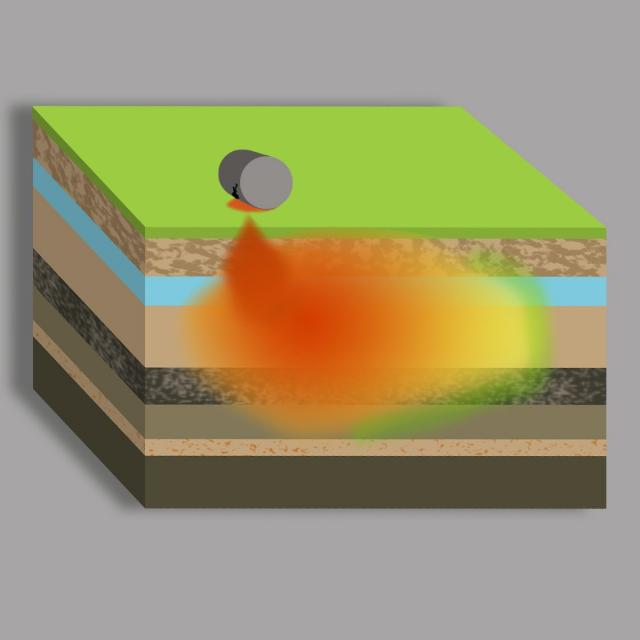
Cleaning up the large number of groundwater contamination sites is a significant and complex environmental challenge. The environmental industry is continuously looking for remediation methods that are both effective and cost-efficient. Over the past 10 years there have been amazing, important developments in our understanding of key attenuation processes and technologies for evaluating natural attenuation processes, and a changing institutional perspective on when and where Monitored Natural Attenuation (MNA) may be applied.

Sep 28th 2026
5-12 Weeks
Herramientas de la Economía Circular (Coursera) Coursera
Universidad de los Andes

Herramientas de la Economía Circular (Coursera)

La Economía Circular representa una perspectiva de mejoramiento continuo para la transformación de sistemas de producción y consumo sostenibles. Aprender de sus herramientas, agrega un valor agregado concreto, a las competencias de profesionales interesados en la sostenibilidad ambiental y social. El presente curso ofrece aprender de la importancia de la Economía Circular a través de sus herramientas, útiles para el diseño de proyectos.

Sep 28th 2026
5-12 Weeks
Teaching the Violin and Viola: Creating a Healthy Foundation (Coursera) Coursera
Northwestern University

Teaching the Violin and Viola: Creating a Healthy Foundation (Coursera)

Join us as we explore the fundamental principles and early stages of teaching violin and viola through a series of engaging video lectures and lesson demonstrations, including: 1) Master classes with some of the world’s top string pedagogues, 2) Individual lesson demos of teaching violin/viola set up, left and right hand technique and pieces from the early violin/viola repertoire, 3) Group lesson demos of teaching music theory, ear training and fun activities that encourage good playing habits, and 4) A “field trip” to the violin shop, where we will outfit a new beginning student with a proper instrument and bow.

Sep 28th 2026
5-12 Weeks
Oceanography: a key to better understand our world (Coursera) Coursera
University of Barcelona,Barcelona Foundation for Ocean Sailing - FNOB

Oceanography: a key to better understand our world (Coursera)

The course for a round the world regatta leads the boats through the Mediterranean Sea and the Atlantic, Southern Indian and South Pacific Oceans. On their voyage, the skippers come across a large variety of oceanographic situations: strong currents, floating ice, wave formations of every kind and biological diversity. In this course the student will learn about the foundations of the science of oceanography. You'll learn about the classification and formation of the ocean floor, how current sea satellite analysis systems work, the chemistry of the oceans and the processes that led to its formation.

Sep 28th 2026
5-12 Weeks
Applied Sustainability Engineering (Coursera) Coursera
University of Colorado Boulder,Siemens

Applied Sustainability Engineering (Coursera)

Applied Sustainability Engineering, the second course in the "Applied Sustainability for Technical Managers" specialization discusses the techniques used by engineers and scientists to develop and assess the environmental impact of products and processes required to make those products. It begins with a discussion of different renewable energy technologies and their economics – highlighting how continued reductions in cost have made wind and solar power the least expensive way to generate electricity. It then addresses carbon footprints and how they are determined, applying a practical example where you determine your residential and transportation carbon footprints.

Sep 19th 2026
5-12 Weeks
Perspectives in Digital Transformation: Manufacturing (Coursera) Coursera
Inter-American Development Bank - IDB

Perspectives in Digital Transformation: Manufacturing (Coursera)

Are you interested in learning how Digital Transformation is driving the manufacturing sector in Latin America and the Caribbean? This course will help you identify challenges and opportunities that digitalization can offer in the industry. Along with specialists from BID Invest and the private sector, you will learn firsthand about the tools and best practices that illustrate the potential of digital solutions, with a cross-cutting focus on sustainability.

Sep 28th 2026
4 Weeks
Paths to a Sustainable Future (Coursera) Coursera
ESSEC Business School

Paths to a Sustainable Future (Coursera)

This MOOC is an introduction to social and ecological transition. Ecological issues (climate change, loss in biodiversity, scarcity of resources, etc.) and their social consequences (growing inequalities, poverty, conflicts, forced migrations, etc.) call upon us to promote a paradigm shift, to redesign our production and consumption patterns, as well as our lifestyles. This is what transition is all about.

Sep 28th 2026
4 Weeks
Global Postharvest Loss Prevention: Fundamentals, Technologies, and Actors (Coursera) Coursera
University of Illinois at Urbana-Champaign

Global Postharvest Loss Prevention: Fundamentals, Technologies, and Actors (Coursera)

This course provides an overview of the issue of postharvest loss of grains by exploring essential physical, technical, and social dimensions of postharvest supply chains and loss prevention methods globally. Each year, estimates suggest that 1/3 of all food produced is lost or wasted, making postharvest loss a critical global food security and sustainability issue of today. Key knowledge areas are presented including: an overview of postharvest loss; supply chain activities such as harvesting, drying, and storage; economics and markets; an introduction to the network of actors working in this field.

Sep 21st 2026
4 Weeks
Introduction to the Arctic: Climate (Coursera) Coursera
University of Alberta

Introduction to the Arctic: Climate (Coursera)

The University of Alberta, the University of Tromso and the University of the Arctic invite you to explore this four week course that examines the environment and climate of the circumpolar North. This course is the result of an international collaboration and provides you with an insight into our planet's North. Following an overview of regional geography, we will focus on the cryosphere (ice), as well as the atmosphere and ocean of the region.

Sep 21st 2026
4 Weeks