Transformation of the Global Food System (Coursera)

Transformation of the Global Food System (Coursera)

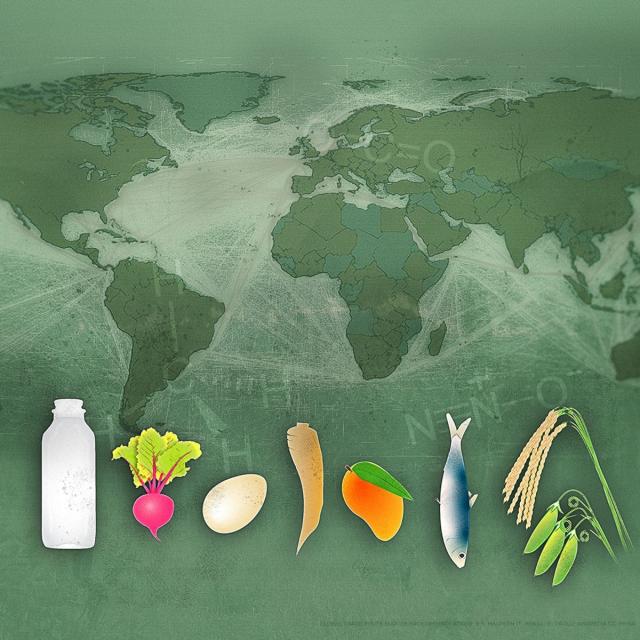
The UN predicts we will be 9-10 billion people on Earth in 2050. Providing so many people with nutritious foods is a massive challenge and one that cannot be met by simply upscaling current practices regarding food production and consumption. Providing humanity with nutritional food is at the center of all decisions related to sustainable development.

Class Deals by MOOC List - Click here and see Coursera's Active Discounts, Deals, and Promo Codes.

Agriculture is responsible for 80% of global deforestation. The food systems release 29% of global greenhouse gasses. We use an area equivalent to North and South America combined for the production of meat for consumption or to produce the food necessary to feed the animals we eat. 70% of fresh water use is related to agriculture. These figures are staggering, and they show us, that we need to rethink and transform the way we produce, distribute and consume food worldwide.
This course focuses on how food systems can become more sustainable. It consists of four modules where each focuses on an essential ingredient towards developing more sustainable food systems: (1) Boosting the small, (2) Transforming the big, (3) Losing less and (4) Eating smarter. In each of these key areas, we will meet people from different countries around the world, who labor every day to find and spread solutions that work.
Connecting the challenges that must be overcome to develop a sustainable global food system with the solutions being developed by the amazing group of people you meet in this course has been a huge source of inspiration for me. I truly believe that the global food system can be transformed to sustainably meet the needs of 9-10 billion people and, with this course, I dare you to join me!

Syllabus

WEEK 1
Introduction to the Global Food System
This first module is an introduction to the challenges facing society when we talk about the global food system. The Doughnut Economics and Planetary Boundaries frameworks are presented and the crucial role of the global food system described. Four areas of intervention in terms of transforming the global food system are identified. In addition, the four “levers” or “tools” identified in the UN 2019 Global Sustainable Development Report that society has at its disposal to transform the global food system are presented: Technology, Governance, Finance and Behavioral Change. These levers are all further developed in the following modules.

WEEK 2
Boosting the Small
One of the essential elements for bringing the global food system onto a sustainable trajectory, is boosting, i.e., improving conditions for small-scale farmers, especially in the Global South. In this module, we look at the major challenges confronting small-scale farmers when it comes to access to information, finance, fertilizers, etc. These challenges can be met through the use of existing technologies, government intervention, and consumer awareness.

WEEK 3
Transforming the big
The second essential element in a sustainable transformation of the global food system takes focuses on changes in industrialized, large-scale agricultural production. These practices must be changed in order to have a sustainable food system. This module identifies some of the kinds of changes needed and presents case studies showing how some actors are beginning the transformation process.

WEEK 4
Losing less
The third essential element for transforming the global food system is reducing food loss and waste. Today, about a third of all of the food produced is never consumed. Thus, no nutritional value was created for the environmental degradation associated with the production of a large percentage of the food produced. If we can limit food loss and waste, it will be possible to stay within our planetary boundaries while feeding the increasing world population. A challenge in reducing this loss and waste is actually climate change. This module examines strategies for reducing food loss and waste.

WEEK 5
Eating Smarter
The fourth and final essential element for achieving a sustainable food system is changing our diets. While an increasing population in the Global South will need access to nutrient-rich foods, the Global North will have to make room for this development by eating smarter. Meat production is especially damaging to the climate and environment. Many people’s health would benefit by eating less meat and it is possible to easily replace meat with alternative sources of protein. This module focuses on when and how it is easiest to change eating habits and what we need to change them to!

WEEK 6
Conclusion: What does transformation really mean?
The Finale. In this module, we examine what it would mean for the global food system if the potentials identified through Boosting the Small, Transforming the Big, Losing Less, and Eating Smarter were to be combined. The module argues that it is possible to develop a global food system that can meet the nutritional needs of 9-10 billion people without destroying the environment and while keeping global warming within the 1.5 - 2 degrees Celcius guardrail identified in the Paris Agreement. Doing so will, however, require a strong focus on transforming the global food system.

Go to Class
MOOC List is learner-supported. When you buy through links on our site, we may earn an affiliate commission.

Related Courses

Public Health Perspectives on Sustainable Diets (Coursera) Coursera
Johns Hopkins University

Public Health Perspectives on Sustainable Diets (Coursera)

What we eat and how we produce that food have significant effects on human health and the sustainability of our planet. But what is a ‘sustainable’ diet? A sustainable diet, as defined by the FAO, promotes health and well-being and provides food security for the present population while sustaining human and natural resources for future generations. This short course looks at the urgent need to address the sustainability of our food systems, including better understanding the complex relationship between diet and climate change. We’ll explore current research on dietary shifts needed in high, middle, and low-income countries to achieve both sustainability and food security goals and discuss evidence-based strategies to promote sustainable diets.

Oct 5th 2026
3 Weeks
Sustainable Food Systems (Coursera) Coursera
University of Illinois at Urbana-Champaign

Sustainable Food Systems (Coursera)

Throughout this course, you will delve into the intricate details of the food production system through a system-thinking lens. You will examine the grand challenges faced by the food, fiber, and natural resource industries, and their repercussions on people, the planet, and profit. By the end of this course, you will have a clear understanding of the concept of systems thinking, be able to explain the three key pillars of sustainability and link these pillars to social, environmental, and economic systems.

Oct 5th 2026
5-12 Weeks
Wind resources for renewable energies (Coursera) Coursera
École Polytechnique

Wind resources for renewable energies (Coursera)

The main goal of this course is to get the necessary knowledge on atmospheric and fluid dynamics in order to quantify the wind resource of a local or regional area. We’ll learn about basic meteorology, the specific dynamics of turbulent boundary layers and some standard techniques to estimate wind resources regardless of the type of turbine used or the level of efficiency achieved.

Oct 5th 2026
4 Weeks
Act on Climate: Steps to Individual, Community, and Political Action (Coursera) Coursera
University of Michigan

Act on Climate: Steps to Individual, Community, and Political Action (Coursera)

Are you concerned about climate change? Would you like to learn how to address and respond to this challenge? If so, this course is for you. Act on Climate: Steps to Individual, Community, and Political Action is intended to help learners understand, address and respond to climate change as individuals and in partnership with their communities and political leaders.

Oct 5th 2026
5-12 Weeks
Natural Attenuation of Groundwater Contaminants: New Paradigms, Technologies, and Applications (Coursera) Coursera
Rice University

Natural Attenuation of Groundwater Contaminants: New Paradigms, Technologies, and Applications (Coursera)

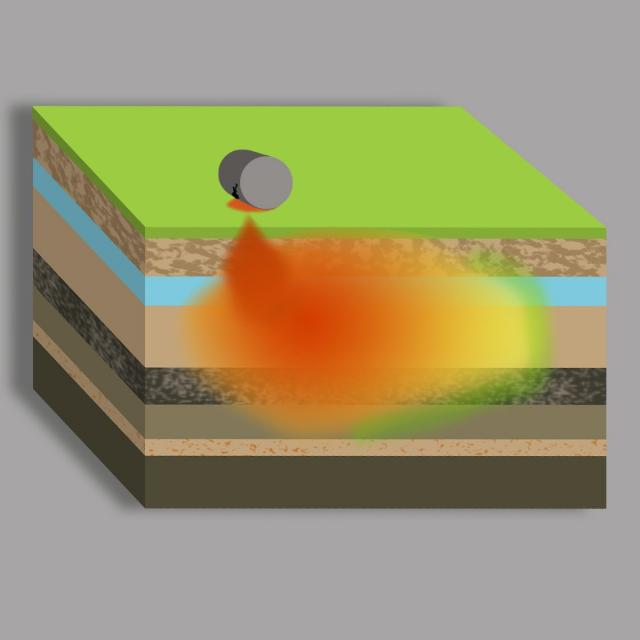
Cleaning up the large number of groundwater contamination sites is a significant and complex environmental challenge. The environmental industry is continuously looking for remediation methods that are both effective and cost-efficient. Over the past 10 years there have been amazing, important developments in our understanding of key attenuation processes and technologies for evaluating natural attenuation processes, and a changing institutional perspective on when and where Monitored Natural Attenuation (MNA) may be applied.

Sep 28th 2026
5-12 Weeks
Circular Economy - Sustainable Materials Management (Coursera) Coursera
Lund University,Delft University of Technology,EIT RawMaterials,VITO,Geological Survey of Denmark and Greenland - GEUS,National Technical University of Athens - NTUA,Ghent University

Circular Economy - Sustainable Materials Management (Coursera)

This course looks at where important materials in products we use every day come from and how these materials can be used more efficiently, longer, and in closed loops. This is the aim of the Circular Economy, but it doesn’t happen on its own. It is the result of choices and strategies by suppliers, designers, businesses, policymakers and all of us as consumers.

Oct 5th 2026
5-12 Weeks
Greening the Economy: Lessons from Scandinavia (Coursera) Coursera
Lund University

Greening the Economy: Lessons from Scandinavia (Coursera)

How can we live a good life on one planet with over seven billion people? This course will explore greening the economy on four levels – individual, business, city, and nation. We will look at the relationships between these levels and give many practical examples of the complexities and solutions across the levels. Scandinavia, a pioneering place advancing sustainability and combating climate change, is a unique starting point for learning about greening the economy. We will learn from many initiatives attempted in Scandinavia since the 1970s, which are all potentially helpful and useful for other countries and contexts.

Oct 5th 2026
5-12 Weeks
ODS y sostenibilidad: una mirada desde los colegios (Coursera) Coursera
Universidad de los Andes

ODS y sostenibilidad: una mirada desde los colegios (Coursera)

En este curso veremos cómo podemos generar cambios y transformaciones (a nivel individual, organizacional y social) para la sostenibilidad desde la educación formal y no-formal. Partiremos del concepto de los Objetivos de Desarrollo Sostenible (ODS) como un marco potente para generar reflexiones críticas, que nos lleven a generar acciones colectivas desde la escuela en pro de la sostenibilidad.

Sep 28th 2026
4 Weeks
Corporate Sustainability. Understanding and Seizing the Strategic Opportunity (Coursera) Coursera
Università Bocconi

Corporate Sustainability. Understanding and Seizing the Strategic Opportunity (Coursera)

In this course, thought leaders in a wide variety of management and economics fields illustrate how to assess and seize the opportunities offered by these global emergencies. They will offer new ways to understand the purpose and the logic of success of the business enterprise in this new context, providing ideas and examples on how to manage the transition process to realize the value creation potential from corporate sustainability for all involved stakeholders.

Oct 5th 2026
5-12 Weeks
Introduction to Complexity Science (Coursera) Coursera
National University of Singapore

Introduction to Complexity Science (Coursera)

This course explores the features of complexity science. Our world is connected by an abundance of complex systems. Across all levels of organizations from physical, biological world to the social world, we may think of the connectivity between individual elements and how they interact and influence each other. For example, how humans transmit pandemics within a group, how cars interact in the traffic system and how networks connect in governmental organizations. Although these systems are diverse and different, they have surprisingly huge features in common.

Oct 5th 2026
5-12 Weeks
Silicon Thin Film Solar Cells (Coursera) Coursera
École Polytechnique

Silicon Thin Film Solar Cells (Coursera)

This course consists of a general presentation of solar cells based on silicon thin films. It is the third MOOC of the photovoltaic series of Ecole polytechnique on Coursera. The general aspects of the photovoltaic field are treated in "Photovoltaic Solar Energy". And the detailed description of the crystalline silicon solar cells can be found in "Physics of Silicon Solar Cells".

Oct 5th 2026
3 Weeks