Oceanography: a key to better understand our world (Coursera)

Oceanography: a key to better understand our world (Coursera)

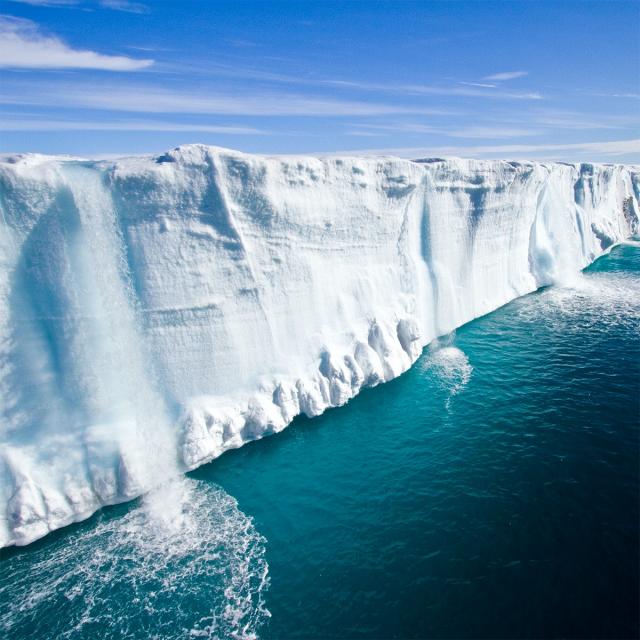
The course for a round the world regatta leads the boats through the Mediterranean Sea and the Atlantic, Southern Indian and South Pacific Oceans. On their voyage, the skippers come across a large variety of oceanographic situations: strong currents, floating ice, wave formations of every kind and biological diversity. In this course the student will learn about the foundations of the science of oceanography. You'll learn about the classification and formation of the ocean floor, how current sea satellite analysis systems work, the chemistry of the oceans and the processes that led to its formation.

Class Deals by MOOC List - Click here and see Coursera's Active Discounts, Deals, and Promo Codes.

To follow this course does not require previous knowledge of oceanography.

Syllabus

WEEK 1
1A - The Mediterranean: a model of an ocean - Temperature, salinity and pressure.
Module 1 addresses some of the fundamental concepts of descriptive oceanography related to the physical characteristics of water: the vertical distribution of temperature and salinity, TS diagram, stability and destabilization of the water column, the formation of water dense and deep, the water masses and circulation. It is necessary also introduces concepts to understand the relationship between the distribution of the mass of water, its surface topography of a regional or larger scale, and called geostrophic circulation, where it plays a fundamental role the Coriolis force. While the concepts presented have general applicability, examples are the Mediterranean, starting with the characteristics of the waters near Barcelona, where it begins and ends the Barcelona World Race, and ending with the general circulation of the water masses around the Mediterranean.

WEEK 2
1B - The Mediterranean: a model of an ocean - Water masses and circulation
In this module you will learn how dense waters and water bodies are formed. Where the Mediterranean will be used as a model of ocean. As well as some of the fundamental concepts of marine dynamics, which is how the Coriolis and pressure gradient force is formed. Besides the importance of dynamic topography and geostrophic flow. Hope will be to your liking.

WEEK 3

  1. The Global Ocean

This module will enter fully into the Global Ocean, will review and generalize the aspects previously referred to in the previous module. We will see the role of the ocean on a global scale, and how we can affect those who live closer or farther from the coast. Try to understand why it is still quite unknown and will glance nose in the marine environment. That is, how it behaves for those living beings, most who live within the ocean or in direct contact with him.

WEEK 4
3A. Satellite oceanography: all eyes on the planet (I)
In this module you will learn the importance of ocean observation by satellite, talk about remote sensing, electromagnetic radiation emitted and reflected, and the importance of their study for navigation.

WEEK 5
3B. Satellite oceanography: All eyes on the planet (II)
This new module will expand the study of oceanography satellite, and microwave as for obtaining information are used. What are they and what is the importance of active sensors. And finally, other applications of satellites and their importance.

WEEK 6

  1. Ocean chemistry: a chemical industry with wall-less pipes

In this section you will learn ocean chemistry what is it? how does it work? What is the vertical axis of the biosphere and the vertical segregació of the elements and how it works? What is carbon carbonate system and what is its relationship with the ocean conveyor belt?. The answers to all these questions will help us understand how the oceans work, the importance for navigation and its relationship to the planet's climate.

WEEK 7

  1. Ocean basins: a memory sustained for millions of years

The result of the evolution of the crust of the Earth: a set of land masses and ocean basins in continuous motion over crust. With a little history we will achieve understand the result of the evolution of the crust of the earth and the diversity of ocean domains: the continental margins to large tanks. Large ocean basins

Go to Class
MOOC List is learner-supported. When you buy through links on our site, we may earn an affiliate commission.

Related Courses

Algae Biotechnology (Coursera) Coursera
University of California, San Diego

Algae Biotechnology (Coursera)

For decades, researchers have been studying microalgae to understand their biological functions and how we can use technology to harness algae’s power to create a wide range of commercial products. In this course, we will cover how synthetic biology, genetic engineering, and metabolic engineering is used in algae biotechnology, and also examine the current state of algae biotechnology research and tools. We’ll also explore some of the common bio-products we can make from algae, and take a look at some real-world algae companies that are using algae biotechnology to create products consumers can buy today.

Aug 17th 2026
5-12 Weeks
Business Sustainability in the Circular Economy (Coursera) Coursera
University of London

Business Sustainability in the Circular Economy (Coursera)

We are surrounded by so much discussion of sustainability that it can sometimes become overwhelming. Important questions include: What role can business have in ensuring the sustainability of the planet? How should business work with society to preserve the environment? These questions will be answered in this course as we explore the meaning of sustainability and its impact on modern organisations as they move to circular ideas to reduce waste, increase recycling and become fit for our modern society.

Aug 17th 2026
3 Weeks
Ecosystem Services: a Method for Sustainable Development (Coursera) Coursera
University of Geneva

Ecosystem Services: a Method for Sustainable Development (Coursera)

Ecosystem services are a way of thinking about – and evaluating – the goods and services provided by nature that contribute to the well-being of humans. This MOOC will cover scientific (technical), economic, and socio-political dimensions of the concept through a mix of theory, case-studies, interviews with specialists and a serious-game.

Aug 10th 2026
5-12 Weeks
Climate Change and Water in Mountains: A Global Concern (Coursera) Coursera
University of Geneva

Climate Change and Water in Mountains: A Global Concern (Coursera)

What is climate change? How are mountain regions affected by the evolution of water resources and their uses? What kind of risks need to be considered? Mountains are recognized as particularly sensitive physical environments where intense and rapid changes have in the past, and may increasingly in the future, place pressure on their resource base.

Aug 10th 2026
5-12 Weeks
Global Warming II: Create Your Own Models in Python (Coursera) Coursera
University of Chicago

Global Warming II: Create Your Own Models in Python (Coursera)

This class provides a series of Python programming exercises intended to explore the use of numerical modeling in the Earth system and climate sciences. The scientific background for these models is presented in a companion class, Global Warming I: The Science and Modeling of Climate Change. This class assumes that you are new to Python programming (and this is indeed a great way to learn Python!), but that you will be able to pick up an elementary knowledge of Python syntax from another class or from on-line tutorials.

Aug 10th 2026
5-12 Weeks
Management of Urban Infrastructures – part 1 (Coursera) Coursera
École Polytechnique Fédérale de Lausanne

Management of Urban Infrastructures – part 1 (Coursera)

Sustainability, Resilience and Efficiency are fundamental considerations for city managers in managing urban infrastructures. Today, more than 3.9 billion people, making up more than 54% of the global population, live in cities. Urbanization is expected to continue in the coming years, raising the urban population to 6.0 billion by 2045. This dramatic increase in urban populations will inevitably increase the demand for energy, mobility (transportation), water, and other urban services in every city around the world. Without functional governance and management structures that ensure efficient, resilient and sustainable performance in cities, the current urbanization growth might become a catastrophic risk threatening the quality of life of the humanity.

Aug 17th 2026
5-12 Weeks
Becoming a changemaker: Introduction to Social Innovation (Coursera) Coursera
University of Cape Town

Becoming a changemaker: Introduction to Social Innovation (Coursera)

This free 6 week course is for anyone who wants to make a difference. Whether you are already familiar with the field of social innovation or social entrepreneurship, working for an organization that wants to increase its social impact, or just starting out, this course will take you on a journey of exploring the complex problems that surround us and how to start thinking about solutions.

Aug 10th 2026
5-12 Weeks
The Effect of Fires on People, Property and the Environment (Coursera) Coursera
University of Maryland, College Park

The Effect of Fires on People, Property and the Environment (Coursera)

Fires impact people, property and the environment in all countries around the world. In some cases, the resulting losses are extraordinary, causing hundreds of deaths, widespread damage to property and contents and significant impacts on the environment. More often, fires may cause a single casualty or affect a single home, though the effects are still highly significant to those affected and collectively are substantial. This course will provide an overview of the challenges posed by fire as well as the fire safety solutions that are available to meet those challenges.

Aug 17th 2026
5-12 Weeks
Strategy and Sustainability (Coursera) Coursera
IESE Business School

Strategy and Sustainability (Coursera)

Business and environmental sustainability are not natural bedfellows. Business is about making money. Sustainability is about protecting the planet. Business is measured in months and quarters. Sustainability often requires significant short term costs to secure a sometimes uncertain long-term benefit. To some activists, all executives are exploitative, selfish one percenters. To some executives, all activists are irresponsible, unyielding extremists.

Aug 17th 2026
5-12 Weeks