Introduction to the Arctic: Climate (Coursera)

Offered by University of Alberta,
Introduction to the Arctic: Climate (Coursera)

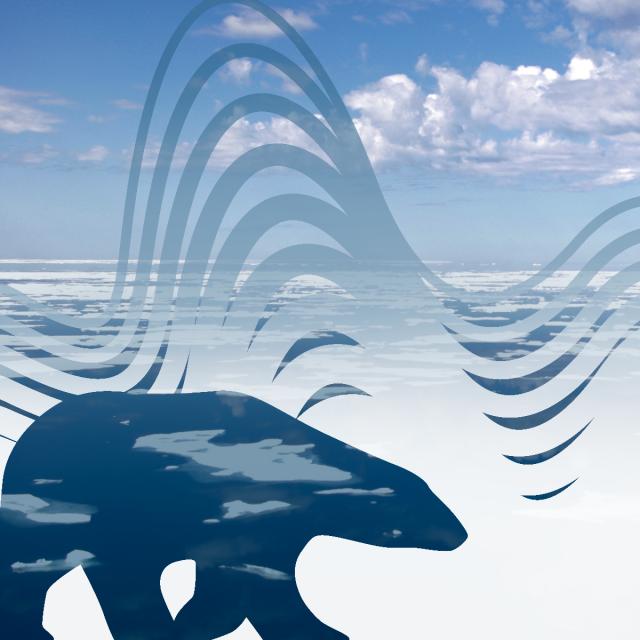
The University of Alberta, the University of Tromso and the University of the Arctic invite you to explore this four week course that examines the environment and climate of the circumpolar North. This course is the result of an international collaboration and provides you with an insight into our planet's North. Following an overview of regional geography, we will focus on the cryosphere (ice), as well as the atmosphere and ocean of the region.

Class Deals by MOOC List - Click here and see Coursera's Active Discounts, Deals, and Promo Codes.

We will learn why the Arctic is cold and ice covered, and how that impacts its climate and ecosystems. We will also consider how the Arctic is connected to the rest of the world. Finally, we will examine present day climate change, the processes driving it, and evidence for it in the Arctic, before looking at the implications in the rapidly evolving North.

Syllabus

WEEK 1
Arctic Environments
This course is about the remarkable northern regions of the earth, the Arctic! Although sometimes considered remote and dangerous, the Arctic is home to many peoples, along with the ecosystems that they coexist with. Researchers from many fields, both scientists and non-scientists, study this vast circumpolar region to understand the environment, peoples, animals, economies, and resources. You’ll soon learn about the environments (the characteristics of the natural world) and climate (the prevailing atmospheric, oceanic and ice conditions) of the world’s North.

WEEK 2
Climate Systems
In this lesson we’ll learn about the climate of the Arctic, and the way the climate interacts with the rest of the Earth system. In Lesson 1, we saw how the Earth receives energy from the sun and how heat is trapped on our planet through the natural greenhouse effect. We will now discuss how this energy is distributed throughout the globe and how it is transferred from the tropics to the poles via the large-scale circulation systems of the atmosphere and the ocean. We’ll learn the difference between the natural and the human-induced greenhouse effect - driven by the input of greenhouse gases created by burning fossil fuels, such as carbon dioxide and methane - and discuss what the future holds for the Arctic’s climate. As you will see, the global climate system is tightly linked and climate change in the Arctic also strongly affects temperate latitudes.

WEEK 3
The Cryosphere
In this lesson, we’ll be learning about the Arctic cryosphere, which is the portion of the Earth’s surface where water occurs in solid forms. Such as snow and ice! In Lesson 2, we talked about atmospheric and oceanic circulation. Now we will learn about when and how ice forms on the surface of the Earth, including such topics as: sea ice, river ice, glaciers , and permafrost. How all this ice formed on the ocean and on (and in) the land? How it relates to the atmosphere and ocean?

WEEK 4
Implications of Climate Change
In this lesson, we’ll be learning about the implications of climate change. Through the first 3 lessons, we’ve learned a great deal about the Arctic environment. This environment is rapidly changing, largely due to industrial human activity throughout the world. You’ll remember the natural greenhouse effect that we discussed in Lesson 1. Carbon dioxide and water vapour are among the naturally occurring greenhouse gases in the atmosphere. They trap outgoing longwave radiation, raising the average temperature of the Earth. We will learn and discuss how sea ice and glaciers react to changes in our atmosphere and oceans. We will then discuss the implications of the changing environment on ecosystems, wildlife and humans.
Go to Class
MOOC List is learner-supported. When you buy through links on our site, we may earn an affiliate commission.

Related Courses

Introduction to Faecal Sludge Management (Coursera) Coursera
École Polytechnique Fédérale de Lausanne

Introduction to Faecal Sludge Management (Coursera)

Do you want learn how to apply concepts of sustainable faecal sludge management (FSM) on a city-wide scale? This course starts with an overview of what faecal sludge is and an introduces you to the engineering fundamentals and required information for the design and selection of technologies. Sanitation solutions are prone to failure if an integrated planning approach that includes stakeholder involvement and the development of appropriate institutional, management and financial arrangements is not implemented.

Aug 10th 2026
5-12 Weeks
Advanced Functional Ceramics (Coursera) Coursera
Yonsei University

Advanced Functional Ceramics (Coursera)

To realize next-generation devices, novel ceramic materials with ultimate physical and chemical properties are required. For this purpose, a few intrinsic and extrinsic approaches for the development of new functional ceramics are proceeding. This course provides the fundamentals of functional ceramics and the materials design rules for developing advanced ceramics with ultimate physical and chemical properties.

Aug 17th 2026
5-12 Weeks
Ressources minérales et transition (Coursera) Coursera
Institut Mines-Telecom

Ressources minérales et transition (Coursera)

Ce MOOC sur les ressources minérales et les transitions invite à se questionner sur la soutenabilité de nos choix technologiques. Les transitions énergétiques et numériques sont en effet confrontées aux enjeux d'approvisionnement des ressources minérales et aux impacts que leur cycle de vie génère sur l’environnement et la société.

Aug 17th 2026
4 Weeks
Ecosystem Services: a Method for Sustainable Development (Coursera) Coursera
University of Geneva

Ecosystem Services: a Method for Sustainable Development (Coursera)

Ecosystem services are a way of thinking about – and evaluating – the goods and services provided by nature that contribute to the well-being of humans. This MOOC will cover scientific (technical), economic, and socio-political dimensions of the concept through a mix of theory, case-studies, interviews with specialists and a serious-game.

Aug 10th 2026
5-12 Weeks
Global Health Security, Solidarity and Sustainability through the International Health Regulations (Coursera) Coursera
University of Geneva

Global Health Security, Solidarity and Sustainability through the International Health Regulations (Coursera)

Welcome to the MOOC "Global Health Security, Solidarity and Sustainability through the International Health Regulations". We are very excited to have you on board and hope you will enjoy the course! In the coming 6 weeks, you will learn about the International Health Regulations (IHR), history of its creation and evolution, its major principles and implementation procedures, as well as challenges and future opportunities.

Aug 17th 2026
5-12 Weeks
Climate Change Mitigation in Developing Countries (Coursera) Coursera
University of Cape Town

Climate Change Mitigation in Developing Countries (Coursera)

This course challenges you to consider how one might lift societies out of poverty while also mitigating greenhouse gas emissions. We explore the inherent complexity of developing country governments wanting to grow their economies in a climate friendly way. You will be introduced to an approach with which to address this challenge. The approach consists of a facilitated process whereby academic researchers and high-level influential actors within society co-produce knowledge. You will track this process in four Latin American countries - Brazil, Chile, Colombia, Peru, and South Africa. You will hear from various professionals about their contexts and the different challenges and opportunities the process includes.

Aug 24th 2026
5-12 Weeks
Algae Biotechnology (Coursera) Coursera
University of California, San Diego

Algae Biotechnology (Coursera)

For decades, researchers have been studying microalgae to understand their biological functions and how we can use technology to harness algae’s power to create a wide range of commercial products. In this course, we will cover how synthetic biology, genetic engineering, and metabolic engineering is used in algae biotechnology, and also examine the current state of algae biotechnology research and tools. We’ll also explore some of the common bio-products we can make from algae, and take a look at some real-world algae companies that are using algae biotechnology to create products consumers can buy today.

Aug 17th 2026
5-12 Weeks
Perspectives in Digital Transformation: Agribusiness (Coursera) Coursera
Inter-American Development Bank - IDB

Perspectives in Digital Transformation: Agribusiness (Coursera)

In this course, you will be learn how to apply the best practices that have been tested by global companies to make the most of the potentialities of digital transformation and its application to your business. Discover what the level of digital maturity is for your organization by identifying current trends in digital transformation, the use of technologies, and the impact on sustainability in the agribusiness sector in Latin America.

Aug 17th 2026
3 Weeks
Wind resources for renewable energies (Coursera) Coursera
École Polytechnique

Wind resources for renewable energies (Coursera)

The main goal of this course is to get the necessary knowledge on atmospheric and fluid dynamics in order to quantify the wind resource of a local or regional area. We’ll learn about basic meteorology, the specific dynamics of turbulent boundary layers and some standard techniques to estimate wind resources regardless of the type of turbine used or the level of efficiency achieved.

Aug 10th 2026
4 Weeks
Greening the Economy: Lessons from Scandinavia (Coursera) Coursera
Lund University

Greening the Economy: Lessons from Scandinavia (Coursera)

How can we live a good life on one planet with over seven billion people? This course will explore greening the economy on four levels – individual, business, city, and nation. We will look at the relationships between these levels and give many practical examples of the complexities and solutions across the levels. Scandinavia, a pioneering place advancing sustainability and combating climate change, is a unique starting point for learning about greening the economy. We will learn from many initiatives attempted in Scandinavia since the 1970s, which are all potentially helpful and useful for other countries and contexts.

Aug 10th 2026
5-12 Weeks
Sustainable Fashion (Coursera) Coursera
Copenhagen Business School

Sustainable Fashion (Coursera)

Sometimes when we say we work with sustainable fashion people look at us like... "Mmmm, is it really possible for something like fashion to be sustainable?" And let's face it, people are right being suspicious. If anything the fashion industry has become increasingly unsustainable over the last decades, using more and more natural resources and creating more and more waste.

Aug 17th 2026
5-12 Weeks