Large Marine Ecosystems: Assessment and Management (Coursera)

Large Marine Ecosystems: Assessment and Management (Coursera)

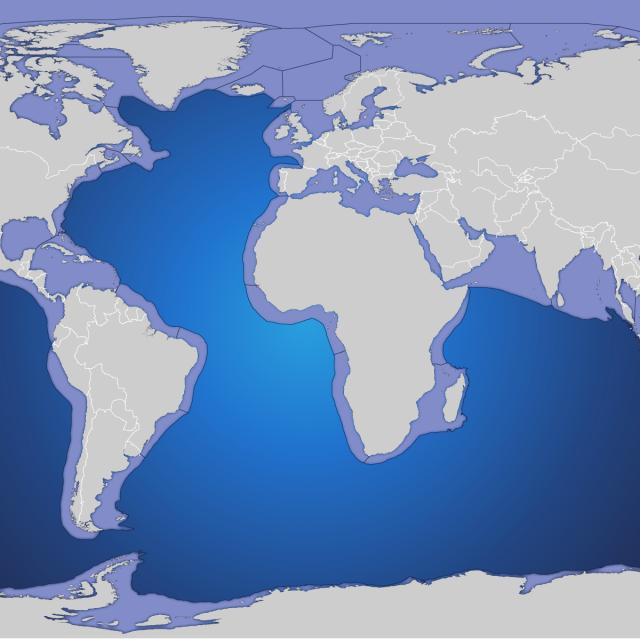
Focusing on the Large Marine Ecosystems (LMEs) of the world, this course will introduce the concept and practice of ecosystem-based management. LMEs occupy areas of coastal ocean at least 200 000 km² or greater in size. These coastal waters produce 12.6 trillion USD in ecosystem goods and services annually and are vitally important for billions of people around the globe.

Class Deals by MOOC List - Click here and see Coursera's Active Discounts, Deals, and Promo Codes.

Because LMEs are bounded by ocean features and are globally linked, management of human activities needs to occur in an integrated fashion across political boundaries and economic sectors (e.g. fishing, shipping, energy, tourism, and mining.) This represents a new type of management approached - shifting from single sector-based to multi-sector assessment and management within the spatial domain of the world's 66 Large Marine Ecosystems. There is global high-level support for this new approach and in this course, we will introduce the concepts and tools for assessing and managing LMEs.
Together, leaders and experts in a global movement to recover and sustain the goods and services of LMEs will introduce you to the mechanisms used for assessment (Transboundary Diagnostic Analysis), planning and implementation (Strategic Action Programme). Based on recent activities in implementation and practice of the LME approach in 22 projects around the globe, we will showcase examples of effective management at this scale, and highlight the challenges and issues. By the end of the online course, we hope you will be able to actively use this knowledge to advance sustainable development of the world’s oceans.
The course was created with the support and input of: the Global Environment Facility (GEF), the United Nations Development Program (UNDP), the National Oceanic and Atmospheric Administration (NOAA), UNESCO-IOC and IW:LEARN.

Syllabus

WEEK 1
What is the Large Marine Ecosystem Approach?
Introducing the Large Marine Ecosystem approach, ecosystem based management principles, and the five modules. There are three topics covered in this first week - ecosystem-based management, the concept of Large Marine Ecosystems, and the 5-module approach to assessment and management. As well as my lectures, there are also summaries of some key readings and links to other resources. We've included practice quizzes to help you recap and test your understanding of the key concepts as we move through the lessons. There is one graded quiz at the end of the week, which carries marks - but you may take the quiz more than once. At the end of this week, and all the other weeks, Dr Kenneth Sherman will share his insights about the topics we have covered.

WEEK 2
The Three Natural Science Modules
In this week, we deal with the three natural science modules within the five module approach.

WEEK 3
The Two Human Dimension Modules
We move onto the two human dimensions of the five module approach.

WEEK 4
Tools and Actions: the Transboundary Diagnostic Analysis and the Strategic Action Programme
This is the heart of the course - delving into the Transboundary Diagnostic Analysis (TDA) and Strategic Action Programme (SAP).

WEEK 5
Implementing transboundary marine Ecosystem-based management (EBM)
Moving into the application of the approaches and the tools we have been discussing - with a description of how LME projects are implemented.

WEEK 6
Taking it home: Examples of best practice
We have included a number of case studies of LMEs, inviting marine ecosystem managers and scientists from across our network to describe their work in implementing EBM.


Go to Class
MOOC List is learner-supported. When you buy through links on our site, we may earn an affiliate commission.

Related Courses

Welcome to Game Theory (Coursera) Coursera
The University of Tokyo

Welcome to Game Theory (Coursera)

This course provides a brief introduction to game theory. Our main goal is to understand the basic ideas behind the key concepts in game theory, such as equilibrium, rationality, and cooperation. The course uses very little mathematics, and it is ideal for those who are looking for a conceptual introduction to game theory. Business competition, political campaigns, the struggle for existence by animals and plants, and so on, can all be regarded as a kind of “game,” in which individuals try to do their best against others.

Oct 5th 2026
4 Weeks
Introduction to Key Constitutional Concepts and Supreme Court Cases (Coursera) Coursera
University of Pennsylvania

Introduction to Key Constitutional Concepts and Supreme Court Cases (Coursera)

This course offers an introduction to the U.S. Constitution and landmark Supreme Court cases interpreting it. It explores the Constitution’s origins, its amendment over the years, and methods of constitutional interpretation. Topics include the nature and structure of the federal government, the powers of the federal government, and individual rights.

Oct 5th 2026
4 Weeks
IUCN Red List of Ecosystems: The Global Standard for Assessing Risks to Ecosystems (FutureLearn) FutureLearn
Deakin University

IUCN Red List of Ecosystems: The Global Standard for Assessing Risks to Ecosystems (FutureLearn)

This course introduces the IUCN Red List of Ecosystems and its successful use and policy impact through real-world case studies. Learn how the Red List of Ecosystems is helping to sustain global biodiversity. Nature is under threat around the world. Understanding where ecosystems are at greatest risk allows us to act to sustain species and ecosystems.

Self Paced
2 Weeks
Tropical Coastal Ecosystems (edX) EdX
University of Queensland,UQx

Tropical Coastal Ecosystems (edX)

Take the challenge and understand problems and solutions to managing tropical coastal ecosystems. Do you want to develop the skills and knowledge needed to help preserve tropical coastal ecosystems? These habitats provide goods and services for hundreds of millions of people but human activities have led to their global decline.

Self Paced
Self-Paced
As above, so below: An introduction to soils, ecosystems and livelihoods in the Tropics (edX) EdX
KU Leuven University,KULeuvenX

As above, so below: An introduction to soils, ecosystems and livelihoods in the Tropics (edX)

The tropics are as beautiful and diverse below-ground as they are above-ground. Learn how to use knowledge about the natural variability in soil properties for the sustainable management of ecosystems and farms. Soils form the foundation of sustainable development. They grow our food, fiber and fuel, are a habitat for organisms, buffer and purify water and safeguard archaeological legacies.

Self Paced
Self-Paced
EPortfolio Self-development Study (EMMA) EMMA
Universitat Oberta de Catalunya

EPortfolio Self-development Study (EMMA)

ePortfolios have become increasingly popular based on their potential to be applied to a wide array of contexts as well as their ability to be used in a great variety of individual or organizational purposes. ePortfolios offer the opportunity to create and manage an online space of digital artefacts that provide evidence of competencies and abilities acquired over a specific period of time. In this way, ePortfolios can be designed to enhance traditional learning and teaching methods, record achievements, the Recognition of Prior Learning (RPL), assist individuals with Personal Development Planning (PDP) or the Personal Career Development (CPD), among others.

Self-Paced
Self-Paced
Ingénierie écologique (FUN) FUN
Université Virtuelle Environnement et Développement - UVED

Ingénierie écologique (FUN)

Restaurer des écosystèmes dégradés, dépolluer des milieux, créer des continuités écologiques, développer une agriculture plus respectueuse de l'environnement, sont autant de défis qui se posent aujourd'hui à nous. Pour y répondre, de plus en plus de réflexions et de pratiques se tournent vers l'ingénierie écologique, solutions que l'on dit "basées sur la nature". Ce MOOC vous propose d'en découvrir les fondements, les enjeux, les outils, les acteurs ainsi que les conditions de mise en œuvre.

No sessions available
4 Weeks
Les Partenariats Public-Privé (PPP): Comment offrir de meilleures infrastructures pour les services publics (Coursera) Coursera
The World Bank

Les Partenariats Public-Privé (PPP): Comment offrir de meilleures infrastructures pour les services publics (Coursera)

Ce cours vous permettra de comprendre les principes clés des PPP et le rôle qu’ils peuvent jouer dans la mise en place de services d’infrastructures, en particulier dans les économies émergentes. Les participants bénéficieront de l’expertise de praticiens, de hauts fonctionnaires d’état, et d’universitaires ayant une véritable expérience de terrain, sur les opportunités et les défis que présentent la mise en place et la maintenance d’infrastructures affectées aux services publics par des PPP efficaces.

Oct 12th 2026
4 Weeks
What is Climate Change? (Coursera) Coursera
University of Colorado Boulder

What is Climate Change? (Coursera)

In this course, learners will become familiar with the scientific evidence that demonstrates human-caused climate change. We will explore how greenhouse gases cause the Earth to warm, and why our recent warming is attributed to human activities. We will also discuss where our climate is headed, including anticipated future temperature, precipitation, and sea level. Learners will engage with the consequences of these changes on our ecosystems, infrastructure, and communities.

Sep 21st 2026
3 Weeks
Villes africaines I: Introduction à la planification urbaine (Coursera) Coursera
École Polytechnique Fédérale de Lausanne

Villes africaines I: Introduction à la planification urbaine (Coursera)

Le cours permet d'apprendre les bases de la planification urbaine à travers ses dimensions techniques, environnementales, sociales, économiques et symboliques. Le cours parle uniquement des villes africaines et même si celles-ci ont valeurs d'exemple pour les ville du Sud, voire toutes les villes, nous nous efforçons à remettre les problématiques dans un contexte africain.

Oct 5th 2026
5-12 Weeks