What is Climate Change? (Coursera)

What is Climate Change? (Coursera)

In this course, learners will become familiar with the scientific evidence that demonstrates human-caused climate change. We will explore how greenhouse gases cause the Earth to warm, and why our recent warming is attributed to human activities. We will also discuss where our climate is headed, including anticipated future temperature, precipitation, and sea level. Learners will engage with the consequences of these changes on our ecosystems, infrastructure, and communities.

Class Deals by MOOC List - Click here and see Coursera's Active Discounts, Deals, and Promo Codes.

We will also identify how political beliefs influence our attitudes about climate change, and apply that knowledge to become better climate communicators.
What You Will Learn

  • Identify the major components of the climate system
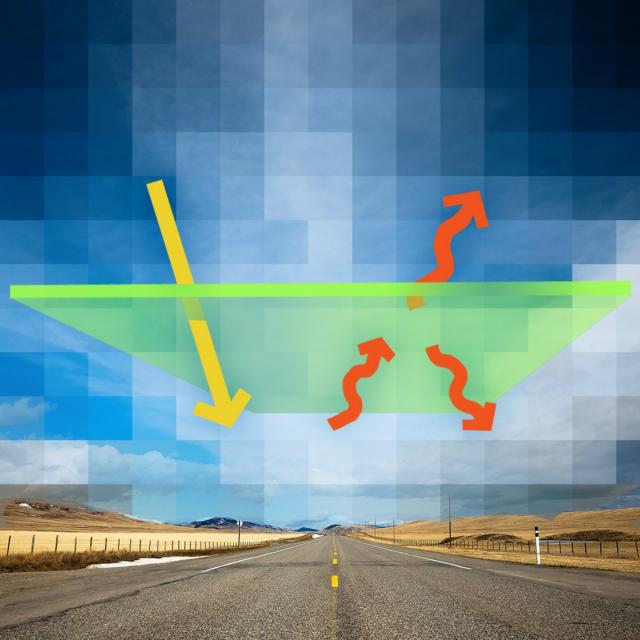
  • Explain the role of anthropogenic greenhouse gas emissions as the drivers of global climate change
  • Identify the primary physical and ecological impacts of climate change
  • Explain the unique process by which scientific information is produced

Course 1 of 3 in the Exploring Our Responses to Climate Change Specialization

Syllabus

WEEK 1
The Climate System and Climate Change
Climate change is real. Scientists agree that human activities are causing the climate to change. Warming will continue in the 21st century, and the amount of warming will be determined by our emissions of greenhouse gases.

WEEK 2
Impacts of Climate Change
The net impact of climate change on ecosystems, infrastructure, and communities is expected to be negative. Many impacts are already occurring, and we expect future warming to exacerbate their effects.

WEEK 3
Attitudes About Climate Change
To stay informed about climate change, it is important to know where to get credible information. It’s also important to understand how scientific information is unique from other types of knowledge. Also, it can be helpful to recognize that others’ opinions on climate are heavily influenced by political affiliation. When engaging with others on climate, information needs to be tailored to take into account your audiences concerns and world views.
Go to Class
MOOC List is learner-supported. When you buy through links on our site, we may earn an affiliate commission.

Related Courses

An Introduction to Global Health (Coursera) Coursera
University of Copenhagen

An Introduction to Global Health (Coursera)

This course will provide you with an overview of the most important health challenges facing the world today. You will gain insight into how challenges have changed over time, we will discuss the likely determinants of such changes and examine future projections. Successful international strategies and programs promoting human health will be highlighted and global health governance structures will be mapped and the role of the key actors explored.

Jun 8th 2026
5-12 Weeks
Climate Solutions: UAE (Coursera) Coursera
University of Edinburgh

Climate Solutions: UAE (Coursera)

Climate Change is one of the greatest threats we face. The impacts of climate change are already being felt around the world, affecting both natural and human systems, and these impacts are expected to become greater in years to come. On this five-week course from the University of Edinburgh, you’ll gain the knowledge and tools you need to make a real difference and help tackle climate change, specifically focusing on the United Arab Emirates (UAE).

Jun 8th 2026
5-12 Weeks
Climate Aware Investing (Coursera) Coursera
EDHEC Business School

Climate Aware Investing (Coursera)

Finance may have a central role to play against climate change on the condition that risks are properly measured and managed. In this course you will be introduced to the latest academic research findings and the most commonly used methods in industry to cope with climate change financial risks. How do we assess these kinds of risks? Can our portfolios perform well and at the same time contribute to the transition towards a low-carbon economy? How do climate change risks affect financial markets?

Jun 1st 2026
5-12 Weeks
Education on climate change: water and soil (Coursera) Coursera
Inter-American Development Bank - IDB

Education on climate change: water and soil (Coursera)

This course delves into the connection between water, climate change, and how living organisms adapt to these shifts. It also explores concepts related to agriculture, food, and food sovereignty. Additionally, it introduces a range of online games that enhance the integration and practical application of the developing conceptual knowledge.

Jun 8th 2026
3 Weeks
Cities, Climate and Change: Pathways and Opportunities (Coursera) Coursera
Lund University

Cities, Climate and Change: Pathways and Opportunities (Coursera)

How can we develop transformative skills and capacities to achieve climate neutral and sustainable cities? This course explores how we can design, create and achieve climate neutral and sustainable cities. We embrace the “mission to the moon” approach for tackling greenhouse emissions from cities putting an emphasis on pathways and opportunities. We utilise insights and inspiration from Sweden, Europe and around the world.

Jun 8th 2026
5-12 Weeks
Introduction to Sustainability (Coursera) Coursera
University of Illinois at Urbana-Champaign

Introduction to Sustainability (Coursera)

This course introduces the academic approach of Sustainability and explores how today’s human societies can endure in the face of global change, ecosystem degradation and resource limitations. The course focuses on key knowledge areas of sustainability theory and practice, including population, ecosystems, global change, energy, agriculture, water, environmental economics and policy, ethics, and cultural history.

Jun 8th 2026
5-12 Weeks
Qualitative and Quantitative Analysis of Disaster Risk (Coursera) Coursera
Inter-American Development Bank - IDB

Qualitative and Quantitative Analysis of Disaster Risk (Coursera)

This course will teach you how to identify and analyze the risks of natural disasters in infrastructure projects. You will learn about different types of qualitative and quantitative analysis, as well as the methodologies and tools used to conduct these analyses in order to apply the knowledge. You will review risk models and comprehensive risk management.

Jun 8th 2026
2 Weeks
The Sustainable Development Goals – A global, transdisciplinary vision for the future (Coursera) Coursera
University of Copenhagen

The Sustainable Development Goals – A global, transdisciplinary vision for the future (Coursera)

In 2015, the UN launched the 17 Sustainable Development Goals (SDGs). Adopted by 193 member states, the goals represent an important international step in setting humanity on a trajectory towards sustainable development. Within this course, you will get a historical overview of how sustainability has been understood, as well as a thorough introduction to the SDGs – what they are, how progress can be measured, and how the SDGs are relevant for the management of the global systems supporting humanity. The course will examine how various societal actors are responding to and implementing the SDGs.

Jun 8th 2026
3 Weeks
Our Energy Future (Coursera) Coursera
University of California, San Diego

Our Energy Future (Coursera)

This course is designed to introduce students to the issues of energy in the 21st century – including food and fuels – which are inseparably linked – and will discuss energy production and utilization from the biology, engineering, economics, climate science, and social science perspectives. This course will cover the current production and utilization of energy, as well as the consequences of this use, examining finite fossil energy reserves, how food and energy are linked, impacts on the environment and climate, and the social and economic impacts of our present energy and food production and use.

Jun 1st 2026
5-12 Weeks
Agroforestry IV: Climate, Carbon Storage and Agroforestry (Coursera) Coursera
University of Florida

Agroforestry IV: Climate, Carbon Storage and Agroforestry (Coursera)

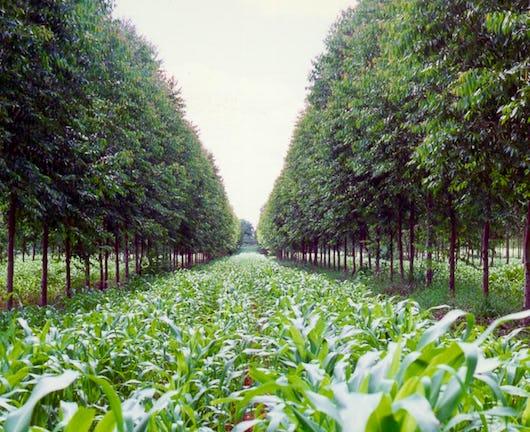
Welcome to Agroforestry IV: Climate Change, Carbon Storage and Agroforestry Systems, a detailed review of fundamental principles and best practices for successful agroforestry projects. This interdisciplinary module, presented by leading experts in the field, is the fourth in the five-module course covering the various aspects of agroforestry including the global distribution of the practices, their underlying principles, and major scientific advances during the past nearly five decades.

Jun 8th 2026
1 Week