Climate Change and Water in Mountains: A Global Concern (Coursera)

Offered by University of Geneva,
Climate Change and Water in Mountains: A Global Concern (Coursera)

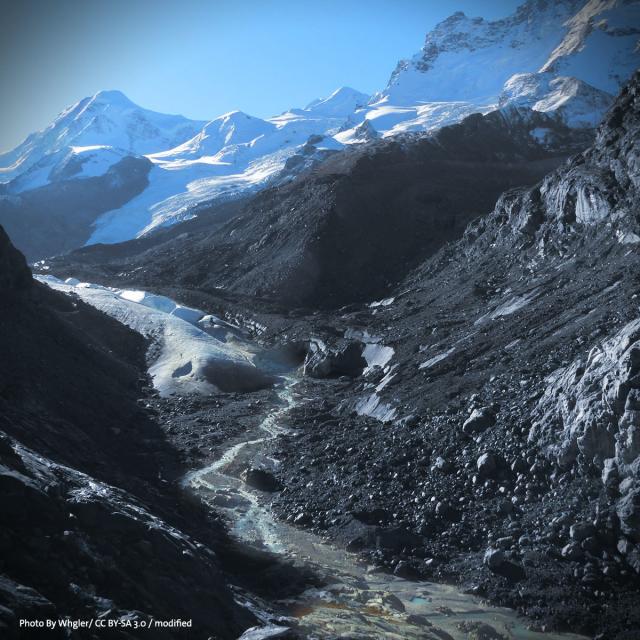
What is climate change? How are mountain regions affected by the evolution of water resources and their uses? What kind of risks need to be considered? Mountains are recognized as particularly sensitive physical environments where intense and rapid changes have in the past, and may increasingly in the future, place pressure on their resource base.

Class Deals by MOOC List - Click here and see Coursera's Active Discounts, Deals, and Promo Codes.

In this context, a team of roughly 100 experts worked from 2008 to 2013 for the European ACQWA project which was coordinated by the University of Geneva. The primary objectives of the project were to assess the impacts of a changing climate on the quantity and quality of water originating in mountain regions, particularly where snow- and ice melt represent a large, sometimes the largest, streamflow component. A further objective of the project was to determine the potential disruptions to water-dependent economic activities related to the climate impacts on hydrological systems, and to propose a portfolio of possible adaptation strategies.
This particular MOOC is inspired by the ACQWA Project and offers a better understanding of climate change, its impacts on the quality and quantity of water in mountain regions and the risks related to changing water resources. From an interdisciplinary perspective, the participation of twenty-five instructors from five different countries (Switzerland, England, South Korea, India and Nepal) and fourteen institutions (UNIGE, RTS, UNIFR, UZH, ETHZ, Meteodat GmbH, WGMS, Imperial College London, Agroscope, République et Canton de Genève, Yonsei University, IHCAP, ICIMOD, SDC, FOEN) highlights the diversity of both theoretical and practical viewpoints related to these issues.
By the end of this course, you will be able :

  • to define the general concept of climate change in mountain regions
  • to understand the concepts associated with climate change such as adaptation and water governance strategies
  • to consider the impacts of climate change on water resources in mountain regions
  • to identify the impacts of climate change on hydropower, agriculture, aquatic ecosystems and health
  • to enumerate risks that can occur in mountain areas and lead to disruptions in water availability and use.

Your acquired knowledge will be evaluated through multiple-choice quizzes at the end of each unit of the course.
This MOOC on “Climate Change and Water in Mountain Regions: A Global Concern” was initiated and financed by the University of Geneva, through its Institute for Environmental Sciences.
We look forward to you joining us!

Syllabus

WEEK 1
Unit 0: Welcome Unit
View an introductory video on the ACQWA Project, read key introductory documents, say hello to your fellow classmates and express your interest in the topic.

WEEK 2
Unit 1: Introduction to climate change
In this module, you will learn about the functioning of the climate system, in particular the numerous interacting components such as the atmosphere, the oceans, the cryosphere and the biosphere. Physical mechanisms that can disrupt climate on different time and space scales will be outlined, and the concepts underlying anthropogenic climate change will be introduced. Following a brief overview of how climate simulation models function, you will be able to see what may be the evolution of climate over coming decades in response to increases in greenhouse-gases in the atmosphere, and what are the limits and uncertainties to these model projections.

WEEK 3
Unit 2: Impacts of Climate Change on Water Resources
In this unit, you will learn about observed trends in glacier retreat and changes in mass balance. Different methods of mass balance measurements are presented. Ongoing and projected climate change by the end of the century will have fundamental consequences on the cryosphere. In this module, you will realize what the consequences of glacier retreat are on glacial runoff regimes and on global scale runoff. You will become familiar with changes in snow cover in different mountain regions of the World. Further, the basic mechanics of glacier flow and an overview of processes leading to glacier instability will allow you to understand how climate variables, among other factors, may potentially modify the frequency of glacial lake drainage, glacier surge and the break-off of glaciers. Finally, this module discusses how the calving of ice sheets will impact sea level rise and where uncertainties persist in the projection of these changes.

WEEK 4
UNIT 3: Impacts of Climate Change on Water Uses
In this module, you will learn about the impacts of climate change on different sectors, such as the economy, the environment or the health. In mountain regions, glacier retreat, warmer waters or modified runoffs will for instance impact hydroelectric installations production, biodiversity and all kind of living organisms. In the lowlands, the agricultural sector will also have to deal with water scarcity to reduce yield vulnerability. You will also see that warmer temperatures can be beneficial to certain plants like grapevine but that it can also enhance the development of insect pest generating damages or favour disease transmissions to human being.

WEEK 5
Unit 4: Recommendations for Adaptation and Water Governance Strategies
In this module, you will learn about the concepts of social network analysis and adaptive capacities, and the central role they play in the implementation of adaptation strategies and in the reduction of ecosystems vulnerability to climate change. The ecosystems will illustrate the mutual benefits that can occur between actors and mechanisms. Concrete examples and case studies will emphasize the mutual benefits and the mechanisms that can occur in a network of actors and how those interactions can help in reducing natural risk disasters.

WEEK 6
Unit 5: Risk management
In this module, you will learn about the role ongoing climatic changes have on the occurrence of natural hazards in high mountain environments, and how their temporal frequency and magnitude is being influenced by the ongoing warming. Concrete examples and case studies will emphasize these changes in process behavior of glacier lake outburst floods (GLOFs), debris flows and rockfalls. In addition to the illustration of changes in the physical processes, this module will also illustrate how Switzerland is coping with these changes and how natural hazard risk is being addressed by the Federal Office for the Environment (FOEN) through an Integrated Risk Management.

Go to Class
MOOC List is learner-supported. When you buy through links on our site, we may earn an affiliate commission.

Related Courses

Global Health Security, Solidarity and Sustainability through the International Health Regulations (Coursera) Coursera
University of Geneva

Global Health Security, Solidarity and Sustainability through the International Health Regulations (Coursera)

Welcome to the MOOC "Global Health Security, Solidarity and Sustainability through the International Health Regulations". We are very excited to have you on board and hope you will enjoy the course! In the coming 6 weeks, you will learn about the International Health Regulations (IHR), history of its creation and evolution, its major principles and implementation procedures, as well as challenges and future opportunities.

Aug 17th 2026
5-12 Weeks
Coberturas de riesgo con futuros y opciones para agrobusiness (Coursera) Coursera
Universidad Austral

Coberturas de riesgo con futuros y opciones para agrobusiness (Coursera)

La producción agropecuaria y agroalimentaria tiene una gran importancia en las economías latinoamericanas tanto desde el punto de vista de su participación en el PBI de los países, generación de empleo y exportaciones , ya que en muchos casos las exportaciones agroalimentarias constituyen una fuente muy importante de divisas en las economías latinoamericanas.

Aug 17th 2026
4 Weeks
Business Sustainability in the Circular Economy (Coursera) Coursera
University of London

Business Sustainability in the Circular Economy (Coursera)

We are surrounded by so much discussion of sustainability that it can sometimes become overwhelming. Important questions include: What role can business have in ensuring the sustainability of the planet? How should business work with society to preserve the environment? These questions will be answered in this course as we explore the meaning of sustainability and its impact on modern organisations as they move to circular ideas to reduce waste, increase recycling and become fit for our modern society.

Aug 17th 2026
3 Weeks
Sustainable Vikings: Sustainability & Corporate Social Responsibility in Scandinavia (Coursera) Coursera
Copenhagen Business School

Sustainable Vikings: Sustainability & Corporate Social Responsibility in Scandinavia (Coursera)

This course gives you immediate access to the world leading sustainability and corporate social responsibility (CSR) practices. Scandinavian firms dominate the major sustainability and CSR performance indicators including the Dow Jones Sustainability Index (DJSI). In this course we explore the concepts of sustainability and CSR and focus attention on how Scandinavian firms, like Novo Nordisk, have achieved superior sustainability and CSR performances.

Aug 17th 2026
5-12 Weeks
Algae Biotechnology (Coursera) Coursera
University of California, San Diego

Algae Biotechnology (Coursera)

For decades, researchers have been studying microalgae to understand their biological functions and how we can use technology to harness algae’s power to create a wide range of commercial products. In this course, we will cover how synthetic biology, genetic engineering, and metabolic engineering is used in algae biotechnology, and also examine the current state of algae biotechnology research and tools. We’ll also explore some of the common bio-products we can make from algae, and take a look at some real-world algae companies that are using algae biotechnology to create products consumers can buy today.

Aug 17th 2026
5-12 Weeks
Advanced Functional Ceramics (Coursera) Coursera
Yonsei University

Advanced Functional Ceramics (Coursera)

To realize next-generation devices, novel ceramic materials with ultimate physical and chemical properties are required. For this purpose, a few intrinsic and extrinsic approaches for the development of new functional ceramics are proceeding. This course provides the fundamentals of functional ceramics and the materials design rules for developing advanced ceramics with ultimate physical and chemical properties.

Aug 17th 2026
5-12 Weeks
Philosophy, Science and Religion: Religion and Science (Coursera) Coursera
University of Edinburgh

Philosophy, Science and Religion: Religion and Science (Coursera)

Philosophy, Science and Religion mark three of the most fundamental modes of thinking about the world and our place in it. Are these modes incompatible? Put another way: is the intellectually responsible thing to do to ‘pick sides’ and identify with one of these approaches at the exclusion of others? Or, are they complementary or mutually supportive? As is typical of questions of such magnitude, the devil is in the details. For example, it is important to work out what is really distinctive about each of these ways of inquiring about the world. In order to gain some clarity here, we’ll be investigating what some of the current leading thinkers in philosophy, science and religion are actually doing.

Aug 11th 2026
5-12 Weeks
The Effect of Fires on People, Property and the Environment (Coursera) Coursera
University of Maryland, College Park

The Effect of Fires on People, Property and the Environment (Coursera)

Fires impact people, property and the environment in all countries around the world. In some cases, the resulting losses are extraordinary, causing hundreds of deaths, widespread damage to property and contents and significant impacts on the environment. More often, fires may cause a single casualty or affect a single home, though the effects are still highly significant to those affected and collectively are substantial. This course will provide an overview of the challenges posed by fire as well as the fire safety solutions that are available to meet those challenges.

Aug 17th 2026
5-12 Weeks
Climate Solutions (Coursera) Coursera
University of Edinburgh

Climate Solutions (Coursera)

This short course has been designed by award-winning climate change experts and passionate educators to give you an insight into the greatest challenge of our era. Through completing the course, you'll gain a deeper understanding of core climate concepts such as mitigation, adaptation, climate justice, carbon footprinting, net zero and solutions frameworks.

Aug 17th 2026
5-12 Weeks
Biosphere 2 Science for the Future of Our Planet (Coursera) Coursera
University of Arizona

Biosphere 2 Science for the Future of Our Planet (Coursera)

Are you ready to take an incredible journey around Planet Earth and beyond? In this course, you will delve into a world of innovative science and learn from a team of Biosphere 2 and University of Arizona researchers. From plants and soils, to oceans and rainforests, the Moon, Mars, and more, this course is an exciting opportunity for anyone interested in science and Earth stewardship.

Aug 17th 2026
5-12 Weeks