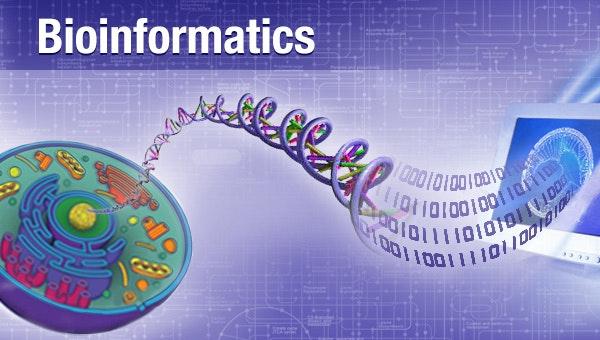
Bioinformatics: Introduction and Methods 生物信息学: 导论与方法 (Coursera)

Offered by Peking University,
Bioinformatics: Introduction and Methods 生物信息学: 导论与方法 (Coursera)

A big welcome to “Bioinformatics: Introduction and Methods” from Peking University! In this MOOC you will become familiar with the concepts and computational methods in the exciting interdisciplinary field of bioinformatics and their applications in biology, the knowledge and skills in bioinformatics you acquired will help you in your future study and research.

Class Deals by MOOC List - Click here and see Coursera's Active Discounts, Deals, and Promo Codes.

Syllabus

WEEK 1
Introduction and History of Bioinformatics
Welcome to “Bioinformatics: Introduction and Methods! Upon completion of this module you will be able to: become familiar with the essential concepts of bioinformatics; explore the history of this young area; experience how rapidly bioinformatics is growing. Our supplementary materials will give you a better understanding of the course lectures through they are not required in quizzes or exams

WEEK 2
Sequence Alignment
Upon completion of this module, you will be able to: describe dynamic programming based sequence alignment algorithms; differentiate between the Needleman-Wunsch algorithm for global alignment and the Smith-Waterman algorithm for local alignment; examine the principles behind gap penalty and time complexity calculation which is crucial for you to apply current bioinformatic tools in your research; experience the discovery of Smith-Waterman algorithm with Dr. Michael Waterman himself.

WEEK 3
Sequence Database Search
Upon completion of this module, you will be able to: become familiar with sequence databse search and most common databases; explore the algoritm behind BLAST and the evaluation of BLAST results; ajdust BLAST parameters base on your own research project.

WEEK 4
Markov Model
Upon completion of this module, you will be able to: recognize state transitions, Markov chain and Markov models; create a hidden Markov model by yourself; make predictuions in a real biological problem with hidden Markov model.

WEEK 5
Next Generation Sequencing (NGS): Mapping of Reads From Resequencing and Calling of Genetic Variants
Upon completion of this module, you will be able to: describe the features of NGS; associate NGS results you get with the methods for reads mapping and models for variant calling; examine pipelines in NGS data analysis; experience how real NGS data were analyzed using bioinformatic tools. This module is required before entering Module 8.

WEEK 6
Functional Prediction of Genetic Variants
Upon completion of this module you will able to: describe what is variant prediction and how to carry out variant predictions; associate variant databases with your own research projects after you get a list of variants; recognize different principles behind prediction tools and know how to use tools such as SIFT, Polyphen and SAPRED according to your won scientific problem.

WEEK 7
Mid-term Exam

WEEK 8
Next Generation Sequencing: Transcriptome Analysis, and RNA-Seq
Upon completion of this module, you will be able to: describe how transcriptome data were generated; master the algorithm used in transcriptome analysis; explore how the RNA-seq data were analyzed. This module is required before entering Module 9.

WEEK 9
Prediction and Analysis of Noncoding RNA
Upon completion of this module, you will be able to: Analyze non-coding RNAs from transcriptome data; identify long noncoding RNA (lncRNA) from NGS data and predict their functions.

WEEK 10
Ontology and Identification of Molecular Pathways
Upon completion of this module, you will be able to: define ontology and gene ontology, explore KEGG pathway databses; examine annotations in Gene Ontology; identify pathways with KOBAS and apply the pipeline to drug addition study.

WEEK 11
Bioinformatics Database and Software Resources
Upon completion of this module, you will be able to describe the most important bioinformatic resources including databases and software tools; explore both centralized resources such as NCBI, EBI, UCSC genome browser and lots of individual resources; associate all your bioinformatic problems with certain resources to refer to.

WEEK 12
Origination of New Genes
Upon completion of this case study module, you will be able to: experience how to apply bioinformatic data, methods and analyses to study an important problem in evolutionary biology; examine how to detect and study the origination, evolution and function of species-specific new genes; create phylogenetic trees with your own data (not required) with Dr. Manyuan Long, a world-renowned pioneer and expert on new genes from University of Chicago.

WEEK 13
Evolution function analysis of DNA methyltransferase
Upon completion of this case study module, you will be able to: experience how to use bioinformatic methods to study the function and evolution of DNA methylases; share with Dr. Gang Pei, president of Tongji University and member of the Chinese Academy of Science, the experiences in scientific research and thought about MOOC.

WEEK 14
Final Exam

Go to Class
MOOC List is learner-supported. When you buy through links on our site, we may earn an affiliate commission.

Related Courses

Probabilistic Graphical Models 1: Representation (Coursera) Coursera
Stanford University

Probabilistic Graphical Models 1: Representation (Coursera)

Probabilistic graphical models (PGMs) are a rich framework for encoding probability distributions over complex domains: joint (multivariate) distributions over large numbers of random variables that interact with each other. These representations sit at the intersection of statistics and computer science, relying on concepts from probability theory, graph algorithms, machine learning, and more. They are the basis for the state-of-the-art methods in a wide variety of applications, such as medical diagnosis, image understanding, speech recognition, natural language processing, and many, many more. They are also a foundational tool in formulating many machine learning problems.

Aug 3rd 2026
5-12 Weeks
Bioinformatic Methods II (Coursera) Coursera
University of Toronto

Bioinformatic Methods II (Coursera)

Large-scale biology projects such as the sequencing of the human genome and gene expression surveys using RNA-seq, microarrays and other technologies have created a wealth of data for biologists. However, the challenge facing scientists is analyzing and even accessing these data to extract useful information pertaining to the system being studied. This course focuses on employing existing bioinformatic resources – mainly web-based programs and databases – to access the wealth of data to answer questions relevant to the average biologist, and is highly hands-on.

Aug 3rd 2026
5-12 Weeks
Science & Religion 101 (Coursera) Coursera
University of Alberta

Science & Religion 101 (Coursera)

This course examines the nature of both science and religion and attempts to explore the possible relationships between them. The primary purpose is to dispel the popular myth that science and religion are entrenched in a never-ending conflict. As a result, this course argues that if the limits of both science and religion are respected, then their relationship can be complementary.

Aug 3rd 2026
5-12 Weeks
Intellectual Humility: Theory (Coursera) Coursera
University of Edinburgh

Intellectual Humility: Theory (Coursera)

Faced with difficult questions people often tend to dismiss and marginalize dissent. Political and moral disagreements can be incredibly polarizing, and sometimes even dangerous. And whether it’s Christian fundamentalism, Islamic extremism, or militant atheism, religious dialogue remains tinted by arrogance, dogma, and ignorance. The world needs more people who are sensitive to reasons both for and against their beliefs, and are willing to consider the possibility that their political, religious and moral beliefs might be mistaken. The world needs more intellectual humility.

Aug 3rd 2026
3 Weeks
Introduction to Genomic Technologies (Coursera) Coursera
Johns Hopkins University

Introduction to Genomic Technologies (Coursera)

This course introduces you to the basic biology of modern genomics and the experimental tools that we use to measure it. We'll introduce the Central Dogma of Molecular Biology and cover how next-generation sequencing can be used to measure DNA, RNA, and epigenetic patterns. You'll also get an introduction to the key concepts in computing and data science that you'll need to understand how data from next-generation sequencing experiments are generated and analyzed.

Aug 17th 2026
4 Weeks
Philosophy of Science (Coursera) Coursera
University of Pennsylvania

Philosophy of Science (Coursera)

For the last four centuries, scientists have aimed to provide us with an understanding of the world around us. By all appearances, science has made substantial progress during this time. But is this progress real or illusory? And if it is real, how has this progress been made? This four-week course will consider these important questions.

Aug 10th 2026
4 Weeks
Constructivism and Mathematics, Science, and Technology Education (Coursera) Coursera
University of Illinois at Urbana-Champaign

Constructivism and Mathematics, Science, and Technology Education (Coursera)

This course is designed to help participants examine the implications of constructivism for learning and teaching in science, mathematics, and technology focused areas. Course readings, discussions, and assignments will examine constructivist views of learning, research on students' ideas and idea-based interactions, research on instructional approaches taking student ideas into account, and challenges in implementing constructivist perspectives in instruction.

Aug 17th 2026
5-12 Weeks
Bugs 101: Insect-Human Interactions (Coursera) Coursera
University of Alberta

Bugs 101: Insect-Human Interactions (Coursera)

Of all the animals on earth, which are the strongest for their size? What about the fastest? Who were the first animals to evolve flight? Insects take all of these titles and more! As the most abundant animals on the planet, insects and other arthropods affect our lives in so many ways. From beneficial interactions like pollination and biological pest control, to the transmission of life threatening diseases; this course will teach you about the big ways that these little arthropods impact our lives.

Aug 17th 2026
13-24 Weeks
Genome Sequencing (Bioinformatics II) (Coursera) Coursera
University of California, San Diego

Genome Sequencing (Bioinformatics II) (Coursera)

You may have heard a lot about genome sequencing and its potential to usher in an era of personalized medicine, but what does it mean to sequence a genome? Biologists still cannot read the nucleotides of an entire genome as you would read a book from beginning to end. However, they can read short pieces of DNA. In this course, we will see how graph theory can be used to assemble genomes from these short pieces. We will further learn about brute force algorithms and apply them to sequencing mini-proteins called antibiotics.

Aug 17th 2026
5-12 Weeks
Introduction to Genetics and Evolution (Coursera) Coursera
Duke University

Introduction to Genetics and Evolution (Coursera)

Introduction to Genetics and Evolution is a college-level class being offered simultaneously to new students at Duke University. The course gives interested people a very basic overview of some principles behind these very fundamental areas of biology. We often hear about new "genome sequences," commercial kits that can tell you about your ancestry (including pre-human) from your DNA or disease predispositions, debates about the truth of evolution, why animals behave the way they do, and how people found "genetic evidence for natural selection." This course provides the basic biology you need to understand all of these issues better, tries to clarify some misconceptions, and tries to prepare students for future, more advanced coursework in Biology (and especially evolutionary genetics). No prior coursework is assumed.

Aug 3rd 2026
5-12 Weeks