Analyzing the Universe (Coursera)

Offered by Rutgers University,
Analyzing the Universe (Coursera)

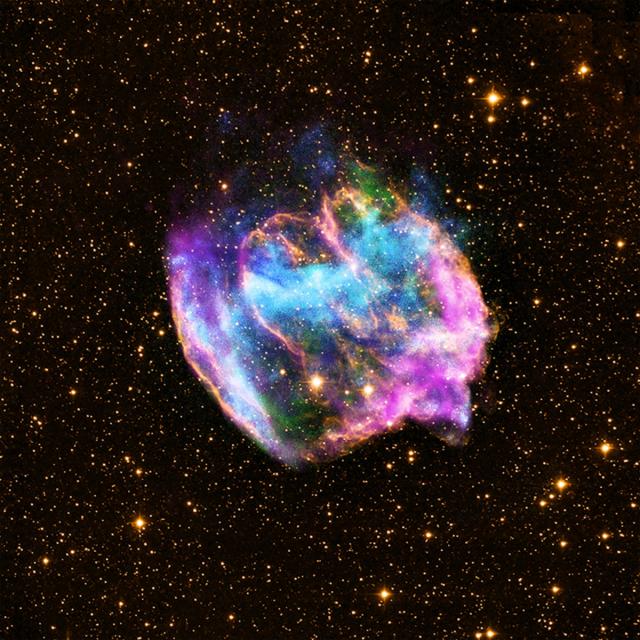
Using publicly available data from NASA of actual satellite observations of astronomical x-ray sources, we explore some of the mysteries of the cosmos, including neutron stars, black holes, quasars and supernovae. We will analyze energy spectra and time series data to understand how these incredible objects work. We utilize an imaging tool called DS9 to explore the amazing diversity of astronomical observations that have made x-ray astronomy one of the most active and exciting fields of scientific investigation in the past 50 years.

Class Deals by MOOC List - Click here and see Coursera's Active Discounts, Deals, and Promo Codes.

Each week we will explore a different facet of x-ray astronomy. Beginning with an introduction to the nature of image formation, we then move on to examples of how our imaging program, DS9, can aid our understanding of real satellite data. You will using the actual data that scientists use when doing their work. Nothing is "canned". You will be able to appreciate the excitement that astronomers felt when they made their important discoveries concerning periodic binary x-ray sources, supernovae and their remnants, and extragalactic sources that have shaped our understanding of cosmology.

Syllabus

WEEK 1
Light and the Nature of Images....Plus, an Introduction to DS9
Welcome to Week 1 of "Analyzing the Universe!" This week we explore the nature of light, and how we get astronomical information from the images we obtain. The lectures and "wiki" material address these themes: light, image formation, and DS9. Dive right in!

WEEK 2
Basic Astronomical Data and a DS9 Smorgasbord
Welcome to week two of "Analyzing the Universe". This week we will be exploring some of the means we have at our disposal to find out many things about the stars. It is really quite incredible that these tiny pinpoints of light can yield so much information about their nature and about the structure of the Universe as a whole. And if this is your first visit to the course, welcome and jump right in!

WEEK 3
Stellar Evolution and White Dwarfs
This week is our first in-depth look at an x-ray source, and it involves a white dwarf in a binary system. So sharpen up your detective skills, keep your copy of DS9 at the ready, and let's get down to business. It should be an exciting week.

WEEK 4
Orbits, Gravity, and Clocks in the Sky
This week we turn our attention to another fascinating cosmic source, discovered in the infancy of x-ray astronomy: Cen X-3. In so doing, we will see how binary stars can determine and influence many of the interesting and surprising features of our observations.

WEEK 5
Supernovae, Our Cosmic Recycling Centers
This week, we will be examining supernovae, and their remnants. These fascinating objects are the breeding grounds for future stars, and were the sources of virtually all the atoms that make up our solar neighborhood. Every atom of calcium in every bone in your body, for example, was once shot out of a supernova, billions of years ago.

WEEK 6
To the Ends of the Universe; Quasars, 3C273, and beyond
This week we wrap things up with trips to galaxies and exotic objects, seen long ago and far away. The mysterious quasars provide clues about the way our Universe is evolving in time. They are incredible objects (actually, come to think of it, what isn't incredible in the x-ray sky?) discovered almost exactly a half century ago, quite by accident. We will explore the astonishingly prodigious x-ray output of 3C 273, one of the nearest ones, at a mere 2.5 billion light years away.


Go to Class
MOOC List is learner-supported. When you buy through links on our site, we may earn an affiliate commission.

Related Courses

Global Warming I: The Science and Modeling of Climate Change (Coursera) Coursera
University of Chicago

Global Warming I: The Science and Modeling of Climate Change (Coursera)

This class describes the science of global warming and the forecast for humans’ impact on Earth’s climate. Intended for an audience without much scientific background but a healthy sense of curiosity, the class brings together insights and perspectives from physics, chemistry, biology, earth and atmospheric sciences, and even some economics—all based on a foundation of simple mathematics (algebra).

Jul 27th 2026
5-12 Weeks
The Diversity of Exoplanets (Coursera) Coursera
University of Geneva

The Diversity of Exoplanets (Coursera)

In this MOOC, you will have the opportunity to practice several methods of detection and characterisation of exoplanets. You will discover their statistical properties and the current state of knowledge we have in this very recent field of research. You will also understand the limitations and biases of the different detection techniques.

Jul 27th 2026
5-12 Weeks
Introduction to Particle Accelerators (NPAP MOOC) (Coursera) Coursera
Lund University

Introduction to Particle Accelerators (NPAP MOOC) (Coursera)

Welcome to the Nordic Particle Accelerator Program's (NPAP) Massive Open Online Courses and to the fascinating world of particle accelerators! Did you know that in the year of 2000 there were more than 15 000 particle accelerators in the world? Yet, today it has grown to more than 30 000 of them! A third of the particle accelerators are dedicated to medical applications, such as radio therapy, and a half are used for ion implantation in semiconductor devices.

Aug 3rd 2026
5-12 Weeks
Tesoros de la Física y sus Descubridores I (Coursera) Coursera
Universidad de los Andes

Tesoros de la Física y sus Descubridores I (Coursera)

¿Sabes cómo vuelan los aviones, tan pesados y no se caen mientras vuelan? ¿Sabes que viajamos por el espacio sobre el planeta Tierra que se traslada y gira muy rápido y no lo percibimos? ¿O acaso, notas efectos de su movimiento? ¿Cuál es nuestro lugar en el universo? ¿Podemos viajar en el tiempo? ¡Preguntas, muchas preguntas! Con espíritu de descubridores nuestra curiosidad nos motiva a buscar respuestas, a explorar nuestro entorno, a entrar a lo desconocido y hallar nuevo conocimiento.

Aug 3rd 2026
5-12 Weeks
The History of Medicine: Philosophy, Science, and Psychology (Coursera) Coursera
University of California, Santa Cruz

The History of Medicine: Philosophy, Science, and Psychology (Coursera)

"History of Medicine" provides an accessible historical and interdisciplinary perspective on medicine, focused primarily upon therapy and practice, to achieve better understanding of the scope, practice, and limits of medicine. Medicine is defined as the treatment of disease. Human attempts to understand and treat disease will be seen as evolving from the spiritual and mystical practices of the distant past, to the rational approach of the Classical World, and finally to the scientific thinking of the Renaissance and beyond.

Aug 3rd 2026
5-12 Weeks
Teaching in University Science Laboratories (Developing Best Practice) (Coursera) Coursera
University of Amsterdam

Teaching in University Science Laboratories (Developing Best Practice) (Coursera)

This course is developed to improve the effectiveness of laboratory classes in higher education. It aims to support teachers to improve their teaching skills for active learning in university science laboratory courses. It will show you how laboratory sessions can differ with respect to their aim and expected learning outcomes, how to engage students for learning and how to cope with their different levels of pre-knowledge and experience and probe their understanding. Last but not least it will show how you could assess students in laboratory courses.

Aug 3rd 2026
5-12 Weeks
Introduction to Genetics and Evolution (Coursera) Coursera
Duke University

Introduction to Genetics and Evolution (Coursera)

Introduction to Genetics and Evolution is a college-level class being offered simultaneously to new students at Duke University. The course gives interested people a very basic overview of some principles behind these very fundamental areas of biology. We often hear about new "genome sequences," commercial kits that can tell you about your ancestry (including pre-human) from your DNA or disease predispositions, debates about the truth of evolution, why animals behave the way they do, and how people found "genetic evidence for natural selection." This course provides the basic biology you need to understand all of these issues better, tries to clarify some misconceptions, and tries to prepare students for future, more advanced coursework in Biology (and especially evolutionary genetics). No prior coursework is assumed.

Aug 3rd 2026
5-12 Weeks
Toxicology 21: Scientific Applications (Coursera) Coursera
Johns Hopkins University

Toxicology 21: Scientific Applications (Coursera)

This course familiarizes students with the novel concepts being used to revamp regulatory toxicology in response to a breakthrough National Research Council Report “Toxicity Testing in the 21st Century: A Vision and a Strategy.” We present the latest developments in the field of toxicology—the shift from animal testing toward human relevant, high content, high-throughput integrative testing strategies. Active programs from EPA, NIH, and the global scientific community illustrate the dynamics of safety sciences.

Aug 3rd 2026
5-12 Weeks
Science Literacy (Coursera) Coursera
University of Alberta

Science Literacy (Coursera)

Fake news or good science? In a world where we have access to unlimited information, it is hard to sift through the echo chamber of opinions fueled by emotions and personal biases, rather than scientific evidence. Science Literacy will teach you about the process of science, how to think critically, how to differentiate science from pseudoscience, how indigenous wisdom can inform science, how to understand and design a scientific study, and how to critically evaluate scientific communication in the media.

Jul 27th 2026
5-12 Weeks