Electrodynamics: An Introduction (Coursera)

Electrodynamics: An Introduction (Coursera)

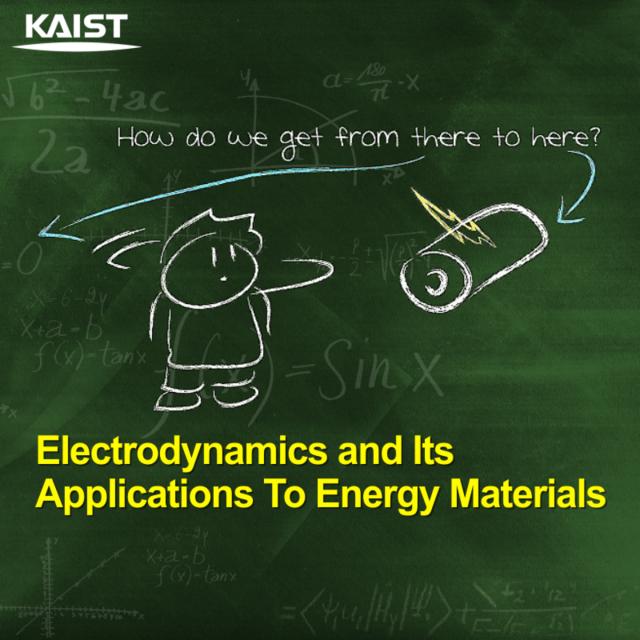
The depth and breadth of electromagnetism, the foundation for many fields including materials science, electrical engineering, and physical chemistry, requires a long, steep, and steady learning curve. This course aims to bridge the gap between the fundamental principles taught in electromagnetism and its practical application to specific fields such as materials, physics, and chemistry related to energy storage and harvesting.

Class Deals by MOOC List - Click here and see Coursera's Active Discounts, Deals, and Promo Codes.

The goal of Electrodynamics: An Introduction is to not only teach electromagnetism but also introduce some mathematical tools which can be used to solve problems in the subject. Within these lecture notes, we review vector calculus and explain how to use fields to visualize the topics we cover. This course is dynamic, as the lectures continuously build on previous notes and a variety of explanations are presented for each solution. Since this is a lower level course, we will focus on the simple concept of electrostatics. This has applications in exploring intermolecular forces, and qualities of capacitors. Through this, we relate electromagnetism to more conventionally studied topics and its application to specific research topics related to energy storage and harvesting.
Course 1 of 4 in the Electrodynamics Specialization.

Syllabus

WEEK 1
Introduction and Basics of Electrostatics
In this module, electrodynamics is introduced by examining the different forces and explaining which are related to electric forces. Furthermore, fields are defined and we differentiate between scalar and vector fields. We cover laws that constitute electrodynamics, specifically Maxwell's equations and the Lorentz force. After explaining how these topics can be illustrated, we also cover how relativity relates to the subject material.

WEEK 2
Introduction to differential calculus of vector fields
This module mainly covers the mathematics behind differential forms of equations. We introduce the ∇ operator and show how it can be used in mathematics. Then, the ∇ operator is proved to be a vector. The Maxwell equations are rewritten in derivative form, and the concepts of divergence and curl are introduced. Finally, we examine the Laplace operator, and other forms of the ∇ operator applied twice.

WEEK 3
Introduction to Vector Integral Calculus
This module explains line integrals and presents some equations where they are important. We explain what the flux and circulation of a field are conceptually and how they can be obtain using the divergence and curl through Gauss' and Stokes' theorems respectively. Finally, we explain the qualities of divergence and curl free fields.

WEEK 4
Introduction to Electrostatic Solutions
This module covers how to simplify Maxwell's equations in the scenario of electrostatics. Then, we discuss how the electric potential can be used and why using a relative value is useful for certain calculations. The flux out of different geometries is presented, as well as how to display field lines and equipotential surfaces.

WEEK 5
The Application of Gauss' Law
This module focusses primarily on electric fields. First, we talk about the mathematical requirements for equilibrium and the implications of finding equilibrium for point charges. Then we move on to describe the electric field coming from different geometries. Finally, we compare the electric fields inside and outside of a conductor and how they create the phenomenon of electric shielding.

Go to Class
MOOC List is learner-supported. When you buy through links on our site, we may earn an affiliate commission.

Related Courses

Nanotechnology and Nanosensors, Part 1 (Coursera) Coursera
Technion - Israel Institute of Technology

Nanotechnology and Nanosensors, Part 1 (Coursera)

Nanotechnology and nanosensors are broad, interdisciplinary areas that encompass (bio)chemistry, physics, biology, materials science, electrical engineering and more. The present course will provide a survey on some of the fundamental principles behind nanotechnology and nanomaterials and their vital role in novel sensing properties and applications. The course will discuss interesting interdisciplinary scientific and engineering knowledge at the nanoscale to understand fundamental physical differences at the nanosensors.

Aug 10th 2026
5-12 Weeks
Understanding Modern Physics III: Simplicity and Complexity (Coursera) Coursera
The Hong Kong University of Science and Technology - HKUST

Understanding Modern Physics III: Simplicity and Complexity (Coursera)

The 20th century was known as the century of physics. In the past 120 years, concepts such as space, time, energy, entropy and particles were understood to much deeper levels. New paradigms of thinking such as relativity and quantum mechanics emerged. This course is the third course in the Understanding Modern Physics series, which covers an introduction to action principle, fundamental particle physics, entropy & information and complexity.

Aug 10th 2026
4 Weeks
Quantum Optics 1 : Single Photons (Coursera) Coursera
École Polytechnique

Quantum Optics 1 : Single Photons (Coursera)

This course gives you access to basic tools and concepts to understand research articles and books on modern quantum optics. You will learn about quantization of light, formalism to describe quantum states of light without any classical analogue, and observables allowing one to demonstrate typical quantum properties of these states. These tools will be applied to the emblematic case of a one-photon wave packet, which behaves both as a particle and a wave.

Aug 10th 2026
5-12 Weeks
Particle Physics: an Introduction (Coursera) Coursera
University of Geneva

Particle Physics: an Introduction (Coursera)

This course introduces you to subatomic physics, i.e. the physics of nuclei and particles. More specifically, the following questions are addressed: What are the concepts of particle physics and how are they implemented?; What are the properties of atomic nuclei and how can one use them?; How does one accelerate and detect particles and measure their properties?; What does one learn from particle reactions at high energies and particle decays?; How do electromagnetic interactions work and how can one use them?; How do strong interactions work and why are they difficult to understand?; How do weak interactions work and why are they so special?; What is the mass of objects at the subatomic level and how does the Higgs boson intervene?; How does one search for new phenomena beyond the known ones?; What can one learn from particle physics concerning astrophysics and the Universe as a whole?

Aug 10th 2026
5-12 Weeks
Física: Vectores, Trabajo y Energía (Coursera) Coursera
Tecnológico de Monterrey

Física: Vectores, Trabajo y Energía (Coursera)

Este curso provee al estudiante con conceptos y herramientas matemáticas para modelar problemas en física, que al aplicar podrá enfrentar con éxito los cursos de física universitarios. Así pues, la filosofía de este curso consiste en cubrir temas conceptuales relativos a la Física y desarrollar tu capacidad de aprender y aplicarlos en tu vida profesional.

Aug 17th 2026
5-12 Weeks
Mechanics: Motion, Forces, Energy and Gravity, from Particles to Planets (Coursera) Coursera
UNSW Sydney - University of New South Wales

Mechanics: Motion, Forces, Energy and Gravity, from Particles to Planets (Coursera)

Most of the phenomena in the world around you are, at the fundamental level, based on physics, and much of physics is based on mechanics. Mechanics begins by quantifying motion, and then explaining it in terms of forces, energy and momentum. This allows us to analyse the operation of many familiar phenomena around us, but also the mechanics of planets, stars and galaxies.

Aug 17th 2026
5-12 Weeks
Energy Harvesting (Coursera) Coursera
Sungkyunkwan University - SKKU

Energy Harvesting (Coursera)

Joining this course presents opportunity to learn about energy harvesting that refers to a technology that converts the energy discarded in our daily lives into useful electrical energy that we can use. As we all know, most of low-power electronics, such as remote sensors, are driven by batteries. However, even when it comes to long-lasting batteries, they face an issue that is a regular replacement. It can turn out to be costly as there are hundreds of sensors in remote locations.

Aug 10th 2026
4 Weeks
Mécanique du point matériel (Coursera) Coursera
École Polytechnique Fédérale de Lausanne

Mécanique du point matériel (Coursera)

Pour illustrer les concepts introduits dans la première partie, on traite ici des problèmes pour lesquels le système mécanique peut être considéré comme un point matériel. Cette partie couvre notamment les problèmes à traiter en coordonnées cylindriques ou sphériques, le problème des orbites des planètes et les référentiels accélérés.

Aug 10th 2026
5-12 Weeks
Introduction to Sustainability (Coursera) Coursera
University of Illinois at Urbana-Champaign

Introduction to Sustainability (Coursera)

This course introduces the academic approach of Sustainability and explores how today’s human societies can endure in the face of global change, ecosystem degradation and resource limitations. The course focuses on key knowledge areas of sustainability theory and practice, including population, ecosystems, global change, energy, agriculture, water, environmental economics and policy, ethics, and cultural history.

Aug 3rd 2026
5-12 Weeks
Ecological and Energy Transitions in Southern Countries (Coursera) Coursera
École normale supérieure

Ecological and Energy Transitions in Southern Countries (Coursera)

This MOOC is at the junction between the development of Southern countries and sustainable development. It has: 1) a macroeconomic and financial dimension, developed by Gael Giraud and Alain Grandjean; 2) an ecological and climatic dimension, developed by David Claessen and ENS speakers; and 3) a focus on Southern countries, developed by AFD speakers.

Aug 17th 2026
5-12 Weeks