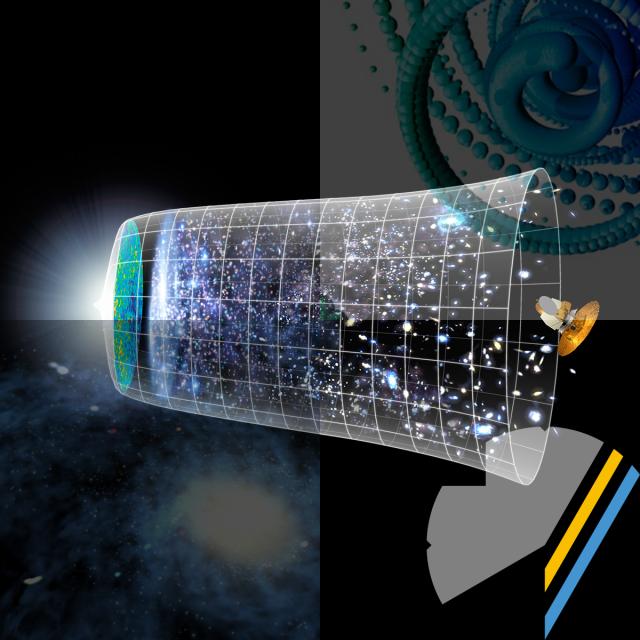
Astronomy: Exploring Time and Space (Coursera)

Offered by University of Arizona,
Astronomy: Exploring Time and Space (Coursera)

This course is designed for anyone who is interested in learning more about modern astronomy. We will help you get up to date on the most recent astronomical discoveries while also providing support at an introductory level for those who have no background in science.

Class Deals by MOOC List - Click here and see Coursera's Active Discounts, Deals, and Promo Codes.

Syllabus

WEEK 1
Astronomy: Exploring Time and Space
Here you can find all of the introductory information, course syllabus, and current announcements.

WEEK 2
Science and History
Science combines logic and evidence to increase our understanding of the natural world, including remote and inaccessible regions of space and time.

WEEK 3
The Night Sky
Astronomy is the oldest science, and its history shows a growing realization of our insignificant status in a vast and ancient universe.

WEEK 4
The Tools of Astronomy
A continuing revolution in telescope design and construction is giving astronomers an unprecedented set of tools for exploring the universe.

WEEK 5
Matter and Radiation
Astronomers harvest information across the electromagnetic spectrum, using spectra to measure the composition of distant objects and diagnose extreme physical conditions.

WEEK 6
The Solar System
Space probes have visited most planets in the Solar System, and orbiters and rovers are homing in on the habitability of Mars. Space exploration is entering an entrepreneurial phase that might let us venture beyond the Solar System.

WEEK 7
Exoplanets
In the last few years, thousands of extrasolar planets have been discovered, including some that are Earth-like and possibly habitable.

WEEK 8
Star Birth and Death
Stars are the crucibles of heavy element creation, and the chaotic regions of their birth are being understood though long wavelength observations. Gravity is the ultimate victor in the life story of any star, leaving behind the exotic end states of white dwarfs, neutron stars, and black holes.

WEEK 9
Galaxies
The architecture of the Milky Way galaxy is that of a disk, a bulge, and a halo, with the entire assemblage bound by enigmatic dark matter. Every galaxy contains a supermassive black hole, and entire population of galaxies is sculpted by gravity into subtle structures on large scales.

WEEK 10
Cosmology
The expanding universe points back to an extraordinary state of extremely high density and temperature called the big bang.

WEEK 11
Life in the Universe
The Earth gives us a ringside seat on the physical, chemical, geological, and biological evolution of a dynamic terrestrial planet. The abundance of terrestrial planets in remote solar systems motivates the search for life and technology elsewhere in the universe.

Go to Class
MOOC List is learner-supported. When you buy through links on our site, we may earn an affiliate commission.

Related Courses

Introduction to Thermodynamics: Transferring Energy from Here to There (Coursera) Coursera
University of Michigan

Introduction to Thermodynamics: Transferring Energy from Here to There (Coursera)

This course provides an introduction to the most powerful engineering principles you will ever learn - Thermodynamics: the science of transferring energy from one place or form to another place or form. We will introduce the tools you need to analyze energy systems from solar panels, to engines, to insulated coffee mugs. More specifically, we will cover the topics of mass and energy conservation principles; first law analysis of control mass and control volume systems; properties and behavior of pure substances; and applications to thermodynamic systems operating at steady state conditions.

Jul 27th 2026
5-12 Weeks
Analyzing the Universe (Coursera) Coursera
Rutgers University

Analyzing the Universe (Coursera)

Using publicly available data from NASA of actual satellite observations of astronomical x-ray sources, we explore some of the mysteries of the cosmos, including neutron stars, black holes, quasars and supernovae. We will analyze energy spectra and time series data to understand how these incredible objects work. We utilize an imaging tool called DS9 to explore the amazing diversity of astronomical observations that have made x-ray astronomy one of the most active and exciting fields of scientific investigation in the past 50 years.

Aug 3rd 2026
5-12 Weeks
Chemical Biology (Coursera) Coursera
University of Geneva

Chemical Biology (Coursera)

Chemical biology is a burgeoning field that has rapidly risen to prominence. This surge of interest has been fuelled by chemical biology’s applicability to understanding critical processes in live cells or model organisms in real time. This success has arisen because chemical biology straddles a nexus between chemistry, biology, and physics. Thus, chemical biology can harness rapid chemistry to observe or perturb biological processes, that are in turn reported using physical assays, all in an otherwise unperturbed living entity. Although its boundaries are endless, the multidisciplinary nature of chemical biology can make the field seem daunting; we beg to differ! Here, we deconstruct chemical biology into its core components, and repackage the material.

Aug 3rd 2026
5-12 Weeks
Chemical Engineering Thermodynamics 2 (Coursera) Coursera
Korea Advanced Institute of Science and Technology - KAIST

Chemical Engineering Thermodynamics 2 (Coursera)

An appreciation of thermodynamics is required to become a chemical and biomolecular engineer. Thermodynamics can assess the viability of a process and is one of the curriculum's most essential topics. The principles are utilized in following engineering courses (kinetics, mass transfer, design, materials) and are applicable to numerous engineering disciplines. The increased emphasis on energy usage and transformation as a result of rising demand, diminishing supply, and global warming necessitates that the engineers who will tackle these issues have a firm grasp of thermodynamics.

Aug 3rd 2026
5-12 Weeks
Off the Clock: The Many Faces of Time (Coursera) Coursera
Universidade de São Paulo, Brasil

Off the Clock: The Many Faces of Time (Coursera)

“Off the Clock: The Many Faces of Time” presents a transdisciplinary and transnational set of perspectives on time. This MOOC aims to expand the learners' understanding of the many facets of time, from our human experience of the present to plants, animals, bacteria, and even art’s relationship to the passing of time. This course equips learners with multidisciplinary tools for thinking about time in human and more-than-human constituents. To do so, the course asks and answers three key questions.

Aug 3rd 2026
5-12 Weeks
Understanding Modern Physics II: Quantum Mechanics and Atoms (Coursera) Coursera
The Hong Kong University of Science and Technology - HKUST

Understanding Modern Physics II: Quantum Mechanics and Atoms (Coursera)

The 20th century was known as the century of physics. In the past 120 years, concepts such as space, time, energy, entropy and particles were understood to much deeper levels. New paradigms of thinking such as relativity and quantum mechanics emerged. This course is the second course in the Understanding Modern Physics series, which covers an introduction to quantum mechanics, atomic physics and quantum information.

Aug 3rd 2026
4 Weeks
Introduction to High-Throughput Materials Development (Coursera) Coursera
Georgia Institute of Technology

Introduction to High-Throughput Materials Development (Coursera)

This course is an introduction to high-throughput experimental methods that accelerate the discovery and development of new materials. This course is an introduction to high-throughput experimental methods that accelerate the discovery and development of new materials. It is well recognized that the discovery of new materials is the key to solving many technological problems faced by industry and society. These problems include energy production and utilization, carbon capture, tissue engineering, and sustainable materials production, among many others. This course will introduce the learner to a remarkable new approach to materials discovery and characterization: high-throughput materials development (HTMD).

Aug 3rd 2026
5-12 Weeks