Philosophy, Science and Religion: Religion and Science (Coursera)

Philosophy, Science and Religion: Religion and Science (Coursera)

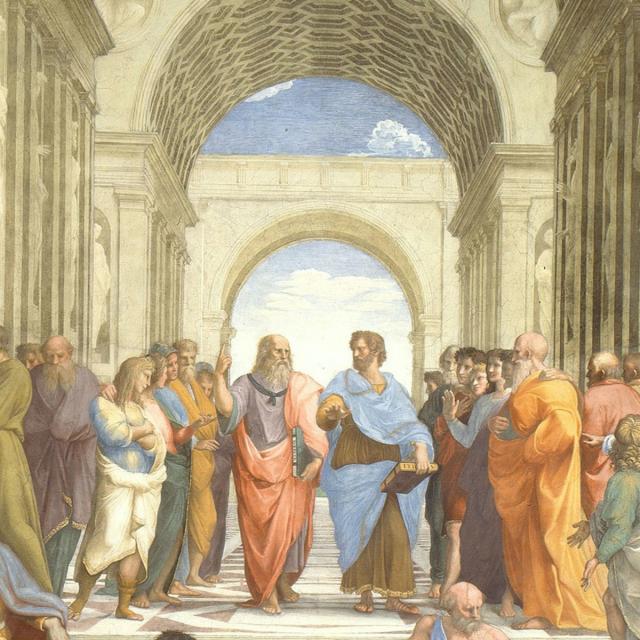
Philosophy, Science and Religion mark three of the most fundamental modes of thinking about the world and our place in it. Are these modes incompatible? Put another way: is the intellectually responsible thing to do to ‘pick sides’ and identify with one of these approaches at the exclusion of others? Or, are they complementary or mutually supportive? As is typical of questions of such magnitude, the devil is in the details. For example, it is important to work out what is really distinctive about each of these ways of inquiring about the world. In order to gain some clarity here, we’ll be investigating what some of the current leading thinkers in philosophy, science and religion are actually doing.

Class Deals by MOOC List - Click here and see Coursera's Active Discounts, Deals, and Promo Codes.

This course, entitled ‘Religion and Science’, is the third of three related courses in our Philosophy, Science and Religion Online series. The course will address five themes, each presented by an expert in the area.

  1. Science, Religion, and the Origin of the Universe (Professor Tim Maudlin, NYU )
  2. Buddhism and Science (Professor Graham Priest, CUNY)
  3. Evolution and Design (Dr Kevin Scharp, St Andrews)
  4. Sin Suffering and Salvation: Evolutions Thorny Issues (Dr Bethany Sollereder, Oxford)
  5. Human Uniqueness in Science, Theology, and Ethics (Professor David Clough, Chester)

The first and second courses in the Philosophy, Science and Religion series, 'Science and Philosophy' and 'Philosophy and Religion' were launched in 2017 and you can sign up to these at any time. It is not necessary to have completed these courses to follow this course. However, completing all three courses will give you a broader understanding of this fascinating topic. Look for:
Philosophy, Science and Religion I: Science and Philosophy
Philosophy, Science and Religion II: Philosophy and Religion
Upon successful completion of all three courses, students will:
(1) Understand the main parameters at stake in the current debate between science and religion.
(2) Have some familiarity with the relevant areas of science that feature in the debate—including cosmology, evolution, and the neurosciences—and will have begun to engage with them conceptually.
(3) Have encountered key philosophical approaches to the interface between science and religion, and will have had the opportunity to engage them in practice.
(4) Have embarked constructively in cross-disciplinary conversations.
(5) Have demonstrated an openness to personal growth through a commitment to dialogue across intellectual and spiritual boundaries.

Syllabus

WEEK 1
Introduction to the Course

WEEK 2
Science, Religion and the Origins of the Universe
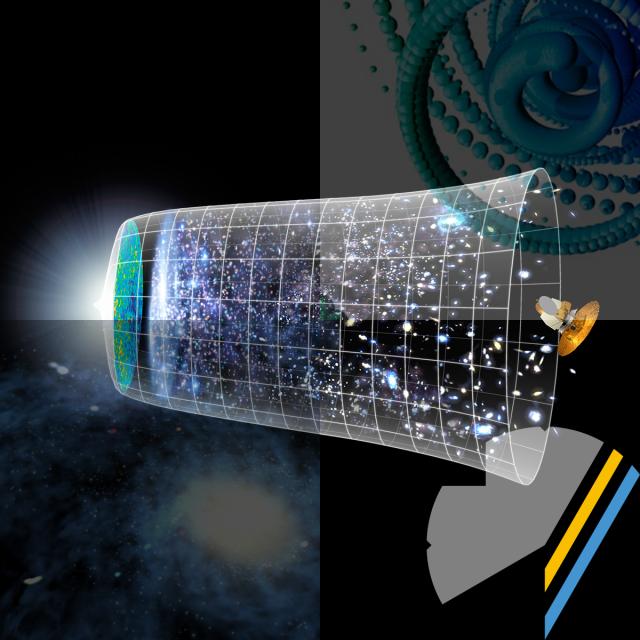
In this module Tim Maudlin, Professor of the Foundations of Physics at New York University (NYU) discusses stories and theories of the origins of the cosmos from the perspectives of various religions, philosophy, and Science. He then explains what our physics tells us and compares this to the origins stories.

WEEK 3
Buddhism and Science
In this module Graham Priest, Distinguished Professor of Philosophy at City University of New York (CUNY) outlines the background and basic ideas of Buddhism. After considering whether Buddhism is compatible with science, he goes on to explain how some aspects of Buddhist thought are relevant to contemporary logic and science.

WEEK 4
Evolution and Design
In this module Kevin Scharp, Reader in Philosophy at the University of St Andrews introduces one of the most common arguments for Intelligent Design and considers whether it is a genuine scientific competitor to, or can even be made compatible with, evolutionary theory. He then presents the Fine-Tuning Argument for the existence of God and its criticisms.

WEEK 5
Sin, Suffering and Salvation: Evolution’s Thorny Issues
In this module Bethany Sollereder, Postdoctoral Fellow in Science and Religion at the University of Oxford considers questions that arise in Christian Theology as a result of accepting evolutionary theory.

WEEK 6
Human Uniqueness in Science, Theology and Ethics
In this module David Clough, Professor of Theological Ethics at Chester University investigates three ways in which the question of human uniqueness prompt questions at the interface of theology and science. It asks ‘Are we alone in the Universe?’, ‘Where did we come from?’ and ‘Are we just animals?’ before going on to consider the ethical implications of a theological approach that engages these questions seriously.

Go to Class
MOOC List is learner-supported. When you buy through links on our site, we may earn an affiliate commission.

Related Courses

East Asian Religions & Ecology (Coursera) Coursera
Yale University

East Asian Religions & Ecology (Coursera)

At first glance the fields of religion and ecology may seem and unlikely pairing, but a deeper consideration reveals the two have a great deal to contribute to one another and are indeed inextricably linked. Religions recognize the unity and interdependence of humans with nature. Ecological sciences affirm this deep interconnection with the natural world. This partnership can inspire work for the wellbeing of the Earth community

Jun 8th 2026
5-12 Weeks
Science & Religion 101 (Coursera) Coursera
University of Alberta

Science & Religion 101 (Coursera)

This course examines the nature of both science and religion and attempts to explore the possible relationships between them. The primary purpose is to dispel the popular myth that science and religion are entrenched in a never-ending conflict. As a result, this course argues that if the limits of both science and religion are respected, then their relationship can be complementary.

Jun 8th 2026
5-12 Weeks
Teaching Science at University (Coursera) Coursera
University of Zurich

Teaching Science at University (Coursera)

This course will prepare you for teaching science in higher education. In this MOOC you will learn to make your knowledge as an excellent researcher accessible to your students. We will show you how to communicate science to novices as well as advanced students in science.

Jun 8th 2026
5-12 Weeks
Introduction to Genetics and Evolution (Coursera) Coursera
Duke University

Introduction to Genetics and Evolution (Coursera)

Introduction to Genetics and Evolution is a college-level class being offered simultaneously to new students at Duke University. The course gives interested people a very basic overview of some principles behind these very fundamental areas of biology. We often hear about new "genome sequences," commercial kits that can tell you about your ancestry (including pre-human) from your DNA or disease predispositions, debates about the truth of evolution, why animals behave the way they do, and how people found "genetic evidence for natural selection." This course provides the basic biology you need to understand all of these issues better, tries to clarify some misconceptions, and tries to prepare students for future, more advanced coursework in Biology (and especially evolutionary genetics). No prior coursework is assumed.

Jun 8th 2026
5-12 Weeks
Big History - From the Big Bang until Today (Coursera) Coursera
University of Amsterdam

Big History - From the Big Bang until Today (Coursera)

Welcome to this Big History course! In this course, renowned scientists and scholars from the University of Amsterdam and beyond will take you on a journey from the Big Bang until today while addressing key questions in their fields. After completing this journey you will have developed a better understanding of how you and everything around you became the way they are today.

Jun 8th 2026
4 Weeks
Tesoros de la Física y sus Descubridores I (Coursera) Coursera
Universidad de los Andes

Tesoros de la Física y sus Descubridores I (Coursera)

¿Sabes cómo vuelan los aviones, tan pesados y no se caen mientras vuelan? ¿Sabes que viajamos por el espacio sobre el planeta Tierra que se traslada y gira muy rápido y no lo percibimos? ¿O acaso, notas efectos de su movimiento? ¿Cuál es nuestro lugar en el universo? ¿Podemos viajar en el tiempo? ¡Preguntas, muchas preguntas! Con espíritu de descubridores nuestra curiosidad nos motiva a buscar respuestas, a explorar nuestro entorno, a entrar a lo desconocido y hallar nuevo conocimiento.

Jun 8th 2026
5-12 Weeks
Indigenous Religions & Ecology (Coursera) Coursera
Yale University

Indigenous Religions & Ecology (Coursera)

At first glance the fields of religion and ecology may seem and unlikely pairing, but a deeper consideration reveals the two have a great deal to contribute to one another and are indeed inextricably linked. Religions recognize the unity and interdependence of humans with nature. Ecological sciences affirm this deep interconnection with the natural world. This partnership can inspire work for the wellbeing of the Earth community

Jun 8th 2026
5-12 Weeks
Humanidades digitales (Coursera) Coursera
Universitat Autònoma de Barcelona

Humanidades digitales (Coursera)

¿Te has planteado para qué sirven las humanidades en el siglo XXI? ¿Cómo el advenimiento de lo Digital ha cambiado nuestra forma de acercarnos a las Humanidades? ¿Y al revés? ¿De qué forma las Humanidades influencian sobre los diferentes aspectos de la Tecnología? Te ofrecemos el primer curso online que da respuesta a estas preguntas. Una visión de las Humanidades Digitales desde la filosofía, la historia, la arqueología, el arte,… y desde las ciencias computacionales y la visión por ordenador.

Jun 8th 2026
4 Weeks
Global Warming I: The Science and Modeling of Climate Change (Coursera) Coursera
University of Chicago

Global Warming I: The Science and Modeling of Climate Change (Coursera)

This class describes the science of global warming and the forecast for humans’ impact on Earth’s climate. Intended for an audience without much scientific background but a healthy sense of curiosity, the class brings together insights and perspectives from physics, chemistry, biology, earth and atmospheric sciences, and even some economics—all based on a foundation of simple mathematics (algebra).

Jun 1st 2026
5-12 Weeks