Christianity & Ecology (Coursera)

Offered by Yale University,
Christianity & Ecology (Coursera)

There is a need for broader literacy and deeper knowledge of the world’s religions and their ecological contributions. This course is designed as a gateway to the rich ecological dimensions of the Christian religious tradition. We delve into unique contributions from Orthodox, Catholic, and Protestant Christianity, exploring views on and relationship with the natural world.

Class Deals by MOOC List - Click here and see Coursera's Active Discounts, Deals, and Promo Codes.

We additionally highlight the relationship between Christianity and environmental justice, evangelical approaches to “creation care”, and Christian teachings on biodiversity, climate change, and the relationship between Human, Earth, and Cosmos.
This course is for lifelong learners curious to know more about world religions and ecology, environmental professionals eager to deepen the discourse of environmental protection and conservation, those working with non-profit organizations and NGOs on issues of ecological justice, and religious leaders and laity who want to know how they can contribute to interreligious dialogue on environmental projects.

Syllabus

WEEK 1
Module 1: Course Introduction

WEEK 2
Module 2: Introduction to Religion and Ecology
We begin by situating Christianity within the study of Religion and Ecology. We explore topics such as creation, incarnation, and sacraments as an entry into Christianity and Ecology. We introduce the emergence of eco-theology as a shift in theological thinking that relates the teachings of Christianity to our contemporary ecological and climate related challenges.

WEEK 3
Module 3: Overview of Christianity and Ecological Responses
We reflect on historical questions embedded in the study of Christianity and Ecology. How do our contemporary environmental challenges and questions relate to the earlier formation and development of Christianity? Foremost among these questions are ideas of stewardship and care for the Earth along with doctrinal issues regarding incarnation, especially as this theme relates to the historical figure of Christ, and the Cosmic Christ prominent in John’s Gospel and several of Paul’s Epistles.

WEEK 4
Module 4: Sacramental Christianity: Earth as Sacred Icon
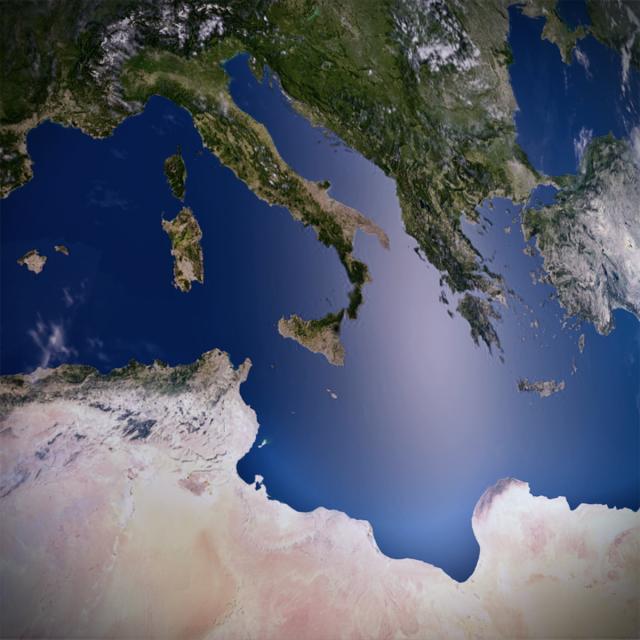
We focus on Orthodox Christianity and ecology under the leadership of the Ecumenical Patriarch Bartholomew, first among the religious leaders of the Greek Orthodox Church. We follow the symposium he organized on the Adriatic Sea, which like all of his eight symposia focused on water issues. This conference brought together scientists, civil servants, journalists, and religious spokespersons to consider ecology, politics, and spirituality as a basis for more integrated environmental solutions.

WEEK 5
Module 5: Christian Integral Ecology: “Cry of the Earth; Cry of the Poor”
We focus on Catholic theology and ecojustice under the leadership of Pope Francis, especially with attention to his encyclical letter, Laudato Si’: On Care for our Common Home (2015). The influence of this encyclical is widespread, including responses from other religions and transformative action led by the Laudato Si’ Movement. Through the lens of “integral ecology,” this document expands understandings of social justice to incorporate ecosystems and all forms of life.

WEEK 6
Module 6: Embodied Christianity: Ecotheology in Practice
We focus on the impact of the Protestant Reformation movements in Christianity, especially with regard to their positions on the natural world as God’s creation. In the 16th Century, the Reformation opened new theological directions and institutional formations that have shaped human-Earth relations into the present. Christianity began to be guided by a broader community-church leadership as reformers engaged scripture and the natural world.

WEEK 7
Module 7: “Integral Liberation”: Christian Ecojustice Engagement
We explore topics of significance for contemporary Christianity, namely environmental justice and the roles of women in Christianity and ecology. Building on Christian concepts of social justice, ecojustice has emerged in response to disproportionate environmental harms faced by marginalized communities. This integration of environmental and social issues affirms the writings, practices, and experiences of women in Christianity worldwide.

WEEK 8
Module 8: Food, Animals, Biodiversity, and Climate Change
We explore emerging Christian perspectives regarding food, agriculture, animals, and biodiversity. We place this in the context of a “communion of subjects” affirming the profound interconnection of all life. We highlight emerging theological ethics and engaged religious action in response to the climate emergency.

WEEK 9
Module 9: Christianity and Cosmology
How might Christianity flourish in relation to scientific insights about evolution? In this module, the first section focuses on the influence of Thomas Berry and a New Story. This evolutionary story is a context for human flourishing, an orientation for Christianity, and an inspiration for other religious traditions in a planetary era. The second section focuses on forms of worship that emphasize the sacred relationship between Human, Earth, and Cosmos.

WEEK 10
Module 10: Course Conclusion
Go to Class
MOOC List is learner-supported. When you buy through links on our site, we may earn an affiliate commission.

Related Courses

Introduction to Algae (Coursera) Coursera
University of California, San Diego

Introduction to Algae (Coursera)

This course was produced by the Algae Technology Educational Consortium and UC San Diego with funding from the Algae Foundation, the National Renewable Energy Lab, and the U.S. Department of Energy. Algae are an extremely diverse group of organisms that can be found in almost every ecosystem on the planet, and they play an essential role for life on earth. They are little bio-factories that use the process of photosynthesis to create chemical compounds that we can utilize for food, feed, medicine, and even energy. We’ve brought together some of foremost algae experts from industry and academia to teach you the fundamentals of algae.

Jun 1st 2026
5-12 Weeks
Agroforestry V: Ecosystem Services, Food and Sustainability (Coursera) Coursera
University of Florida

Agroforestry V: Ecosystem Services, Food and Sustainability (Coursera)

Welcome to Agroforestry V: Ecosystem Services, Food Security and Sustainable Development, a detailed review of fundamental principles and best practices for successful agroforestry projects. This interdisciplinary module, presented by leading experts in the field, is the final in the five-module course covering the various aspects of agroforestry including the global distribution of the practices, their underlying principles, and major scientific advances during the past nearly five decades.

Jun 8th 2026
2 Weeks
Know Thyself - The Value and Limits of Self-Knowledge: The Examined Life (Coursera) Coursera
University of Edinburgh

Know Thyself - The Value and Limits of Self-Knowledge: The Examined Life (Coursera)

According to legend, inscribed on walls of the temple on the sacred site of Delphi in Ancient Greece were two premier injunctions: NOTHING IN EXCESS, and KNOW THYSELF. This course will be an examination of the latter injunction in an effort to discover what self-knowledge is, why it might be valuable, and what, if any, limitations it might face.

Jun 1st 2026
4 Weeks
Principles of Secure Coding (Coursera) Coursera
University of California, Davis

Principles of Secure Coding (Coursera)

This course introduces you to the principles of secure programming. It begins by discussing the philosophy and principles of secure programming, and then presenting robust programming and the relationship between it and secure programming. We'll go through a detailed example of writing robust code and we'll see many common programming problems and show their connection to writing robust, secure programs in general.

Jun 1st 2026
4 Weeks
Ethical Issues in Data Science (Coursera) Coursera
University of Colorado Boulder

Ethical Issues in Data Science (Coursera)

Computing applications involving large amounts of data – the domain of data science – impact the lives of most people in the U.S. and the world. These impacts include recommendations made to us by internet-based systems, information that is available about us online, techniques that are used for security and surveillance, data that is used in health care, and many more. In many cases, they are affected by techniques in artificial intelligence and machine learning.

Jun 8th 2026
5-12 Weeks
Serious Gaming (Coursera) Coursera
Erasmus University Rotterdam

Serious Gaming (Coursera)

Have you ever wondered how playing games can help us to train people, deal with societal challenges or raise awareness of contemporary social issues? In this MOOC you will learn the ins and outs of games that are designed with exactly those purposes in mind: serious games. We will define serious games and discuss the different types that have been developed. We will explain why people like to play them and what impact they may have.

Jun 8th 2026
5-12 Weeks
Women in environmental biology (Coursera) Coursera
Universitat Autònoma de Barcelona

Women in environmental biology (Coursera)

Have you ever wondered how humans relate to other living beings and what do you need to know to be able to understand current environmental problems? Do you know that many of these researches and knowledge have been described by women? This course gives answers to these questions and it is addressed to anyone interested in the relationship between humans and other living beings, as well as all those concerned about the global change situation that the planet is suffering.

Jun 1st 2026
4 Weeks
The Politics of Skepticism (Coursera) Coursera
Erasmus University Rotterdam

The Politics of Skepticism (Coursera)

This is a course about the history of Skepticism from the ancient Greeks to today, with special attention to the political ramifications of questioning man's ability to know the world and himself with any certainty. We will discuss the debates raging between Plato and the Sophists, the rise of Christianity in the Roman world, and the so-called 'Skeptical Crisis' of the Renaissance as well as Pierre Bayle's Skepticism and David Hume's.

Jun 8th 2026
5-12 Weeks
Philosophy and the Sciences: Introduction to the Philosophy of Cognitive Sciences (Coursera) Coursera
University of Edinburgh

Philosophy and the Sciences: Introduction to the Philosophy of Cognitive Sciences (Coursera)

What is our role in the universe as human agents capable of knowledge? What makes us intelligent cognitive agents seemingly endowed with consciousness? This is the second part of the course 'Philosophy and the Sciences', dedicated to Philosophy of the Cognitive Sciences. Scientific research across the cognitive sciences has raised pressing questions for philosophers. The goal of this course is to introduce you to some of the main areas and topics at the key juncture between philosophy and the cognitive sciences. Each week we will introduce you to some of these important questions at the forefront of scientific research. We will explain the science behind each topic in a simple, non-technical way, while also addressing the philosophical and conceptual questions arising from it.

Jun 1st 2026
4 Weeks
Agroforestry IV: Climate, Carbon Storage and Agroforestry (Coursera) Coursera
University of Florida

Agroforestry IV: Climate, Carbon Storage and Agroforestry (Coursera)

Welcome to Agroforestry IV: Climate Change, Carbon Storage and Agroforestry Systems, a detailed review of fundamental principles and best practices for successful agroforestry projects. This interdisciplinary module, presented by leading experts in the field, is the fourth in the five-module course covering the various aspects of agroforestry including the global distribution of the practices, their underlying principles, and major scientific advances during the past nearly five decades.

Jun 8th 2026
1 Week
Chimpanzee Behavior and Conservation (Coursera) Coursera
Duke University

Chimpanzee Behavior and Conservation (Coursera)

Chimpanzees are one of our closest living relatives, yet almost nothing was known about their behavior in the wild until Jane Goodall started her groundbreaking study of the chimpanzees of Gombe, Tanzania in 1960. This study continues today, following the same chimpanzee families that Jane Goodall first encountered over 55 years ago. Guided by three course instructors who have lived and worked with the Gombe chimpanzees, you will learn how Goodall’s early discoveries changed our view of human uniqueness.

Jun 8th 2026
5-12 Weeks
Ecologie Politique: défi de la durabilité pour les démocraties (Coursera) Coursera
University of Lausanne

Ecologie Politique: défi de la durabilité pour les démocraties (Coursera)

De quoi parle-t-on lorsque l’on parle d’environnement ? Existe-t-il une crise écologique ? L’environnement se résume-t-il à la pollution ? Est-on vraiment fondé à parler de risques environnementaux ? L’environnement a-t-il affaire à la politique et si oui pourquoi ? Pourquoi et à partir de quand a-t-on pu parler d’écologie politique ? Quelles en sont les différentes expressions ? Les démocraties et leurs expressions courantes ne suffisent-elles pas à répondre aux problèmes écologiques ? Et si ce n’est pas le cas, quels sont les apports éventuels et potentiels de l’écologie politique ? Ce cours se propose à répondre à ces questions, l’objectif global étant de comprendre les tenants et aboutissants de l’interface écologie et politique.

Jun 8th 2026
4 Weeks