Violences et religions (Coursera)

Offered by University of Geneva,
Violences et religions (Coursera)

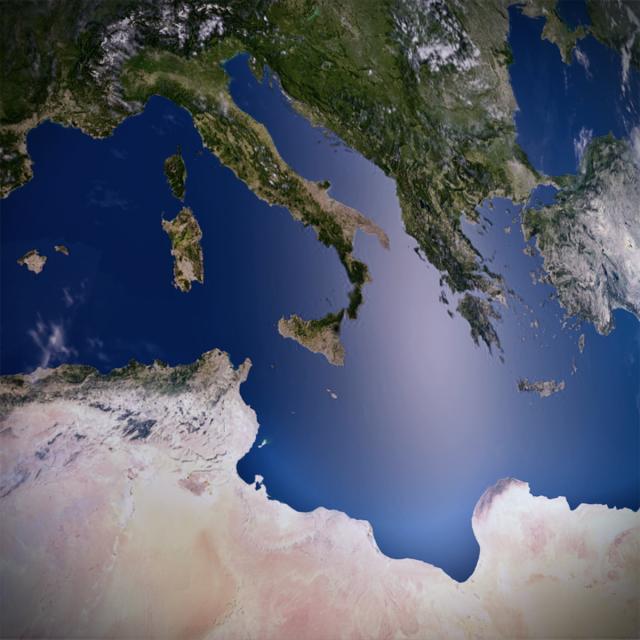
La question « violences et religions » est d’actualité, et pas seulement depuis les attentats d’Al-Qaïda ou de Daech. Pour bien la comprendre, ce cours propose de prendre du recul et de l’envisager sous un angle historique et comparatiste. Le domaine concerné étant l’espace euro-méditerranéen, ce sont essentiellement le christianisme et l’islam qui seront traités (quelques séquences sont également consacrées au judaïsme).

Class Deals by MOOC List - Click here and see Coursera's Active Discounts, Deals, and Promo Codes.

Notre approche commencera avec quelques-uns des textes les plus difficiles de la Bible et du Coran puis vous entraînera dans un survol historique : christianisation de l’Europe et islamisation du monde méditerranéen, avec leurs cortèges de contraintes religieuses ; répression des hérésies, croisades, statut des minorités dans le monde arabo-musulman ; guerres de religion en Europe, puis tentatives d’établir la liberté de conscience ; l’islam moderne, et ses courants réformistes, du wahhabisme à la Nahda (Lumières) ; réflexions et défis d’aujourd’hui, avec le concours de plusieurs personnalités du monde de la philosophie, du droit, de la psychanalyse, de la théologie…
Ce cours fait appel à 25 spécialistes de Suisse, de France, de Belgique, du Canada et du Maroc. Quelques-uns s’expriment en arabe, mais la grande majorité des séquences est en français (les séquences sont intégralement sous-titrées en français et en arabe).
Objectifs d’apprentissage généraux
Au terme du parcours, l’étudiant(e) sera capable de :
• poser le problème des liens entre violence et religion
• mesurer l’intérêt d’une approche historico-critique de la question « violences et religions »
• énoncer, dans leurs grandes lignes, quelques positions de penseurs chrétiens et musulmans sur la violence
• identifier les facteurs, notamment politiques, qui génèrent la violence religieuse
• comprendre comment la liberté de conscience contribue à résoudre le problème de la violence religieuse
• formuler une appréciation personnelle et argumentée sur la violence dans l’histoire du christianisme et de l’islam

Syllabus

WEEK 1
Méthode, principes, origines
Pour commencer, nous vous proposons une approche historico-critique des textes sacrés (Bible et Coran) et des premiers temps du christianisme et de l'islam.

WEEK 2
La chrétienté médiévale
Vous entendrez ici parler de christianisation contrainte, de chasse aux hérétiques, de croisades, mais aussi de non-violence. Avec en outre une leçon sur le judaïsme face à la violence.

WEEK 3
L'islam médiéval et moderne
Notre tâche sera maintenant de bien vous guider : de la période des premiers califes (dits précisément bien guidés) aux conquêtes omeyyades et à la réflexion, en terre d'Islam, sur la guerre et la paix.

WEEK 4
L'Europe moderne (16e-18e siècle)
Nous allons ici vous conduire du 16e siècle, avec son cortège de violences religieuses, à la réflexion théologique et philosophique qui va contribuer à la victoire de la liberté de conscience en Europe.

WEEK 5
L'islam du 18e au 20e siècle
Vous allez comprendre ici ce que sont le salafisme, le wahhabisme ou les Frères musulmans. Il sera aussi question de la Nahda (Renaissance arabe), du conflit israélo-arabe, d'iconoclasme, de Daech et de liberté de conscience dans le monde arabo-musulman.

WEEK 6
Réflexions et défis d'aujourd'hui
Nous allons vous présenter plusieurs intervenants de grande qualité, qui vous apporteront notamment un éclairage philosophique, juridique, humanitaire, religieux, psychologique sur notre thème.

Go to Class
MOOC List is learner-supported. When you buy through links on our site, we may earn an affiliate commission.

Related Courses

Terrorism and Counterterrorism: Comparing Theory and Practice (Coursera) Coursera
Leiden University

Terrorism and Counterterrorism: Comparing Theory and Practice (Coursera)

Terrorism has arguably been one of the defining factors of our age. It frequently makes headlines, threatening or attacking governments, private business and ordinary citizens. And in many parts of the world, it has been one of the most important threats to peace, security and stability. But what does this exactly mean? What is the nature of this threat? Who or what is threatened, how, by whom and why? What can be done about it or how can we at least limit the impact of terrorism and make sure that terrorists do not make headlines and manage to scare us? These are just a handful of questions that will be addressed in this course that consists of three parts.

Oct 5th 2026
5-12 Weeks
Soul Beliefs: Causes and Consequences - Unit 1: Historical Foundations (Coursera) Coursera
Rutgers University

Soul Beliefs: Causes and Consequences - Unit 1: Historical Foundations (Coursera)

Throughout history, the vast majority of people around the globe have believed they have, however defined, a “soul.” While the question of whether the soul exists cannot be answered by science, what we can study are the causes and consequences of various beliefs about the soul and its prospects of surviving the death of the body. Why are soul and afterlife beliefs so common in human history? Are there adaptive advantages to assuming souls exist?

Sep 28th 2026
5-12 Weeks
Understanding Violence (Coursera) Coursera
Emory University

Understanding Violence (Coursera)

We are so pleased to have you join us as we investigate this crucial topic. Violence is a leading cause of death, disability and health care use worldwide. Violence is a complex problem and can only be understood and reduced though a multidisciplinary approach. This course introduces you to experts who study different forms of violence and we will discuss the various causes of violence. You will also learn about efforts to reduce violence and engage in a day of compassion.

Sep 21st 2026
5-12 Weeks
Reducing Gun Violence in America: Evidence for Change (Coursera) Coursera
Johns Hopkins University

Reducing Gun Violence in America: Evidence for Change (Coursera)

Reducing Gun Violence in America: Evidence for Change is designed to provide learners with the best available science and insights from top scholars across the country as well as the skills to understand which interventions are the most effective to offer a path forward for reducing gun violence in our homes, schools, and communities.

Sep 21st 2026
5-12 Weeks
After the Arab Spring – Democratic Aspirations and State Failure (Coursera) Coursera
University of Copenhagen

After the Arab Spring – Democratic Aspirations and State Failure (Coursera)

Learn why the hope and excitement of the Arab Spring is gone, why so many Arab states are falling apart, why the youth are so frustrated, why there are so many refugees, and what can be done about it. The so-called Arab Spring appeared to end decades of exceptionalism and bring the Arab world back into the mainstream of global developments. The rebellions promised the return of politics and the reassertion of popular sovereignty against their corrupt and geriatric leaders. Much hope and flowery language greeted the young men and women who deposed their leaders and tried to build new, better societies.

Sep 28th 2026
5-12 Weeks
Violence Against Healthcare (Coursera) Coursera
University of Geneva

Violence Against Healthcare (Coursera)

At the global level, there are many countries marked by violence affecting health care. The 'Health care in danger' project aims to establish practical measures and recommendations that can be implemented on the ground by policy-makers, humanitarian organizations and health professionals. In view of the multiplicity of actors and latitudes concerned, it is essential to be able to make available the tools needed to make informed decisions, guide behaviour in high-risk areas and provide everyone the means to create and optimize the dialogue between humanitarian professionals and health on the one hand and relevant authorities or other armed actors.

Oct 5th 2026
5-12 Weeks
Coexistence in Medieval Spain: Jews, Christians, and Muslims (Coursera) Coursera
University of Colorado System

Coexistence in Medieval Spain: Jews, Christians, and Muslims (Coursera)

This course explores Jewish, Christian, and Muslim intercultural relations in Iberia from the Visigothic era (6th century CE) until the creation of Queen Isabel I and King Ferdinand II Catholic Spain (late 15th century). We evaluate the many identities of the peninsula known as Christian Hispania, Jewish Sefarad, and Islamic al-Andalus. We trace the origins and trajectory of conflict between these communities (the Muslim conquest of Spain, Christian Reconquista, prohibitions blocking intermixing of peoples, and expulsions).

Sep 14th 2026
5-12 Weeks
Christianity & Ecology (Coursera) Coursera
Yale University

Christianity & Ecology (Coursera)

There is a need for broader literacy and deeper knowledge of the world’s religions and their ecological contributions. This course is designed as a gateway to the rich ecological dimensions of the Christian religious tradition. We delve into unique contributions from Orthodox, Catholic, and Protestant Christianity, exploring views on and relationship with the natural world.

Sep 14th 2026
5-12 Weeks
Greek and Roman Mythology (Coursera) Coursera
University of Pennsylvania

Greek and Roman Mythology (Coursera)

Myths are traditional stories that have endured over a long time. Some of them have to do with events of great importance, such as the founding of a nation. Others tell the stories of great heroes and heroines and their exploits and courage in the face of adversity. Still others are simple tales about otherwise unremarkable people who get into trouble or do some great deed. What are we to make of all these tales, and why do people seem to like to hear them? This course will focus on the myths of ancient Greece and Rome, as a way of exploring the nature of myth and the function it plays for individuals, societies, and nations. We will also pay some attention to the way the Greeks and Romans themselves understood their own myths.

Sep 21st 2026
5-12 Weeks
A Journey through Western Christianity: from Persecuted Faith to Global Religion (200 - 1650) (Coursera) Coursera
Yale University

A Journey through Western Christianity: from Persecuted Faith to Global Religion (200 - 1650) (Coursera)

This course follows the extraordinary development of Western Christianity from its early persecution under the Roman Empire in the third century to its global expansion with the Jesuits of the early modern world. We explore the dynamic and diverse character of a religion with an enormous cast characters. We will meet men and women who tell stories of faith as well as of violence, suppression, and division.

Oct 5th 2026
5-12 Weeks
Chemerinsky on Constitutional Law - Individual Rights and Liberties (Coursera) Coursera
University of California, Irvine

Chemerinsky on Constitutional Law - Individual Rights and Liberties (Coursera)

Chemerinsky on Constitutional Law: Individual Rights and Liberties will highlight the construction and interpretation of the U.S. Constitution through the centuries with an emphasis on protections of individual liberties and the evolution of equal protection. You'll learn the history behind the Constitution, cases that formed important precedent, and how changes in interpretation have been dependent on shifts in cultural and political climate as well as the composition of the Supreme Court.

Oct 5th 2026
5-12 Weeks