Understanding 9/11: Why 9/11 Happened & How Terrorism Affects Our World Today (Coursera)

Offered by Duke University,
Understanding 9/11: Why 9/11 Happened & How Terrorism Affects Our World Today (Coursera)

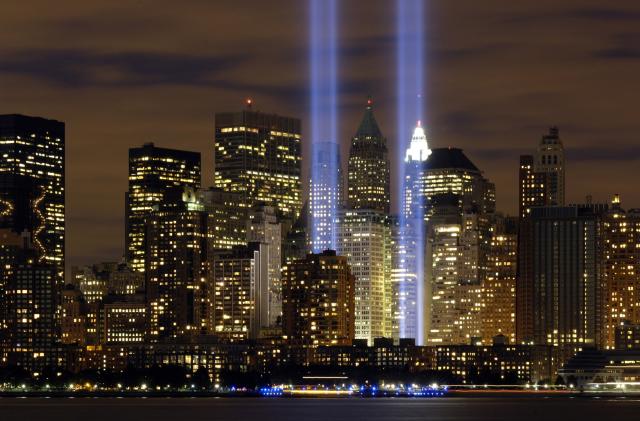
This course will explore the forces that led to the 9/11 attacks and the policies the United States adopted in response. We will examine the phenomenon of modern terrorism, the development of the al Qai'da ideology, and the process by which individuals radicalize towards violence.

Class Deals by MOOC List - Click here and see Coursera's Active Discounts, Deals, and Promo Codes.

Syllabus

WEEK 1
Course Overview and the 9/11 Attacks
In this course, we will examine why al Qai-da attacked America. We will also examine the phenomenon of terrorism, in general, and the radical ideology developed and propagated by Osama bin Laden through al Qaida, more specifically. We will consider why individuals are attracted to this ideology and how they radicalize to violence. We will also explore how the United States addressed terrorism prior to 9/11 and the policy changes the US (and its allies around the globe) faced in the immediate aftermath of the attacks.

WEEK 2
What is Terrorism?
Our topic for this week is, what is terrorism. We will try to define terrorism and understand the actions that we're going to be studying in this course, 9/11 and its aftermath. We will examine one of the key debates in this area; can terrorism be executed by a state, or is it only the use of political violence by a non-state actor. You will also learn how to write a policy me

WEEK 3
A Primer on Islam
This week we have a special treat: we will have an extensive conversation with Imam Abdullah Antepli, the Islamic Chaplin here at Duke. We’ll cover a wide range of topics, including Islamic history, law, the role of women and the Muslim experience in the post – 9/11 world.

WEEK 4
The al Qai'da Ideology
Our topic for this week is the al Qaeda ideology. An ideology is essentially the set of beliefs that an individual, a group, or an organization has to either motivate them or to give that organization purpose. For al Qaeda, of course this is incredibly important because they're trying to motivate individuals to sacrifice their lives for what they view as a great cause.

WEEK 5
The Radicalization Process
This week we’ll examine how individuals become radicalized. We’ll see that there are multiple paths to radicalization where opportunity and chance play a significant role. Thus, radicalization is a complex process that defies simple explanation. We’ll conclude with a conversation with Peter Neumann, Professor of Security Studies at the Department of War Studies, King’s College London, and director of the International Centre for the Study of Radicalization.

WEEK 6
Counterterrorism Before 9/11
This week we’ll examine the three main US political philosophies that underlie the country’s approach to counterterrorism. We’ll look at the beginnings of the US response to this growing threat and how US agencies involved in counterterrorism efforts have adapted over time. Finally, we’ll examine how the US attempted to combat Osama bin Laden’s growing threat to US security.

WEEK 7
September 12, 2001
In this final week of the course we’ll speak with Juan Zarate , one of the key White House counter terrorism advisers in the second Bush administration, about US counterterrorism efforts since 9/11. We’ll look at the current state of threats to US interests from emerging actors, such as ISIS. Finally, we’ll look at the recent developments in the Middle East that affect US security.

Go to Class
MOOC List is learner-supported. When you buy through links on our site, we may earn an affiliate commission.

Related Courses

Network Dynamics of Social Behavior (Coursera) Coursera
University of Pennsylvania

Network Dynamics of Social Behavior (Coursera)

How do revolutions emerge without anyone expecting them? How did social norms about same sex marriage change more rapidly than anyone anticipated? Why do some social innovations take off with relative ease, while others struggle for years without spreading? More generally, what are the forces that control the process of social evolution –from the fashions that we wear, to our beliefs about religious tolerance, to our ideas about the process of scientific discovery and the best ways to manage complex research organizations?

Aug 3rd 2026
5-12 Weeks
Security & Safety Challenges in a Globalized World (Coursera) Coursera
Leiden University

Security & Safety Challenges in a Globalized World (Coursera)

Security and safety challenges rank among the most pressing issues of modern times. Challenges such as, cyber-crime, terrorism, and environmental disasters impact the lives of millions across the globe. These issues also rank high on the agenda of politicians, international organizations and businesses. They also feature prominently in the public conscience and in governmental policies.

Aug 10th 2026
5-12 Weeks
Governance and Strategy (Coursera) Coursera
Infosec

Governance and Strategy (Coursera)

This course is an introduction and an overview to the basic principles of cybersecurity Governance and Strategy. It provides guidance on determining information security objectives and how to measure progress toward achieving them. It is an exposition on the rationale and necessity for senior management to integrate information security into overall organizational governance at the highest levels.

Jul 27th 2026
13-24 Weeks
Paradoxes of War (Coursera) Coursera
Princeton University

Paradoxes of War (Coursera)

The Paradoxes of War teaches us to understand that war is not only a normal part of human existence, but is arguably one of the most important factors in making us who we are. Through this course, I hope that you will come to appreciate that war is both a natural expression of common human emotions and interactions and a constitutive part of how we cohere as groups. That is, war is paradoxically an expression of our basest animal nature and the exemplar of our most vaunted and valued civilized virtues.

Jul 27th 2026
13-24 Weeks
Reputation Crisis? Facebook meets Cambridge Analytica (Coursera) Coursera
Erasmus University Rotterdam

Reputation Crisis? Facebook meets Cambridge Analytica (Coursera)

Do you remember when you first created your Facebook account? Do you know what happens to the data and stories you share on Facebook? Are you aware of the Facebook – Cambridge Analytica crisis and its ramifications? In this course, you will take a deep dive into reputation management by tackling a case study on the crisis, the effects of which are still unravelling for Facebook, the tech industry, and society at large. You will explore the concept of corporate reputation, and touch upon topics such as data privacy implications for the big tech or the importance of leadership and culture, and how Mark Zuckerberg’s leadership might have affected Facebook in particular. In the final project, you will be asked to link theory and practice to provide an analysis of events and make recommendations for Facebook, going forward.

Aug 3rd 2026
5-12 Weeks
Introduction to the Nonprofit Sector, Nonprofit Organizations, Nonprofit Leadership and Governance (Coursera) Coursera
The State University of New York

Introduction to the Nonprofit Sector, Nonprofit Organizations, Nonprofit Leadership and Governance (Coursera)

This course introduces you to the nonprofit sector, nonprofit organizations, and the concepts of leadership and governance. While this course has been developed with North American culture in mind, we do appreciate that in other parts of the world the nature of the nonprofit sector, nonprofit organizations, nonprofit leadership and governance may not be the same. Nevertheless, it is our hope that much of the course content will still be of value to those in other parts of the world.

Jul 20th 2026
5-12 Weeks
Media ethics & governance (Coursera) Coursera
University of Amsterdam

Media ethics & governance (Coursera)

This course explores some of the basic theories, models and concepts in the field of media ethics. We will introduce influential ethical theories and perspectives, explore changing societal demands and expectations of media creation and media use, and we will elaborate on existing ethical norms for media professionals. After following this course, you will be able to reflect on ethical dilemmas and develop a well-substantiated argumentation for ethical decision making in a variety of media-related contexts.

Jul 27th 2026
4 Weeks
Terrorism and Counterterrorism: Comparing Theory and Practice (Coursera) Coursera
Leiden University

Terrorism and Counterterrorism: Comparing Theory and Practice (Coursera)

Terrorism has arguably been one of the defining factors of our age. It frequently makes headlines, threatening or attacking governments, private business and ordinary citizens. And in many parts of the world, it has been one of the most important threats to peace, security and stability. But what does this exactly mean? What is the nature of this threat? Who or what is threatened, how, by whom and why? What can be done about it or how can we at least limit the impact of terrorism and make sure that terrorists do not make headlines and manage to scare us? These are just a handful of questions that will be addressed in this course that consists of three parts.

Aug 10th 2026
5-12 Weeks
Chinese Politics Part 2 - China and the World (Coursera) Coursera
The Hong Kong University of Science and Technology - HKUST

Chinese Politics Part 2 - China and the World (Coursera)

One of the most significant changes in the world in the past 30 years is the opening of China to the outside world and its engagement with that world. In the initial years of the opening, external forces influenced China’s economy, regional balances, bureaucracy, as well as the political authority of local leaders in the coastal areas.

Jul 20th 2026
5-12 Weeks
Global Diplomacy – Diplomacy in the Modern World (Coursera) Coursera
University of London,SOAS University of London

Global Diplomacy – Diplomacy in the Modern World (Coursera)

The Global Diplomacy course is a unique offering to the MOOC environment. Bringing together cutting edge research in the broad fields of Diplomatic and International Studies, award winning distance learning delivery and the instructors previous experience of delivering a successful MOOC. Please see the volume Global Diplomacy: Theories, Types and Models authored with Dr Alison Holmes, (Westview, 2016), and the Understanding Research Methods MOOC from Coursera.

Aug 10th 2026
5-12 Weeks
Blockchain Transformations of Financial Services (Coursera) Coursera
INSEAD

Blockchain Transformations of Financial Services (Coursera)

The current global financial system is riddled with inefficiencies, uneven developments, and bizarre contradictions. Blockchain technology has the potential to bring about profound changes to financial services. In this course, you will learn how blockchain technology will disrupt the core functions of the financial services industry, offering individuals and organizations alike real choices in how they create and manage value.

Jul 27th 2026
4 Weeks
Linguistic Diversity, What for? (Coursera) Coursera
Universitat Autònoma de Barcelona

Linguistic Diversity, What for? (Coursera)

What is linguistic diversity? What are its implications and opportunities? How is diversity around the world? How is it experienced, understood and managed in different contexts? What is your knowledge and experience about languages and diversity? In this course we approach linguistic diversity and multilingualism not only from a theoretical point of view, but also from a perspective oriented to help understand and manage various contexts that emerge from diversity in different environments of social interaction.

Aug 3rd 2026
5-12 Weeks