Violence Against Healthcare (Coursera)

Offered by University of Geneva,
Violence Against Healthcare (Coursera)

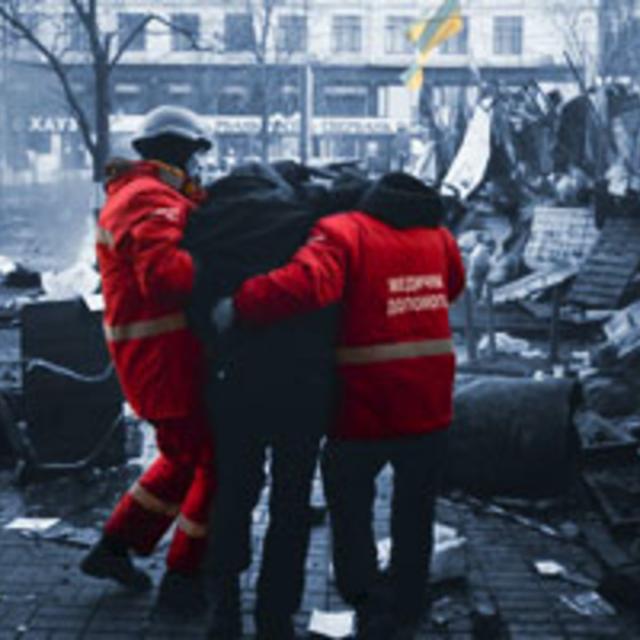
At the global level, there are many countries marked by violence affecting health care. The 'Health care in danger' project aims to establish practical measures and recommendations that can be implemented on the ground by policy-makers, humanitarian organizations and health professionals. In view of the multiplicity of actors and latitudes concerned, it is essential to be able to make available the tools needed to make informed decisions, guide behaviour in high-risk areas and provide everyone the means to create and optimize the dialogue between humanitarian professionals and health on the one hand and relevant authorities or other armed actors.

Class Deals by MOOC List - Click here and see Coursera's Active Discounts, Deals, and Promo Codes.

This course covers various topics such as ethics, rights and responsibilities of the staff of health and pre-hospital personnel, issues related to international law and humanitarian law, international human rights, caregivers and patient safety as well as the role of communities to address and reduce violence against health care.

Syllabus

WEEK 1
General Introduction
Health-care personnel: ethical principles of health care in times of armed conflict and other emergencies
The purpose of this first module on violence against health care Is to highlight and understand the situations and the constraints faced on the ground in conflicts and emergencies. These sitautions will be analysed both from the health care providers perspective as well as from the beneficiairies perspective. A special focus on Mental Health and psychosocial support, ethical dilemmas and riks analysis

WEEK 2
The legal framework on the protection of health-care delivery
Today, an elaborate international legal framework exists whose aim is to guarantee protection of patients and health-care providers from violence in armed conflict or other emergencies. However, violence against patients and health-care providers remains a sad reality in such situations. Still, it is important for those who have an influence over the respect for the law, like State authorities, State armed forces, armed groups or members of communities, as well as for health-care professionals or those who will become health-care professionals themselves to identify who has to follow the law, what the rules describe and when they apply. A better understanding of the law may contribute to better behavior on the ground, if there is general willingness to comply with legal rules. For health-care professionals, the law may be a tool that can be invoked towards authorities, armed forces, armed groups and others for more effective protection. This module should contribute towards these aims by identifying international legal rules relevant to the protection of patients and health-care providers and pointing towards legal and practical challenges in their implementation.

WEEK 3
Ambulance and prehospital services in risk situations
This module will inform you of the the general security challenges that ambulance and prehospital services face in situations of armed conflict or other emergencies. Unfortunately, challenges also include targetted attacks or threats of violence against the ambulance and prehospital. Direct and indirect attacks may be carried out by arms carriers, but also by the local communities themselves. Through the following chapters, we will try to understand some of the reasons behind such threats and attacks, as well as present you with some solutions that the service providers can implement to reduce risks and the impact that threats and attacks may have on the service providers and the people they seek to help. It should be noted that these solutions and good practices have to be considered up against the context in which they are to be implemented. What works in one country or area, may not be as relevant in another.

WEEK 4
Hospital managers: ensuring the preparedness and security of health-care facilities in armed conflict and other emergencies
This module speaks of how health services are valuable at any time, but particularly during emergencies resulting from any hazard (radio nuclear, disease, chemical, food safety, social/political, natural); during emergencies, hospitals may face the additional burden of overcrowding, infrastructure damage, loss of staff, and increased violence against health care facilities and workers becoming victims of the emergencies themselves; therefore hospitals must be strengthened to stay safe and resilient even when faced with these difficult challenges.

WEEK 5
Weapons bearers: military operational practice to ensure safer access to and delivery of health care
This module speaks of the vital role Non-State Armed Groups (NSAGs) play as recipients and providers of health care. This lesson delineates different ways armed groups can pose a threat to the safe provision of health care, but also how armed groups act as health care providers themselves. The lesson also highlights key tools to safeguard the provision of health care in conflict settings, i.a. doctrine, education, trainings, and sanctions, and critically discusses limitations to their applicability.
Measures and recommendations to improve arms carriers' respect for health care

WEEK 6
Members of the civil society: communities, National Societies, Religious Leaders, Health organizations and others
The purpose of this module is to highlight and understand the role civil society has in the medical mission. Civil society includes those who are actors themselves in the medical mission, as well as those who protect and promote access to health care. This module will look at how Red Cross and Red Crescent National Societies, communities, medical associations and religious circles have the ability to strengthen the provision of health care and to influence relevant parties in showing respect for the medical mission. The module will allow learners to understand the bigger picture in terms of actors involved and their role in the concept of “health care in danger”.


Go to Class
MOOC List is learner-supported. When you buy through links on our site, we may earn an affiliate commission.

Related Courses

Cybersecurity in Healthcare (Hospitals & Care Centres) (Coursera) Coursera
Erasmus University Rotterdam

Cybersecurity in Healthcare (Hospitals & Care Centres) (Coursera)

The Cybersecurity in Healthcare MOOC was developed as part the SecureHospitals.eu project. This project has received funding from the European Union’s Horizon 2020 Coordination Research and Innovation Action under Grant Agreement No. 826497. The course "Cybersecurity in Healthcare" has been developed to raise awareness and understanding the role of cybersecurity in healthcare (e.g., hospitals, care centres, clinics, other medical or social care institutions and service organisations) and the challenges that surround it.

Aug 10th 2026
5-12 Weeks
La Solución del Conflicto Ético (Coursera) Coursera
Universidad Nacional Autónoma de México

La Solución del Conflicto Ético (Coursera)

En este curso los participantes lograrán identificar y tomar decisiones sobre casos clínicos con conflictos éticos en el área de la salud por medio de la aplicación del razonamiento ético desde una perspectiva universal y considerando los aspectos médicos y éticos, el marco jurídico y la decisión ética.

Aug 10th 2026
5-12 Weeks
International Humanitarian Law in Theory and Practice (Coursera) Coursera
Leiden University,Kalshoven-Gieskes Forum

International Humanitarian Law in Theory and Practice (Coursera)

“International Humanitarian Law in Theory and Practice” is the first MOOC of the Kalshoven-Gieskes Forum on International Humanitarian Law, which is the platform within the Grotius Centre for International Legal Studies of Leiden University for the research, teaching and dissemination of international humanitarian law (IHL).

Aug 10th 2026
5-12 Weeks
Foundations of Healthcare Systems Engineering (Coursera) Coursera
Johns Hopkins University

Foundations of Healthcare Systems Engineering (Coursera)

Through dynamic video lectures and practical application questions, you will learn about the Foundations of Healthcare Systems Engineering. In this course you will learn about the current lack of synchronized, efficient, and integrated healthcare systems, which are some of the drivers for improvements to healthcare delivery.

Aug 10th 2026
4 Weeks
Terrorism and Counterterrorism: Comparing Theory and Practice (Coursera) Coursera
Leiden University

Terrorism and Counterterrorism: Comparing Theory and Practice (Coursera)

Terrorism has arguably been one of the defining factors of our age. It frequently makes headlines, threatening or attacking governments, private business and ordinary citizens. And in many parts of the world, it has been one of the most important threats to peace, security and stability. But what does this exactly mean? What is the nature of this threat? Who or what is threatened, how, by whom and why? What can be done about it or how can we at least limit the impact of terrorism and make sure that terrorists do not make headlines and manage to scare us? These are just a handful of questions that will be addressed in this course that consists of three parts.

Aug 10th 2026
5-12 Weeks
Lymphoedema: Monitoring & Intervention After Breast Cancer (Coursera) Coursera
Macquarie University

Lymphoedema: Monitoring & Intervention After Breast Cancer (Coursera)

Lymphoedema following breast cancer treatment is a poorly understood and under-researched condition which can significantly impact physical and psychological function, reduce quality of life and result in substantial cost burdens to both patients and the healthcare system. In these interactive modules we will cover an introduction to lymphoedema, lymphatic physiology and anatomy, assessment and treatment, as well as utilise case studies to understand the prospective surveillance and early intervention model of care in breast cancer rehabilitation.

Aug 10th 2026
4 Weeks
Navigating Healthcare Supply Chain Operations (Coursera) Coursera
Northeastern University

Navigating Healthcare Supply Chain Operations (Coursera)

This course is the continuation of "Introduction to Healthcare Supply Chain Operations". If you have not visited the first part yet, please check it out before starting this course. If you have finished the first part of this series: Introduction to Healthcare Supply Chain Operations, you will be able to apply what you learned to your own career. The foundational knowledge and project plan from the introduction are carried through in this deeper dive into healthcare supply chain operations.

Aug 10th 2026
4 Weeks
Health Care and Promotion for Infants and Toddlers (Coursera) Coursera
Peking University

Health Care and Promotion for Infants and Toddlers (Coursera)

The course Health Care and Promotion for Infants and Toddlers provides a comprehensive and detailed overview of cutting-edge knowledge, new concepts and practical skills in early childhood health care, including the growth and development of newborns, infants, and toddlers, daily parenting, and early childhood development and education.

Aug 10th 2026
5-12 Weeks
Hacking Exercise For Health. The surprising new science of fitness. (Coursera) Coursera
McMaster University

Hacking Exercise For Health. The surprising new science of fitness. (Coursera)

Renowned exercise physiologists Martin Gibala and Stuart Phillips of McMaster University teach the surprising new science of cardio fitness and strength-building—and then provide you with hacks to get fit and strong (and healthy!) in less time than you ever thought possible. What’s the right mix of exercise between cardio and strength? How do you know if you’re working out hard enough? What’s better, heavy or light weights? These questions and more are addressed through a course designed to provide even the most inexperienced of exercisers the tools you need to design time-efficient workouts that can be done virtually anywhere, from your own home to a city park or even at your workplace.

Aug 10th 2026
4 Weeks
Violences et religions (Coursera) Coursera
University of Geneva

Violences et religions (Coursera)

La question « violences et religions » est d’actualité, et pas seulement depuis les attentats d’Al-Qaïda ou de Daech. Pour bien la comprendre, ce cours propose de prendre du recul et de l’envisager sous un angle historique et comparatiste. Le domaine concerné étant l’espace euro-méditerranéen, ce sont essentiellement le christianisme et l’islam qui seront traités (quelques séquences sont également consacrées au judaïsme).

Aug 10th 2026
5-12 Weeks