Human Rights for Open Societies (Coursera)

Offered by Universiteit Utrecht,
Human Rights for Open Societies (Coursera)

Human rights are under pressure in many places across the globe. Peaceful protests are violently quashed. Voting is tampered with. And minorities are often excluded from decision-making. All of this threatens the ideal of an open society in which each of us can be free and participate equally. A solid protection of human rights is needed for an open society to exist and to flourish. But it is often an uphill battle to work towards that ideal. Equip yourself and learn more about what human rights are and how they work.

Class Deals by MOOC List - Click here and see Coursera's Active Discounts, Deals, and Promo Codes.

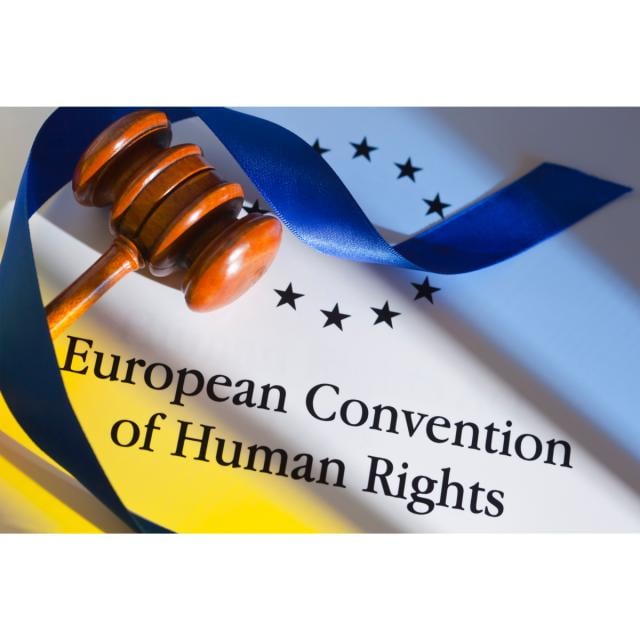
In this course, we will introduce you to one of the world’s most intricate human rights systems: the European Convention on Human Rights. You will see when and how people can turn to the European Court of Human Rights to complain about human rights violations. You will learn how the Court tries to solve many of the difficult human rights dilemmas of today. We will look, amongst other things, at the freedom of expression and demonstration, the right to vote, and the prohibition of discrimination. And we will address the rights of migrants, refugees, and other vulnerable groups. And, of course, we will see whether it is possible to restrict rights and if so under what conditions. You will even encounter watchdogs and ice cream in this course. We invite you to follow us on a journey of discovery into the European Convention!

Syllabus

WEEK 1
Introduction to the ECHR
The protection of human rights is closely linked to the idea of open societies. In an open society, people enjoy freedom and they are to a large extent free to live their lives as they wish. This week, we explore the idea of open societies and see how it relates to the protection of human rights. We also introduce you to the European Convention on Human Rights. This document forms the foundation for one of the world’s most intricate international human rights systems. Finally, you learn about the background and history of the Convention, the rights that are protected therein and the procedure which individuals can use to lodge a complaint with the European Court of Human Rights.

WEEK 2
General principles
When someone complains that his or her right to privacy or right to freedom of expression has been violated, the European Court of Human Rights has to assess whether that is truly the case. But how does it do this? In this part of the course, we will focus on the general principles and methods the Court uses in order to assess whether a State has violated the Convention. We will see how the Court approaches human rights cases and learn about the dilemmas it faces in this regard in the context of open societies.

WEEK 3
Human rights and democracy
Open societies require a democratic form of government. But how are human rights and democracy linked? In this part of the course, we focus on what democracy entails from a human rights perspective. We also address what voting rights are and how political parties are protected under the European Convention on Human Rights. Finally, we take a look at the protection of political rights in countries in transitions from war to peace and from dictatorship to democracy.

WEEK 4
Insiders and outsiders: non-discrimination, vulnerable groups, migrants and asylum seekers
Open societies are all about inclusion. In an open society, everyone should be allowed to participate on an equal footing. No one should be excluded. Equally, human rights should be enjoyed by all people and discrimination is prohibited. Yet, even in an open society, universality of human rights and the prohibition of discrimination may raise many questions. For example, what about the rights of people who are not (yet) citizens of that society, such as asylum seekers? On the one hand, asylum seekers find themselves in the extremely difficult and vulnerable position of being in transit. For that reason, their needs deserve extra consideration. For example, they may need special protection against hostile responses by the local population, they may need food, education and housing, and they must be protected against discrimination. On the other hand, not being citizens, the question is often raised to what extent they should be included and benefit from the rights and freedoms guaranteed in the European Convention on Human Rights. Finding the right balance and solving such dilemmas is crucial in open societies. In this week, we focus on (1) the rights and freedoms of insiders and outsiders under the European Convention, (2) non-discrimination and (3) the protection of vulnerable groups. To illustrate, we pay special attention to the rights of migrants and asylum seekers, as well as of other minority groups.

WEEK 5
Freedom of expression and public protest
The right to freely express yourself, the freedom of the press to report news and the right to protest are essential in an open society. The freedom of expression enables you to gather information about public issues and to let others know what you think. The media plays an important role in conveying information about matters of general interest. And public protest enables you to publicly support a cause you believe in. Together, these rights provide the essential conditions for the free and peaceful sharing of thoughts and ideas. Nevertheless, the unlimited freedom to say whatever you want and the freedom to protest might also undermine the openness of society. Hate speech and discriminatory speech, for example, might contribute to the exclusion of minority groups. In this learning unit, we take a closer look at the right to freedom of expression and the right to freedom of assembly. Thereby, we also address the limits of these rights in an open society.

WEEK 6
Closure
This is the final assignment of the course on Human Rights for Open Societies. In this assignment, the various topics of the course are brought together. The first aim is to help you test the knowledge and insights you have acquired during the course. The second aim is to help you understand the interrelatedness of the main topics discussed.

Go to Class
MOOC List is learner-supported. When you buy through links on our site, we may earn an affiliate commission.

Related Courses

Introduction to English Common Law (Coursera) Coursera
University of London

Introduction to English Common Law (Coursera)

The common law of England and Wales is one of the major global legal traditions. This MOOC will give you an introduction to this influential legal system including its history, constitutional background, sources and institutions. You’ll learn about the different ways in which laws are made and interpreted, the English court system and the increasing importance of European Union and human rights law. Now is an especially exciting time to be learning about English common law, given the potential changes that lie ahead in today’s political, economic and social environment – all these pose challenges to and opportunities for the law.

Oct 5th 2026
5-12 Weeks
Public Health in Humanitarian Crises 1 (Coursera) Coursera
Johns Hopkins University

Public Health in Humanitarian Crises 1 (Coursera)

This course, Public Health in Humanitarian Crises 1, introduces discussions about the public health approach to problems experienced by people affected by disasters, both natural and related to conflict. The course discusses the many changes which occur in people’s lives when they are uprooted by a disaster, ranging from changes in disease patterns, access to health care, livelihoods, shelter, sanitary conditions, nutritional status, etceteras. We will explore what humanitarian interventions could look like if we want to mitigate the effects of disasters. The course content is a mix of theoretical knowledge and many practical examples from recent disasters. We think this course is unique because it contains so many practical ‘real-life’ examples and is taught by instructors and guest lecturers who together have over 200 years of experience in this field.

Sep 28th 2026
5-12 Weeks
Bienestar, equidad y derechos humanos (Coursera) Coursera
Universidad de los Andes

Bienestar, equidad y derechos humanos (Coursera)

En la actualidad es muy frecuente escuchar debates en torno a los derechos humanos, la equidad y el bienestar de la población. Muchas personas incluyen estos conceptos en sus conversaciones cotidianas y también son parte de la mayoría de documentos de política pública, programas de gobierno y proyectos de diversas organizaciones. Sin embargo, nuestra experiencia en docencia, investigación, intervención y evaluación nos ha permitido establecer que pocas veces lo que se plantea acerca de estos temas se materializa en acciones concretas que cambien tanto la manera como las personas se relacionan entre sí como la valoración que hacen de la vida que tienen.

Sep 28th 2026
3 Weeks
Introduction to Key Constitutional Concepts and Supreme Court Cases (Coursera) Coursera
University of Pennsylvania

Introduction to Key Constitutional Concepts and Supreme Court Cases (Coursera)

This course offers an introduction to the U.S. Constitution and landmark Supreme Court cases interpreting it. It explores the Constitution’s origins, its amendment over the years, and methods of constitutional interpretation. Topics include the nature and structure of the federal government, the powers of the federal government, and individual rights.

Oct 5th 2026
4 Weeks
Children's Human Rights - An Interdisciplinary Introduction (Coursera) Coursera
University of Geneva

Children's Human Rights - An Interdisciplinary Introduction (Coursera)

Drawing on the contributions of several academic disciplines including law, psychology, sociology, history, educational and health sciences, economy and anthropology, an interdisciplinary approach guides the student into a selection of critical issues concerning children’s rights. Participants will gain insight relative to the development of this specific human rights category, as well as to the evolution of the challenges faced by children over time and society’s efforts to respond.

Oct 5th 2026
5-12 Weeks
Internet Giants: The Law and Economics of Media Platforms (Coursera) Coursera
University of Chicago

Internet Giants: The Law and Economics of Media Platforms (Coursera)

Law

This seven-week course will explore the relationship between law and technology with a strong focus on the law of the United States with some comparisons to laws around the world, especially in Europe. Tech progress is an important source of economic growth and raises broader questions about the human condition, including how culture evolves and who controls that evolution. Technology also matters in countless other ways as it often establishes the framework in which governments interact with their citizens, both in allowing speech and blocking it and in establishing exactly what the boundaries are between private life and the government. And technology itself is powerfully shaped by the laws that apply in areas as diverse as copyright, antitrust, patents, privacy, speech law and the regulation of networks.

Sep 28th 2026
5-12 Weeks
Privacy in the USA (Coursera) Coursera
EIT Digital

Privacy in the USA (Coursera)

After having followed Privacy in the Western world you have become acquainted with the overall global legal system and the origins of privacy as a concept as well as privacy as a (human) right. This course deals with the American legal system to protect privacy. In the USA privacy is protected through different legal concepts. Constitutional protection through the 4th Amendment plays a crucial role in protecting the US citizen against unjust governmental intrusion. As part of a myriad of consumer protection laws (e.g. health, financial) personal data is also protected.

Sep 28th 2026
5-12 Weeks
International Law in Action: the Arbitration of International Disputes (Coursera) Coursera
Leiden University

International Law in Action: the Arbitration of International Disputes (Coursera)

‘The Arbitration of International Disputes’ is the third course of Leiden University’s series on International Law in Action. The first course covered generalities on the international courts and tribunals in The Hague, while the second course provided an insider's perspective into the work of international criminal courts and tribunals. This third course explores the major aspects of international arbitration as one of the most common method of international dispute settlement .

Oct 5th 2026
4 Weeks