El Abogado del Futuro: Legaltech y la Transformación Digital del Derecho (Coursera)

Offered by Universidad Austral,
El Abogado del Futuro: Legaltech y la Transformación Digital del Derecho (Coursera)

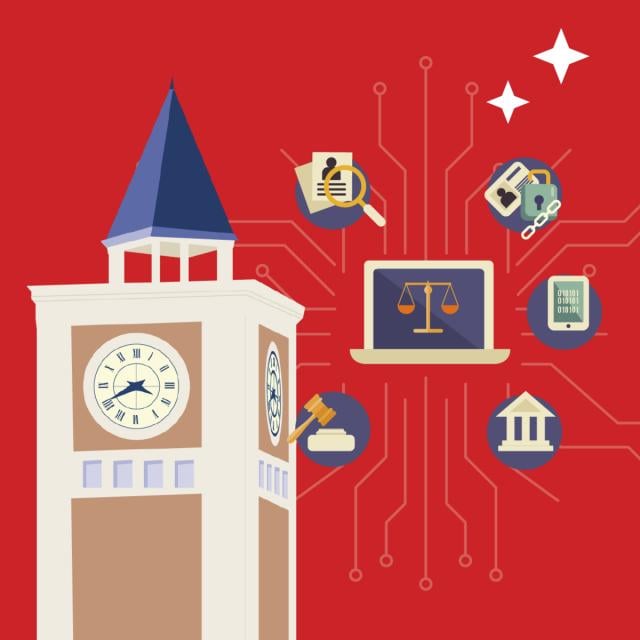
La revolución digital cambió nuestra manera de comunicarnos, de comerciar y de relacionarnos. Ahora, está llegando al mundo del derecho. Este programa te ofrecerá una visión amplia de las principales tendencias que están afectando a la industria legal: - El nacimiento del mercado de legaltech y la aplicación de tecnología en el derecho. - El rol de la inteligencia artificial en la automatización del trabajo de los abogados. - La tecnología de blockchain y su impacto en la forma en que firmamos y ejecutamos contratos. - Las iniciativas para asegurar el acceso a la justicia a través de cortes virtuales y jueces robot.

Class Deals by MOOC List - Click here and see Coursera's Active Discounts, Deals, and Promo Codes.

El programa está dirigido a abogados, notarios, funcionarios, ejecutivos, emprendedores y cualquier persona que desee conocer las principales tendencias tecnológicas y de negocio que están impactando en el mundo legal.
El mundo del derecho va a sufrir mayores cambios en los próximos 20 años que en los últimos 200. El programa te brindará las herramientas necesarias para ser protagonista de esta transformación.
Es tu oportunidad de convertirte en un abogado digital.
Al finalizar este curso, serás capaz de:

  • Analizar el contexto económico, tecnológico y regulatorio que afectará a la industria legal en los próximos años.
  • Reconocer las áreas que serán afectadas por nuevas tecnologías como el blockchain y la inteligencia artificial.
  • Aplicar estas nuevas tecnologías en la mejora de procesos para aumentar la eficiencia y transparencia en la administración de justicia.
  • Construir prototipos de software legal a través de la metodología de design thinking.
  • Decidir cómo capacitarte y orientar tu carrera para ser protagonista de la transformación digital del derecho.

What You Will Learn

  • Un panorama del mercado de legaltech con sus principales actores y protagonistas.
  • El impacto de las nuevas tecnologías digitales sobre las firmas legales, los abogados de empresas y los sistemas de justicia.
  • Las principales tendencias del mercado para orientar tu carrera hacia el futuro de la industria legal.

Syllabus

WEEK 1
El Derecho en el Contexto de la Revolución Digital.
Los abogados están acostumbrados a desarrollar su profesión en una industria estable y previsible. Pero esto está cambiando. Este módulo revisa las principales tendencias tecnológicas y económicas que están afectando a la industria de servicios legales, y presenta una breve historia del nacimiento del legaltech. Como ocurrió antes en otros rubros, las fuerzas de la revolución digital están llegando al mundo del derecho.

WEEK 2
La Disrupción de la Inteligencia Artificial en el Derecho.
La inteligencia artificial (IA) ya es parte de nuestras vidas en los sistemas de navegación por GPS, el reconocimiento facial y los motores de recomendación de contenidos. En este módulo, aprenderás de qué forma también está comenzando a transformar la industria legal. Conocerás casos de empresas que utilizan esta tecnología en áreas como la investigación legal, los procesos de confección y revisión de documentos, y hasta la predicción de los resultados de los juicios. Por último, reflexionarás sobre las oportunidades, las amenazas y los dilemas éticos que se plantean en la utilización de robots como abogados y jueces.

WEEK 3
La Disrupción del Blockchain en el Derecho.
En general, el blockchain es conocido por ser la tecnología en la que se basan las criptomonedas como el Bitcoin. Pero su potencial va mucho más allá de las finanzas. En este módulo, estudiarás de qué forma el blockchain puede ser una formidable herramienta para la transformación del derecho contractual, comercial y de propiedad intelectual. Aprenderás cómo esta tecnología puede disrumpir a los notarios en actividades de certificación. Además, conocerás el concepto de contratos inteligentes, acuerdos de ejecución automática que pueden potenciar la transparencia y eficiencia del sistema legal.

WEEK 4
Innovación Para el Acceso a la Justicia
Las Naciones Unidas consideran al acceso a la justicia como un derecho humano básico. Sin embargo, todos los años, más de 420 millones de casos quedan sin resolver. En este módulo, estudiarás los desafíos de acceso a la justicia en un contexto en que una parte cada vez mayor del comercio, el trabajo y las inversiones ocurren en línea y en mercados globales. Conocerás las iniciativas desarrolladas por actores públicos y privados para la resolución de disputas en línea y la construcción de cortes virtuales.

WEEK 5
Tu Transformación en un Abogado Digital.
Ahora que conoces las principales tendencias de mercado y las tecnologías que afectan al futuro del derecho, es hora de que encuentres tu lugar en el nuevo contexto. Este módulo te brindará una serie de herramientas y marcos conceptuales para reinventar tu carrera en el marco de la transformación digital de la industria legal.


Go to Class
MOOC List is learner-supported. When you buy through links on our site, we may earn an affiliate commission.

Related Courses

Technologies and platforms for Artificial Intelligence (Coursera) Coursera
Politecnico di Milano

Technologies and platforms for Artificial Intelligence (Coursera)

This course will address the hardware technologies for machine and deep learning (from the units of an Internet-of-Things system to a large-scale data centers) and will explore the families of machine and deep learning platforms (libraries and frameworks) for the design and development of smart applications and systems.

Aug 17th 2026
4 Weeks
Chemerinsky on Constitutional Law - The Structure of Government (Coursera) Coursera
University of California, Irvine

Chemerinsky on Constitutional Law - The Structure of Government (Coursera)

This course will highlight the construction and interpretation of the U.S. Constitution through the centuries. You'll learn the history behind the Constitution, cases that formed important precedent, and how changes in interpretation have been dependent on shifts in cultural and political climate as well as the composition of the Supreme Court.

Aug 17th 2026
5-12 Weeks
Constitutional Struggles in the Muslim World (Coursera) Coursera
University of Copenhagen

Constitutional Struggles in the Muslim World (Coursera)

Learn what motivates the restive Muslim youth from Tunis to Tehran, what political positions Islamists from Mali to Chechnya are fighting for, where the seeming obsession with Islamic law comes from, where the secularists have vanished to, and whether it makes sense to speak of an Islamic state. This course is a survey of the constitutional ideas and institutions that have developed since the mid 19th century throughout predominantly Muslim countries, but its focus will lie on the actors that have dominated this discourse and shaped its outcomes. We will look at the large body of classical writings on the Islamic state only in so far as it is necessary to understand the contemporary debate, but concentrate on the legal and political developments of the 20th and 21st centuries.

Aug 17th 2026
5-12 Weeks
Web3 and Blockchain Fundamentals (Coursera) Coursera
INSEAD

Web3 and Blockchain Fundamentals (Coursera)

There is a lot of hype around Web3 and blockchain. As with any disruptive technology, there are many competing sources of information. But if we look beyond the hype and mania—not to mention the fear, uncertainty, and doubt—we see something profound happening. We are witnessing one of the largest transformations of wealth in human history—from paper-based analog assets to digital ones. Blockchain represents the first native digital medium for value, and is foundational to the next generation of the Internet—also known as Web3.

Aug 17th 2026
1 Week
Machine Learning Rapid Prototyping with IBM Watson Studio (Coursera) Coursera
IBM

Machine Learning Rapid Prototyping with IBM Watson Studio (Coursera)

An emerging trend in AI is the availability of technologies in which automation is used to select a best-fit model, perform feature engineering and improve model performance via hyperparameter optimization. This automation will provide rapid-prototyping of models and allow the Data Scientist to focus their efforts on applying domain knowledge to fine-tune models. This course will take the learner through the creation of an end-to-end automated pipeline built by Watson Studio’s AutoAI experiment tool, explaining the underlying technology at work as developed by IBM Research.

Aug 17th 2026
4 Weeks
Designing Autonomous AI (Coursera) Coursera
University of Washington,Microsoft

Designing Autonomous AI (Coursera)

When children learn how to hit a baseball, they don’t start with fastballs. Their coaches begin with the basics: how to grip the handle of the bat, where to put their feet and how to keep their eyes on the ball. Similarly, an autonomous AI system needs a subject matter expert (SME) to break a complex process or problem into easier tasks that give the AI important clues about how to find a solution faster.

Aug 17th 2026
4 Weeks
Innovative Teaching with ChatGPT (Coursera) Coursera
Vanderbilt University

Innovative Teaching with ChatGPT (Coursera)

Despite what you may have heard, ChatGPT offers exciting possibilities for supporting innovative teaching and personalized education. This course provides practical techniques that any educator, from K-12 to higher education, can use to help support their teaching. No experience with ChatGPT, prompt engineering, or Generative AI is required.

Aug 17th 2026
1 Week
Leveraging Virtual Assistants for Personal Productivity (Coursera) Coursera
Coursera Instructor Network

Leveraging Virtual Assistants for Personal Productivity (Coursera)

In a fast-paced world, managing personal productivity is crucial. This course introduces beginners to the world of virtual assistants and chatbots and how they can be harnessed to enhance personal productivity. Learn how to use these AI-driven tools effectively to streamline tasks, manage time, and boost overall efficiency.

Aug 17th 2026
1 Week
Prompt Engineering for Web Developers (Coursera) Coursera
Scrimba

Prompt Engineering for Web Developers (Coursera)

Not quite getting the results you want from ChatGPT? Wondering how you can use AI language models to your advantage? Then this course is for you! If you’ve spent any amount of time with AI language models like ChatGPT and Google Bard, you may have noticed the results can sometimes be, well, frustrating. When it comes to leveraging AI language models, your output is often only as good as your input. In other words, it’s all about learning how best to communicate your desired results. Effective prompt engineering is the secret sauce for getting the most out of AI.

Aug 17th 2026
3 Weeks
Quantization Fundamentals (Coursera) Coursera
DeepLearning.AI

Quantization Fundamentals (Coursera)

Generative AI models, like large language models, often exceed the capabilities of consumer-grade hardware and are expensive to run. Compressing models through methods such as quantization makes them more efficient, faster, and accessible. This allows them to run on a wide variety of devices, including smartphones, personal computers, and edge devices, and minimizes performance degradation.

Aug 17th 2026
1 Week