Introduction to Key Constitutional Concepts and Supreme Court Cases (Coursera)

Introduction to Key Constitutional Concepts and Supreme Court Cases (Coursera)

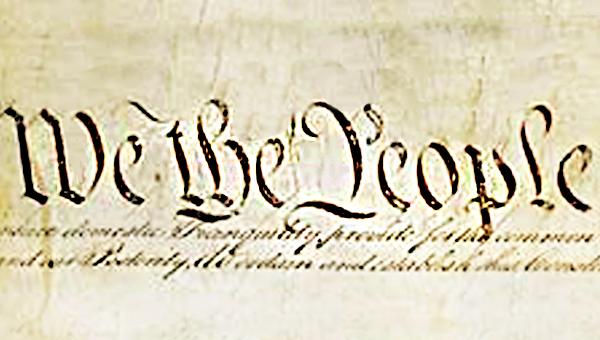
This course offers an introduction to the U.S. Constitution and landmark Supreme Court cases interpreting it. It explores the Constitution’s origins, its amendment over the years, and methods of constitutional interpretation. Topics include the nature and structure of the federal government, the powers of the federal government, and individual rights.

Class Deals by MOOC List - Click here and see Coursera's Active Discounts, Deals, and Promo Codes.

Syllabus

WEEK 1
The Constitution and Three Branches of Government
Classes 1, 2, and 3 discuss why we need a Constitution and the history that preceded its drafting. You will learn about the two conflicting lessons the founders learned from the Revolution and the failure of the Articles of Confederation: the national government can become a tyrant if it is too strong, but the nation will fall apart if it is too weak. These lectures explore how the drafters sought to balance these concerns in the original Constitution and the many compromises it contains. You will also learn about two approaches to interpreting the Constitution: Originalism and Living Constitutionalism. Classes 4, 5, and 6 explore the powers of the legislative, executive, and judicial branches of government and the separation of powers between those branches. The Framers gave the federal government limited powers, and divided those powers among the three branches in order to protect individual liberty and state authority.

WEEK 2
Amendments and the First Amendment
This segment first explores constitutional amendments, including the Bill of Rights, and the Reconstruction and Progressive-era Amendments. Then, we will take a detailed look at one of the most important amendments: the First. We will learn about the constitutional protections for speech and religion, how they have changed over time, and how they apply to various circumstances. Finally, we will learn about the Establishment Clause and what it means in today's society.

WEEK 3
Criminal Procedure and Federalism and Nationalism
We begin here by looking at another group of very important constitutional provisions: the Fourth, Fifth, and Sixth Amendments, which guarantee rights to individuals accused of committing crimes. These amendments protect us against unreasonable searches, ensure our right to remain silent in the face of police questioning, and allow us to demand the assistance of counsel and trial by jury. These rights are fundamental to our system of criminal justice. Then we will shift our focus to examining the Second Amendment, the right to bear arms, and incorporation. We will also discuss the Ninth and Tenth Amendments, unenumerated rights, and states' rights, and finish by considering the implications of the Civil War and Reconstruction for the balance of power between the federal government and the states.

WEEK 4
The Fourteenth Amendment and Modern Controversies
The first three lessons consider the equal protection and due process clauses of the 14th Amendment. We will begin by discussing race discrimination and the anti-classification and anti-subordination perspectives on equal protection. Next, we will discuss sex discrimination and the right to an abortion derived from the due process clause. Finally, we will examine discrimination based on sexual orientation, and the social progression of major civil rights movements in the United States. The final three lessons in this module consider some modern constitutional controversies. First, we will learn about presidential war powers. Next, we will analyze free speech in the context of campaign finance reform. Finally, we will discuss federal legislative power with a focus on health care reform.


Go to Class
MOOC List is learner-supported. When you buy through links on our site, we may earn an affiliate commission.

Related Courses

American Contract Law II (Coursera) Coursera
Yale University

American Contract Law II (Coursera)

Contracts I & II provides a comprehensive overview of contract law in the United States. The course covers most of the key concepts found in a first year law school class. Each lecture is based on one or more common-law cases, integrating legal doctrines with policy discussions. The course also covers key sections from the Uniform Commercial Code (UCC), which governs the sale of goods.

Jul 6th 2026
5-12 Weeks
Healthcare Data Security, Privacy, and Compliance (Coursera) Coursera
Johns Hopkins University

Healthcare Data Security, Privacy, and Compliance (Coursera)

In the final course of the Healthcare IT Support program, we will focus on the types of healthcare data that you need to be aware, complexities of security and privacy within healthcare, and issues related to compliance and reporting. As a health IT support specialist, you’ll be exposed to different types of data sources and data elements that are utilized in healthcare. It’s important for you to understand the basic language of healthcare data and for you to recognize the sensitive nature of protected health information (PHI). Maintaining data privacy and security is everyone’s responsibility, including IT support staff!

Jul 6th 2026
4 Weeks
Revolutionary Ideas: Borders, Elections, Constitutions, Prisons (Coursera) Coursera
Rutgers University

Revolutionary Ideas: Borders, Elections, Constitutions, Prisons (Coursera)

What is the purpose of government? Why should we have a State? What kind of State should we have? Even within a political community, there may be sharp disagreements about the role and purpose of government. Some want an active, involved government, seeing legal and political institutions as the means to solve our most pressing problems, and to help bring about peace, equality, justice, happiness, and to protect individual liberty.

Jun 29th 2026
5-12 Weeks
Digital Governance (Coursera) Coursera
Erasmus University Rotterdam

Digital Governance (Coursera)

Big data, artificial intelligence, machine learning, autonomous cars, chatbots, just a few terms that have become a part of our professional legal and political vocabulary. Emerging technologies and technological advancement have confronted us in our daily practice and will continue to do so in the future. Whether we’re buying something online, taking part in an election, or chatting with friends across the globe. Technology is here and it is here to stay.

Jun 29th 2026
5-12 Weeks
A Law Student's Toolkit (Coursera) Coursera
Yale University

A Law Student's Toolkit (Coursera)

Whether you are an advanced law student looking to review the basics, or an aspiring law student looking for head start, this course will help you build the foundation you will need to succeed in law school and beyond. This course will introduce you to terminology, concepts, and tools lawyers and legal academics use to make their arguments. It will help you follow these arguments—and make arguments of your own.

Jul 6th 2026
3 Weeks
Patrick Henry: Forgotten Founder (Coursera) Coursera
University of Virginia,UVA Lifetime Learning, Patrick Henry Memorial Foundation

Patrick Henry: Forgotten Founder (Coursera)

“Give me liberty, or give me death:” Remembering Patrick Henry, the Forgotten Founder. Patrick Henry was enormously popular during the American Revolution. Even Thomas Jefferson, who over time developed a deep loathing of Henry (some would say jealousy), had to admit that “it is not now easy to say what we should have done without Patrick Henry.” Edmund Randolph, a patriot leader in his own right, explained that “It was Patrick Henry … awakening the genius of his country, and binding a band of patriots together to hurl defiance at the tyranny of so formidable a nation as Great Britain.”

Jun 29th 2026
5-12 Weeks
Data Privacy Fundamentals (Coursera) Coursera
Northeastern University

Data Privacy Fundamentals (Coursera)

This course is designed to introduce data privacy to a wide audience and help each participant see how data privacy has evolved as a compelling concern to public and private organizations as well as individuals. In this course, you will hear from legal and technical experts and practitioners who encounter data privacy issues daily.

Jul 1st 2026
3 Weeks
The Construction Industry: The Way Forward (Coursera) Coursera
Columbia University

The Construction Industry: The Way Forward (Coursera)

This course provides an introduction on types of the construction projects as well as the main concern of the productivity challenge in the construction industry. Through case studies, you will learn the industry characteristics and its unique environment that led to such productivity performance as well as touch base on other several examples of challenges we are facing internally in the industry.

Jun 29th 2026
5-12 Weeks
Introduction to International Criminal Law (Coursera) Coursera
Case Western Reserve University

Introduction to International Criminal Law (Coursera)

From the Nuremberg trial to the case against Saddam Hussein, from the prosecution of Al-Qaeda terrorists to the trial of Somali pirates – no area of law is as important to world peace and security as international criminal law. Taught by one of the world’s leading experts in the field, this course will educate students about the fundamentals of international criminal law and policy. We will explore the contours of international crimes such as genocide, war crimes, terrorism, and piracy. We will examine unique modes of international criminal liability and specialized defenses. And we will delve into the challenges of obtaining custody of the accused and maintaining control of the courtroom.

Jun 29th 2026
5-12 Weeks
Surviving Disruptive Technologies (On Demand) (Coursera) Coursera
University of Maryland, College Park

Surviving Disruptive Technologies (On Demand) (Coursera)

The purpose of this course is to help individuals and organizations survive when confronted with disruptive technologies that threaten their current way of life. We will look at a general model of survival and use it to analyze companies and industries that have failed or are close to failing. Examples of companies that have not survived include Kodak, a firm over 100 years old, Blockbuster and Borders.

Jun 29th 2026
4 Weeks