The Politics of Skepticism (Coursera)

The Politics of Skepticism (Coursera)

This is a course about the history of Skepticism from the ancient Greeks to today, with special attention to the political ramifications of questioning man's ability to know the world and himself with any certainty. We will discuss the debates raging between Plato and the Sophists, the rise of Christianity in the Roman world, and the so-called 'Skeptical Crisis' of the Renaissance as well as Pierre Bayle's Skepticism and David Hume's.

Class Deals by MOOC List - Click here and see Coursera's Active Discounts, Deals, and Promo Codes.

In addition the Natural Law tradition will be explored and the relationship between Skepticism and Conservatism.
In the second part, we will explore the systematic relations between Skepticism and politics. What is skeptical doubt? When is doubt relevant? How does Skepticism relate to tolerance and to freedom of expression? And can it help us to solve political problems not only in a critical, but also in a creative way?

Syllabus

WEEK 1
Political Origins
We will discuss the historical and philosophical backgrounds to Plato's rejection of democracy: they will turn out to be intimately connected to his rejection of Skepticism. In addition we will present Karl Popper's highly critical assessment of Plato's 'totalitarian' alternative.

WEEK 2
Skepticism and Religion
We will sketch some of the skeptical arguments against Christianity developed by Roman philosophers, but we will also see how Skepticism soon turned into an ally of Christian theology. By the end of the seventeenth century, however, Pierre Bayle turned Skepticism into a highly questionable source of support to revealed religion.

WEEK 3
Skepticism and Natural Law
We will turn to the relevance of the early modern natural law tradition, serving as as an antidote to Skepticism. Grotius's efforts will be discussed, and we will see how during the eighteenth century David Hume pushed Skepticism to its ultimate and highly disturbing conclusion.

WEEK 4
Skepticism and Conservatism
We will focus on the intimate relationship between Skepticism and the origins of eighteenth-century conservatism: Edmund Burke's analysis of the French Revolution will be put into perspective. But we will also pay attention to the way in which Skepticism came to serve as a progressive and liberating force, for instance in its critique of biblical authority.

WEEK 5
“There’s a method to his madness”: Responses to Cartesian Skepticism
We will discuss the specific and influential way in which Rene Descartes defined the problems of Skepticism, not only the question whether knowledge is possible, but also the question whether the external world and all the objects and properties in it, really exist. But instead of considering Descartes’ own rationalist response, we will then move on to consider the alternative responses of John Locke, Charles Peirce, and John Austin.

WEEK 6
Fallibilism, prejudices and toleration: Lessons from Pyrrhonian Skepticism
We will address the question whether, in what sense, and to what extent, Skepticism provides good reasons to do away with prejudices and to adopt religious tolerance. First we will distinguish carefully between belief and truth. Then we will consider the attitude of the positive Skeptic: truth exists, but all our beliefs are and remain prejudices. Finally, we will investigate the role that this epistemic predicament plays in arguments for toleration.

WEEK 7
The marketplace of ideas: An imaginative argument for freedom of expression
We will consider Mill’s argument from “the marketplace of ideas” for both freedom of opinion and freedom of expression of opinion. If ideas can compete freely, truth will emerge. Just as a free market is self correcting, speech should not be restricted, because in a free and open encounter, the true and sound ideas will survive, and the false and unsound ideas will vanquish. We will identify the Skeptical assumptions of Mill’s argument and we will evaluate it.

WEEK 8
The benefit of the doubt: Critical creative problem solving in politics
What is the benefit of the doubt? What good can come from the confrontation with alternative views or rival opinions? First we will learn that one of the most effective ways to boost the carefulness of problem solving processes is by pushing on alternatives. Then we will consider the role of organized doubt in meetings, deliberations or political negotiations; to find a solution or to reach an agreement, the participants should deliberately adopt the perspective of the others and make their rival opinions relevant.
Go to Class
MOOC List is learner-supported. When you buy through links on our site, we may earn an affiliate commission.

Related Courses

Overcoming Dyslexia (Coursera) Coursera
Yale University

Overcoming Dyslexia (Coursera)

Dyslexia is everywhere, touching so many children and adults, and while science has made extraordinary progress in understanding and clarifying the condition, this incredible powerful knowledge rarely reaches those who most need to know and would greatly benefit from it. Our goal is to change all this with the Coursera you are about to view, produced by Dr. Sally Shaywitz, the Audrey G. Ratner Professor in Learning Development, both the leading scientist studying dyslexia and the most devoted advocate for helping those who are dyslexic.

Oct 3rd 2026
5-12 Weeks
Pets, Politics and Pandemics (Coursera) Coursera
Columbia University

Pets, Politics and Pandemics (Coursera)

This course is designed to be a fun and accessible introduction to the topic of systems theory. Systems theory describes a number of fundamental concepts that undergird a broad array of phenomena across many different social, political and natural arenas. It is from this broad applicability that the course derives its title: Pets (social), politics (political and economic) and Pandemics (natural).

Oct 5th 2026
5-12 Weeks
Introduction to English Common Law (Coursera) Coursera
University of London

Introduction to English Common Law (Coursera)

The common law of England and Wales is one of the major global legal traditions. This MOOC will give you an introduction to this influential legal system including its history, constitutional background, sources and institutions. You’ll learn about the different ways in which laws are made and interpreted, the English court system and the increasing importance of European Union and human rights law. Now is an especially exciting time to be learning about English common law, given the potential changes that lie ahead in today’s political, economic and social environment – all these pose challenges to and opportunities for the law.

Oct 5th 2026
5-12 Weeks
European Business Law: Understanding the Fundamentals (Coursera) Coursera
Lund University

European Business Law: Understanding the Fundamentals (Coursera)

The European Union is one of the world’s largest and most important economies. This five week course is the first in a series of three that will provide students with an insight into European Business Law. The series ranges from considering the basic structures and principles of the European Union to focusing on various specialized areas of law. Each course will give the students an understanding of the laws and policies that regulate the internal market of European Union, as well as relevant case law and useful inputs from leading practitioners in the field.

Oct 5th 2026
5-12 Weeks
FinTech Law and Policy (Coursera) Coursera
Duke University

FinTech Law and Policy (Coursera)

Being a successful FinTech firm requires more than just great technology; it also requires an understanding of the laws and regulations applicable to your business. This course will provide you with that understanding. You will learn about the critical legal, regulatory, and policy issues associated with cryptocurrencies, initial coin offerings, online lending, new payments and wealth management technologies, and financial account aggregators.

Oct 5th 2026
5-12 Weeks
Arch of Titus: Rome and the Menorah (Coursera) Coursera
Yeshiva University

Arch of Titus: Rome and the Menorah (Coursera)

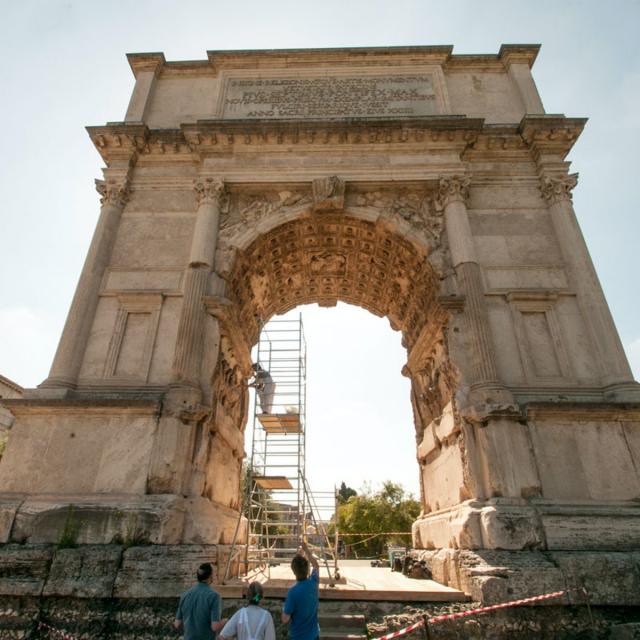
The Arch of Titus: Rome and the Menorah explores one of the most significant Roman monuments to survive from antiquity, from the perspectives of Roman, Jewish and later Christian history and art. The Arch of Titus commemorates the destruction of Jerusalem by the emperor Titus in 70 CE, an event of pivotal importance for the history of the Roman Empire, of Judaism, of Christianity and of modern nationalism. Together with your guide, Professor Steven Fine, you will examine ancient texts and artifacts, gaining skills as a historian as you explore the continuing significance of the Arch of Titus from antiquity to the very present.

Sep 28th 2026
5-12 Weeks
Citizenship and the Rule of Law (Coursera) Coursera
University of London

Citizenship and the Rule of Law (Coursera)

"Be you so high, the law is above you." This principle, part of the Rule of Law, has come to represent the powerful idea that even politicians and monarchs are bound by the law. However in an age of powerful corporations, international cyber-crime and popular support for authoritarian leaders, the Rule of Law is under threat worldwide.

Oct 5th 2026
5-12 Weeks
International Law in Action: the Arbitration of International Disputes (Coursera) Coursera
Leiden University

International Law in Action: the Arbitration of International Disputes (Coursera)

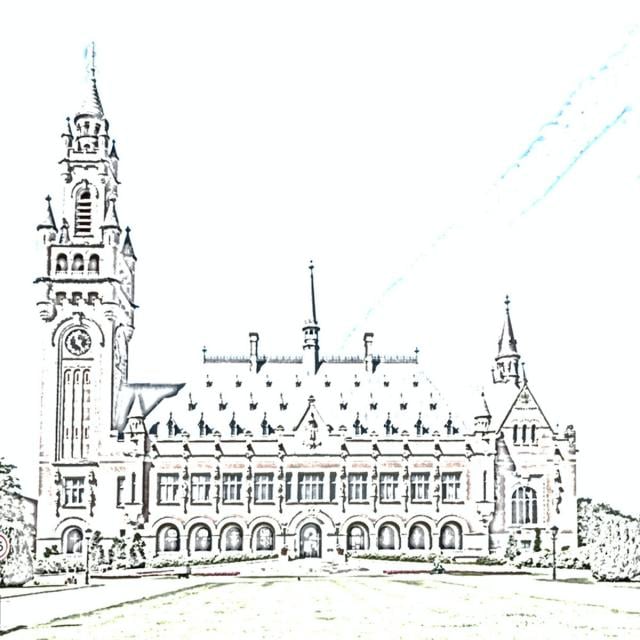
‘The Arbitration of International Disputes’ is the third course of Leiden University’s series on International Law in Action. The first course covered generalities on the international courts and tribunals in The Hague, while the second course provided an insider's perspective into the work of international criminal courts and tribunals. This third course explores the major aspects of international arbitration as one of the most common method of international dispute settlement .

Oct 5th 2026
4 Weeks
Democracia y decisiones públicas. Introducción al análisis de políticas públicas (Coursera) Coursera
Universitat Autònoma de Barcelona

Democracia y decisiones públicas. Introducción al análisis de políticas públicas (Coursera)

¿Qué son las políticas públicas? Son la plasmación más concreta de la política. Lo que los gobiernos hacen, y dejan de hacer, para hacer frente a los problemas colectivos. Este curso trata sobre cómo se decide qué problemas abordar y qué soluciones adoptar. Un proceso primordialmente político y social que suele escapar al análisis puramente racional.

Sep 28th 2026
5-12 Weeks
Taiwan Law in Focus: Economy, Society and Democracy (Coursera) Coursera
National Taiwan University

Taiwan Law in Focus: Economy, Society and Democracy (Coursera)

“Taiwan Law in Focus” is the first online course provided by the College of Law, National Taiwan University. This course will give you an introduction to the legal system in Taiwan, which includes the topics of Constitution, administration law, criminal law, civil law, corporative law, and some related issues. You will learn about the brief history of Taiwan’s legal system and its transition in recent decades.

Oct 5th 2026
5-12 Weeks
Civic Engagement in American Democracy (Coursera) Coursera
Duke University

Civic Engagement in American Democracy (Coursera)

So how does the American political system work? Who are some of the key actors? What are key concepts for a student trying to understand what’s going on? How can I as a citizen influence politics? Civic Engagement in American Democracy takes on these and other key questions. We’re Dr. Nicholas Carnes and Dr. Bruce Jentleson, the principal course instructors. Along with our Duke faculty colleagues who also contributed modules, we’ve designed the course to provide a strong foundational introduction to US politics.

Oct 5th 2026
4 Weeks