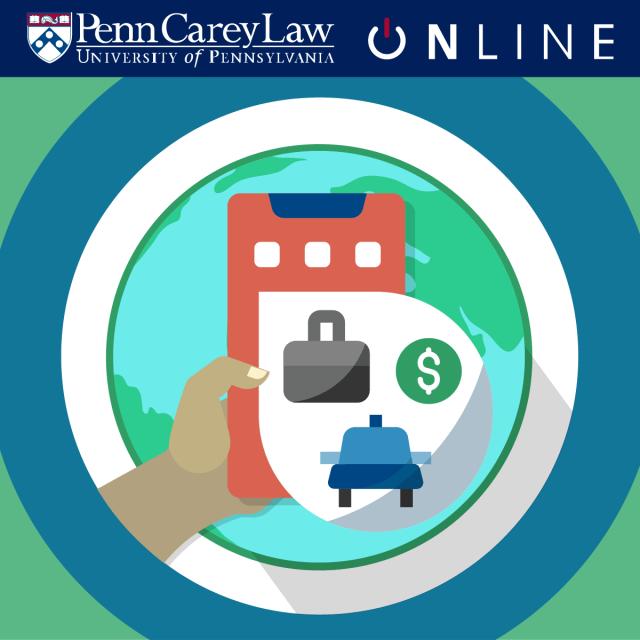
Employment Law: The Gig Economy (Coursera)

Employment Law: The Gig Economy (Coursera)

Gig work, a type of work that is done on a short-term or freelance basis, has exploded in popularity in recent years. The term gig work is commonly used to discuss work for businesses that facilitate peer-to-peer transactions. People usually think of ridesharing apps such as Uber and Lyft, but the categories of gig work have expanded rapidly. Although people are quick to identify gig work, the newness of the concept has left many gaps in the legal definitions of what gig work is and how gig workers should be protected. This course seeks to clear up misconceptions about gig workers through an examination of various legal cases, examining grey areas of the law and also providing possible alternatives.

Class Deals by MOOC List - Click here and see Coursera's Active Discounts, Deals, and Promo Codes.

We begin by examining how the gig economy is defined in terms of the relationships between employer, employee, and consumer, and we then examine how the gig economy is defined legally. We also explore how gig work classification has evolved over time through various court rulings. We will then determine the areas where court precedents have still fallen short in the coverage of worker protections offered to other employee statuses but not to gig workers. Finally, we will propose alternative solutions to gig worker classification that would increase worker benefits among other protections.

Syllabus

WEEK 1
Introduction to Gig Work
Welcome to this course on The Gig Economy! In this introductory module, we will introduce the concept of gig work and examine how it has evolved. Then, we will discuss why the gig economy is relevant to businesses today. Finally, we will explore how the gig economy poses a regulatory challenge to the US legal system.

WEEK 2
Employment Status Classifications
This module explores how employment status classifications pose a threat to the gig economy. Namely, we will discuss how Court rulings have evolved overtime, attempting to decide gig work employment classification with a series of legal tests. Then, we will explore the implications of Dynamex on the future of gig work regulation. Finally, we will explain why the Control Test is insufficient, proposing alternative solutions.

WEEK 3
Classification as an Employee
This module begins by exploring the regulatory framework covering workers with “EE” status. Even though such a status change is unlikely to happen, we will then discuss how giving gig workers “EE” status could change their collective bargaining power. We will detail a few union-like alternatives for gig workers. Finally, we will use Seattle as a case study to compare how gig worker’s protection has progressed in the US vs other countries.

WEEK 4
Limited Protections for Gig Workers
In this final module, we will cover how gig work employment status classification eliminates certain protections available for other workers. Specifically, we will analyze how legal gaps have left space for gig worker discrimination. Finally, we will discuss how gig economy workers don’t have access to employment benefits offered to other workers such as unemployment insurance and retirement among other things.
Go to Class
MOOC List is learner-supported. When you buy through links on our site, we may earn an affiliate commission.

Related Courses

FinTech Law and Policy (Coursera) Coursera
Duke University

FinTech Law and Policy (Coursera)

Being a successful FinTech firm requires more than just great technology; it also requires an understanding of the laws and regulations applicable to your business. This course will provide you with that understanding. You will learn about the critical legal, regulatory, and policy issues associated with cryptocurrencies, initial coin offerings, online lending, new payments and wealth management technologies, and financial account aggregators.

Oct 5th 2026
5-12 Weeks
Digital Governance (Coursera) Coursera
Erasmus University Rotterdam

Digital Governance (Coursera)

Big data, artificial intelligence, machine learning, autonomous cars, chatbots, just a few terms that have become a part of our professional legal and political vocabulary. Emerging technologies and technological advancement have confronted us in our daily practice and will continue to do so in the future. Whether we’re buying something online, taking part in an election, or chatting with friends across the globe. Technology is here and it is here to stay.

Sep 21st 2026
5-12 Weeks
Internet Giants: The Law and Economics of Media Platforms (Coursera) Coursera
University of Chicago

Internet Giants: The Law and Economics of Media Platforms (Coursera)

Law

This seven-week course will explore the relationship between law and technology with a strong focus on the law of the United States with some comparisons to laws around the world, especially in Europe. Tech progress is an important source of economic growth and raises broader questions about the human condition, including how culture evolves and who controls that evolution. Technology also matters in countless other ways as it often establishes the framework in which governments interact with their citizens, both in allowing speech and blocking it and in establishing exactly what the boundaries are between private life and the government. And technology itself is powerfully shaped by the laws that apply in areas as diverse as copyright, antitrust, patents, privacy, speech law and the regulation of networks.

Sep 28th 2026
5-12 Weeks
ERPO: A Civil Approach to Gun Violence Prevention Teach-Out (Coursera) Coursera
Johns Hopkins University

ERPO: A Civil Approach to Gun Violence Prevention Teach-Out (Coursera)

Evidence shows that 1 life is saved for every 10-20 Extreme Risk Protection Orders (ERPOs) issued. ERPOs are legally issued civil orders that allow people on the front lines to ask a court to prevent a person at imminent risk of harm to themselves or others from purchasing or possessing firearms during a critical period of risk. As of October 2020, ERPO laws have been enacted by nineteen states and the District of Columbia and while some aspects differ by state, the general process for applying and issuing ERPOs are quite similar.

Sep 21st 2026
2 Weeks
Children's Human Rights - An Interdisciplinary Introduction (Coursera) Coursera
University of Geneva

Children's Human Rights - An Interdisciplinary Introduction (Coursera)

Drawing on the contributions of several academic disciplines including law, psychology, sociology, history, educational and health sciences, economy and anthropology, an interdisciplinary approach guides the student into a selection of critical issues concerning children’s rights. Participants will gain insight relative to the development of this specific human rights category, as well as to the evolution of the challenges faced by children over time and society’s efforts to respond.

Oct 5th 2026
5-12 Weeks
Corporate & Commercial Law I: Contracts & Employment Law (Coursera) Coursera
University of Illinois at Urbana-Champaign

Corporate & Commercial Law I: Contracts & Employment Law (Coursera)

This class deals with the business law topics that appear on the CPA exam: Agency, Contracts, Debtor-Creditor Relationships, Government Regulation of Business, and Business Organizations. Students will gain an understanding of how these areas of the law affect businesses and their operations, with an eye on preparation for the business law portions of the REG section of the CPA exam.

Sep 21st 2026
4 Weeks
Cloud Computing Law: Data Protection and Cybersecurity (Coursera) Coursera
Queen Mary University of London

Cloud Computing Law: Data Protection and Cybersecurity (Coursera)

Vast amounts of personal information are processed in the cloud. But who is legally responsible for such ‘personal data’ in cloud environments? What duties do cloud providers like Amazon, Microsoft, and Google have? And what rights can you, as an individual, exercise under data protection law? If you’d like to find out, then this course is for you!

Sep 21st 2026
3 Weeks
International Water Law (Coursera) Coursera
University of Geneva

International Water Law (Coursera)

In recent decades, international law has undergone a series of major developments in order to accommodate the many new facets of freshwater management and protection. The adoption of universal, regional and basin instruments highlights how important it is to study the evolution of international water regulations and to be able to identify the main principles in this field. This course aims to provide the necessary background to understand and examine the regulation applicable to transboundary freshwaters especially to rivers, lakes and aquifers. It presents the principles and legal standards that govern the use, sharing, management and protection of these resources.

Sep 21st 2026
5-12 Weeks
Helping Families Avoid Negative Court Involvement Teach-Out (Coursera) Coursera
Johns Hopkins University

Helping Families Avoid Negative Court Involvement Teach-Out (Coursera)

This course will teach learners how to understand when issues can become legal issues, encourage learners to recognize legal problems early, identify possible “legal soft spots” in their own situations, and act when issues are identified to avoid them escalating. This course will also teach and encourage learners to think preventatively and provide some tools to use with an eye toward preventing future legal issues.

Sep 28th 2026
1 Week
Constitutional Struggles in the Muslim World (Coursera) Coursera
University of Copenhagen

Constitutional Struggles in the Muslim World (Coursera)

Learn what motivates the restive Muslim youth from Tunis to Tehran, what political positions Islamists from Mali to Chechnya are fighting for, where the seeming obsession with Islamic law comes from, where the secularists have vanished to, and whether it makes sense to speak of an Islamic state. This course is a survey of the constitutional ideas and institutions that have developed since the mid 19th century throughout predominantly Muslim countries, but its focus will lie on the actors that have dominated this discourse and shaped its outcomes. We will look at the large body of classical writings on the Islamic state only in so far as it is necessary to understand the contemporary debate, but concentrate on the legal and political developments of the 20th and 21st centuries.

Sep 14th 2026
5-12 Weeks
Legal Tech and the Digital Transformation of Law (Coursera) Coursera
Universidad Austral

Legal Tech and the Digital Transformation of Law (Coursera)

The digital revolution changed the way we communicate and trade. Now, it is coming into the world of law. This program will give you a broad overview of the main trends that are affecting the legal industry: the birth of the legal tech market and the application of technology in law; the role of artificial intelligence in the automation of the work of lawyers; blockchain technology and its impact on the way we sign and execute contracts; initiatives to ensure access to justice through virtual courts and robot judges.

Oct 5th 2026
5-12 Weeks