America's Unwritten Constitution (Coursera)

Offered by Yale University,
America's Unwritten Constitution (Coursera)

An introduction to basic techniques of constitutional interpretation.

Class Deals by MOOC List - Click here and see Coursera's Active Discounts, Deals, and Promo Codes.

Syllabus

WEEK 1
Introduction
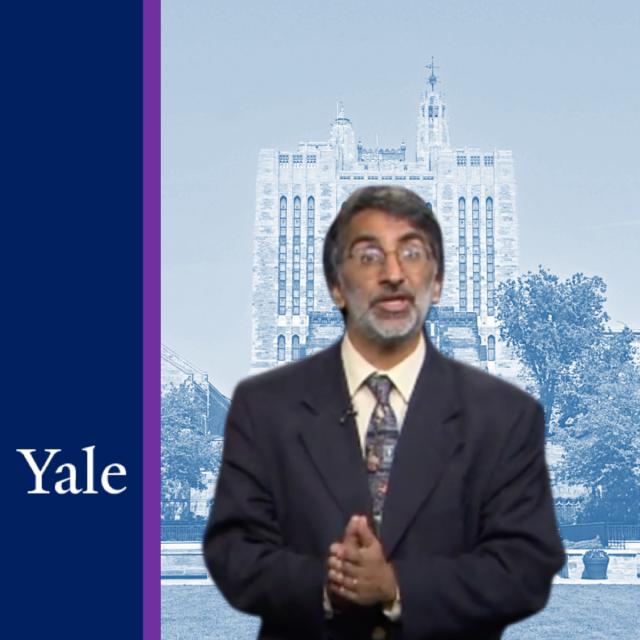
Hello everyone and welcome to America’s Unwritten Constitution! This course is designed to teach you some of the basic tool and techniques for constitutional interpretation. Over the next 13 modules, Professor Akhil Amar will teach you how to go beyond the text of the U.S. Constitution, while still remaining faithful to it. Please, take some time to watch the two introductory videos and read through some of the course information below. Enjoy!
Heeding the Deed
Heeding the Deed, refers to the technique of understanding the Constitution further by looking at issues the nation was dealing with at the time of the passage's adoption. Another way to say this could be; putting yourself in the framer's shoes.
Reading Between the Lines
This module teaches the interpretive technique of reading between the lines. This involves extracting, from the text, things that are implicit, but not expressly stated.

WEEK 2
Hearing the People
In this module, we explore a number of unenumerated rights that exist simply because Americans embody these rights in their everyday lives. Owning pets, using contraception, testifying at one’s own trial, none of these are explicitly mentioned in the text of the Constitution, yet today, they are recognized as protected fundamental rights. Professor Amar explains why.
Confronting Modern Case Law
The "Confronting Modern Case Law" lectures take a closer look at the Warren-lead Supreme Court. Spanning from 1953 to 1969, his court decided many of the most influential cases is U.S. history. Brown v. Board of Education, Miranda v. Arizona, Griswold v. Connecticut to name a few. Professor Amar, will discuss how the court arrived at their decisions, how these rulings changed American society at the time and how they are still affecting it today.

WEEK 3
Putting Precedent in its Place
Professor Amar discusses the role that precedent—that is, prior court decisions—plays in our understanding of the document. He will answer questions about how far courts should go when interpreting the Constitution, and what courts might do when they believe that a prior decision was incorrect.
Honoring the Icons
Here we'll examine documents outside of the Constitution that influence our understanding of the founding text—things like the Declaration of Independence, The Federalist papers, Lincoln’s Gettysburg Address, and Martin Luther King’s I Have a Dream speech. Professor Amar will explain how these sources have offered meaning and guidance in constitutional interpretation.

WEEK 4
Remembering the Ladies
These lectures explore the profound changes American society underwent immediately following the ratification of the 19th amendment. The reverberations of women's enfranchisement are still being strongly felt today. Prof. Amar will highlight some legislation, he believes, directly or indirectly owe their existence to the 19th amendment.
Following Washington's Lead
Undoubtedly, the figure who looms largest in U.S. political history is George Washington. His actions before, during, and after the Presidency set precedents for the executive office which are still observed today. Prof. Amar will explain why Article II of the Constitution was custom written for our first president.

WEEK 5
Interpreting Government Practices
This module delves into how the actual structure of each government branch inherently effects their interactions with one another. The framers purposefully under-specified sections of the Constitution, leaving room for flexibility. They rightly assumed future law makers would fill these “gaps” in procedure as need arose. Indeed they have, each time a gap is discovered
Joining the Party
In this module, Prof. Amar chronicles the adoption and evolution of the two party system in America. You'll learn which framers founded each party and how the creation of the parties caused great friction in government. The lectures go on to explain how the Constitution changed to accommodate the two party system and how these changes have made to the two party system inextricably codified into the Document.

WEEK 6
Doing the Right Thing
This module discusses the role of conscience in government. It is important for us to remember, the Constitution did not implement itself. It was implemented by human beings with minds, hearts, and consciences. Understanding the interaction between these “human elements” and the text is fundamental to proper interpretation of the Constitution. We’ll go over several codified manifestations of the "human element" in the Constitution, such as the veto and juror nullification.
Envisioning the Future
In the course’s final lectures, we’ll look to the future and ask, "what will the constitution look like in 25 years? 50 years? 100?" Might we soon see an amendment allowing for a foreign born president? Or the dissolution of the Electoral College? Prof. Amar will discuss the idea of "constitutional trajectory," and the factors which affect it. We’ll go over how today’s legislators can be looked at as "framers of the future.” Which will lead to the very interesting topic of “sunrise legislation."
Bonus Content Archive
This content is not tied to the assessment materials in any way but it is interesting, entertaining, and informative nonetheless. We encourage all learners to take some time to watch these videos and post about them in the discussion forums!
Conclusion
Prof. Amar recapitulate concepts learned in this course and discuss his hopes for you all; the matriculants of America’s Unwritten Constitution. We sincerely hope you all have enjoyed the course and learned something along the way! Thank you so much for your time and effort.


Go to Class
MOOC List is learner-supported. When you buy through links on our site, we may earn an affiliate commission.

Related Courses

The Politics of Skepticism (Coursera) Coursera
Erasmus University Rotterdam

The Politics of Skepticism (Coursera)

This is a course about the history of Skepticism from the ancient Greeks to today, with special attention to the political ramifications of questioning man's ability to know the world and himself with any certainty. We will discuss the debates raging between Plato and the Sophists, the rise of Christianity in the Roman world, and the so-called 'Skeptical Crisis' of the Renaissance as well as Pierre Bayle's Skepticism and David Hume's.

Aug 3rd 2026
5-12 Weeks
Healthcare Data Security, Privacy, and Compliance (Coursera) Coursera
Johns Hopkins University

Healthcare Data Security, Privacy, and Compliance (Coursera)

In the final course of the Healthcare IT Support program, we will focus on the types of healthcare data that you need to be aware, complexities of security and privacy within healthcare, and issues related to compliance and reporting. As a health IT support specialist, you’ll be exposed to different types of data sources and data elements that are utilized in healthcare. It’s important for you to understand the basic language of healthcare data and for you to recognize the sensitive nature of protected health information (PHI). Maintaining data privacy and security is everyone’s responsibility, including IT support staff!

Jul 20th 2026
4 Weeks
Privacy & Standardisation Capstone (Coursera) Coursera
EIT Digital

Privacy & Standardisation Capstone (Coursera)

Welcome to the capstone on the specialisation on Privacy & Standardisation. This capstone will build on the knowledge you obtained in the courses: Standardisation & Technology, Privacy in the Western World, Privacy in the USA and Privacy in Europe. The capstone will help you build a comprehensive opinion and it will challenge you in all areas of present-day privacy protection. The assignments invite you to use and revisit the material of all the courses. This capstone will link historic milestones to current limitations and offer you a journey through jurisdictions and technological fields alike.

Jul 20th 2026
5-12 Weeks
刑法学总论 Criminal Law (Coursera) Coursera
Peking University

刑法学总论 Criminal Law (Coursera)

刑法是规定犯罪与刑罚的法律。刑法学是研究刑法的科学,主要研究犯罪的成立条件以及刑罚的种类与适用刑法的制度等问题。本课程的主要目的是简明完整地说明现代刑法学总论的基本概念、基本理论与基本方法,包括的主要内容有刑法与刑法学的基本概念,刑罚的正当性,罪刑法定原则,刑法解释,刑法的适用范围,犯罪与犯罪构成的概念,犯罪构成的主要内容,排除犯罪的根据,犯罪的未完成状态,共同犯罪,刑罚的概念与体系,量刑制度,数罪并罚,缓刑、减刑与假释。本课程通过理论说明与案例分析对有关问题进行讲解,鼓励同学们通过刑法发展来认识刑法的生命,通过刑法比较来认识刑法的国际标准,通过确立刑法理想来追求社会的公平正义。

Jul 27th 2026
13-24 Weeks
Helping Families Avoid Negative Court Involvement Teach-Out (Coursera) Coursera
Johns Hopkins University

Helping Families Avoid Negative Court Involvement Teach-Out (Coursera)

This course will teach learners how to understand when issues can become legal issues, encourage learners to recognize legal problems early, identify possible “legal soft spots” in their own situations, and act when issues are identified to avoid them escalating. This course will also teach and encourage learners to think preventatively and provide some tools to use with an eye toward preventing future legal issues.

Aug 3rd 2026
1 Week
Digital Governance (Coursera) Coursera
Erasmus University Rotterdam

Digital Governance (Coursera)

Big data, artificial intelligence, machine learning, autonomous cars, chatbots, just a few terms that have become a part of our professional legal and political vocabulary. Emerging technologies and technological advancement have confronted us in our daily practice and will continue to do so in the future. Whether we’re buying something online, taking part in an election, or chatting with friends across the globe. Technology is here and it is here to stay.

Jul 27th 2026
5-12 Weeks
Constitutional Struggles in the Muslim World (Coursera) Coursera
University of Copenhagen

Constitutional Struggles in the Muslim World (Coursera)

Learn what motivates the restive Muslim youth from Tunis to Tehran, what political positions Islamists from Mali to Chechnya are fighting for, where the seeming obsession with Islamic law comes from, where the secularists have vanished to, and whether it makes sense to speak of an Islamic state. This course is a survey of the constitutional ideas and institutions that have developed since the mid 19th century throughout predominantly Muslim countries, but its focus will lie on the actors that have dominated this discourse and shaped its outcomes. We will look at the large body of classical writings on the Islamic state only in so far as it is necessary to understand the contemporary debate, but concentrate on the legal and political developments of the 20th and 21st centuries.

Jul 20th 2026
5-12 Weeks
Privacy in the USA (Coursera) Coursera
EIT Digital

Privacy in the USA (Coursera)

After having followed Privacy in the Western world you have become acquainted with the overall global legal system and the origins of privacy as a concept as well as privacy as a (human) right. This course deals with the American legal system to protect privacy. In the USA privacy is protected through different legal concepts. Constitutional protection through the 4th Amendment plays a crucial role in protecting the US citizen against unjust governmental intrusion. As part of a myriad of consumer protection laws (e.g. health, financial) personal data is also protected.

Jul 20th 2026
5-12 Weeks
Reducing Gun Violence in America: Evidence for Change (Coursera) Coursera
Johns Hopkins University

Reducing Gun Violence in America: Evidence for Change (Coursera)

Reducing Gun Violence in America: Evidence for Change is designed to provide learners with the best available science and insights from top scholars across the country as well as the skills to understand which interventions are the most effective to offer a path forward for reducing gun violence in our homes, schools, and communities.

Jul 27th 2026
5-12 Weeks
Privacy in the Western World (Coursera) Coursera
EIT Digital

Privacy in the Western World (Coursera)

Welcome to this course about privacy. We are thrilled to see that you are interested and will provide you with a comprehensive study of this intriguiging subject. We hope this course will enthuse you to look further into privacy and personal data regulation. Especially in the light of recent events it becomes more important to know about your (alleged!?) rights and freedoms.

Jul 20th 2026
5-12 Weeks
Children's Human Rights - An Interdisciplinary Introduction (Coursera) Coursera
University of Geneva

Children's Human Rights - An Interdisciplinary Introduction (Coursera)

Drawing on the contributions of several academic disciplines including law, psychology, sociology, history, educational and health sciences, economy and anthropology, an interdisciplinary approach guides the student into a selection of critical issues concerning children’s rights. Participants will gain insight relative to the development of this specific human rights category, as well as to the evolution of the challenges faced by children over time and society’s efforts to respond.

Jul 13th 2026
5-12 Weeks