International Law in Action: the Arbitration of International Disputes (Coursera)

Offered by Leiden University,
International Law in Action: the Arbitration of International Disputes (Coursera)

‘The Arbitration of International Disputes’ is the third course of Leiden University’s series on International Law in Action. The first course covered generalities on the international courts and tribunals in The Hague, while the second course provided an insider's perspective into the work of international criminal courts and tribunals. This third course explores the major aspects of international arbitration as one of the most common method of international dispute settlement .

Class Deals by MOOC List - Click here and see Coursera's Active Discounts, Deals, and Promo Codes.

Through this course you will gain an in-depth understanding of the various facets of international arbitration through the analysis of its role as a mechanism of dispute settlement, its institutions, the fields of law it is applicable to, and, of course, its most famous awards.
The main question we will answer together during this course is "Can international arbitration contribute to the creation of a peaceful world through the settlement of disputes between States and between States and non-State actors?" In order to do so, we will learn the basic historical concepts or arbitration, as well as everything there is to know about the Permanent Court of Arbitration, based in The Hague. We will then dive into the role of international arbitration in settling disputes relating to the Law of the Sea, with a particular insight into the landmark South China Sea Arbitration. For an entire module, we will focus on investment arbitration, its principles and the procedure of the ICSID, the International Centre for Settlement of Investment Disputes. We will conclude the course with a module on the interplay between state immunity and enforcement of arbitral awards. This is brought to light through the Yukos Arbitration which is a perfect illustration of the topic.
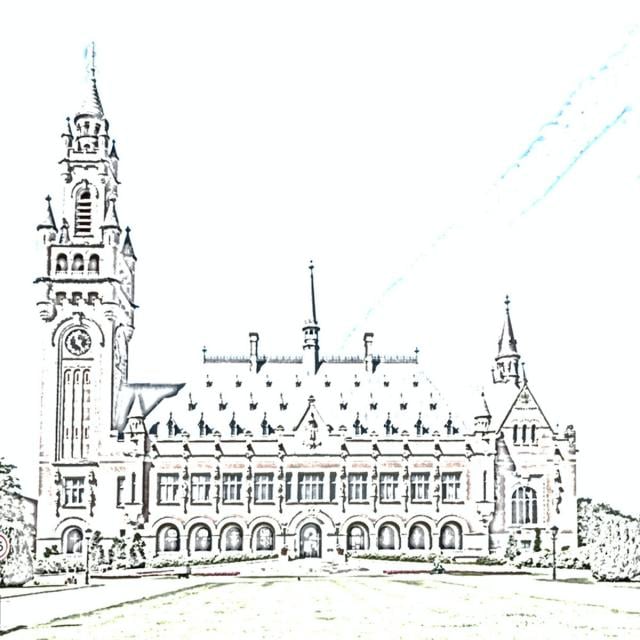
This course offers you an opportunity to gain a better insight into international arbitration, its role and the current issues relating to it. You will gain in-depth knowledge of the principles and rules of arbitration. You will explore the topic through concrete examples and the most prominent arbitrations. You will also grasp the notion of international arbitration navigating between law and politics. International arbitration and The Hague go hand in hand: several key arbitration institutes are located in The Hague and important disputes were settled here through arbitration. The Hague is, so to speak, ‘the place to be for international arbitration’, especially when we are dealing with arbitration between States, or arbitration of investment disputes between foreign investors and States.
Join us for the course and become an expert on international arbitration!

Syllabus

WEEK 1
Welcome to the course
Welcome ! Before you start we invite you to first go through our introduction module and introduce yourself in the forum to meet your fellow learners. If you encounter any difficulties while studying, please let us know in the forum. For technical difficulties or questions regarding the course certificate, you can always contact the Coursera Learner Center. Good luck & we hope you will enjoy this course.
The History and General Principles of International Arbitration
Have you read all the tips for studying online? Are you ready to delve into the world of dispute settlement through international arbitration? This week, you will learn the history of international arbitration and the general principles of international arbitration. We will also discuss the work of the Permanent Court of Arbitration and its role as administrator of arbitrations.

WEEK 2
Arbitration and the Law of the Sea
This week will explore the role of international arbitration in settling disputes between States under the 1982 Law of the Sea Convention (UNCLOS). Why do States choose arbitration to settle their disputes regarding the law of the sea? To answer this question, we will study how arbitration fits into the complex dispute settlement architecture of UNCLOS, and discuss the option given to States parties to choose either arbitration or settlement through adjudication before the International Court of Justice or the International Tribunal for the Law of the Sea. We will conclude this week with an analysis of the famous dispute between the Philippines and China in relation to the parties' maritime entitlements in the South China Sea. Through this case, you will learn how arbitration navigates between law and politics.

WEEK 3
Investment Arbitration
Do you remember, from the first week, the different types of parties to a dispute? What makes an arbitration 'mixed'? This week, we will focus on investment treaty arbitration, the most notable example of arbitration between States and non-State actors. I will introduce you to the main principles of investment treaty arbitration, and the procedure at the International Centre for Settlement of Investment Disputes (ICSID).

WEEK 4
State Immunity and the Enforcement & Validity of International Arbitral Decision
What happens after an arbitral award has been rendered? Can an award be invalidated? How are arbitral awards enforced? This week, we will see how a ‘valid’ decision can be rendered and what the parties who are dissatisfied with a decision can or cannot do. More specifically, you will learn about the aftermath of the Yukos Arbitration, an investment arbitration that perfectly illustrates the interplay between state immunity and the enforcement of arbitral awards.
Go to Class
MOOC List is learner-supported. When you buy through links on our site, we may earn an affiliate commission.

Related Courses

Social Science Approaches to the Study of Chinese Society Part 1 (Coursera) Coursera
The Hong Kong University of Science and Technology - HKUST

Social Science Approaches to the Study of Chinese Society Part 1 (Coursera)

This course seeks to turn learners into informed consumers of social science research. It introduces concepts, standards, and principles of social science research to the interested non-expert. Learners who complete the course will be able to assess evidence and critically evaluate claims about important social phenomena. It reviews the origins and development of social science, describes the process of discovery in contemporary social science research, and explains how contemporary social science differs from apparently related fields. It describes the goals, basic paradigms, and methodologies of the major social science disciplines.

Jul 6th 2026
5-12 Weeks
After the Arab Spring – Democratic Aspirations and State Failure (Coursera) Coursera
University of Copenhagen

After the Arab Spring – Democratic Aspirations and State Failure (Coursera)

Learn why the hope and excitement of the Arab Spring is gone, why so many Arab states are falling apart, why the youth are so frustrated, why there are so many refugees, and what can be done about it. The so-called Arab Spring appeared to end decades of exceptionalism and bring the Arab world back into the mainstream of global developments. The rebellions promised the return of politics and the reassertion of popular sovereignty against their corrupt and geriatric leaders. Much hope and flowery language greeted the young men and women who deposed their leaders and tried to build new, better societies.

Jul 6th 2026
5-12 Weeks
Network Dynamics of Social Behavior (Coursera) Coursera
University of Pennsylvania

Network Dynamics of Social Behavior (Coursera)

How do revolutions emerge without anyone expecting them? How did social norms about same sex marriage change more rapidly than anyone anticipated? Why do some social innovations take off with relative ease, while others struggle for years without spreading? More generally, what are the forces that control the process of social evolution –from the fashions that we wear, to our beliefs about religious tolerance, to our ideas about the process of scientific discovery and the best ways to manage complex research organizations?

Jul 6th 2026
5-12 Weeks
Design Thinking for the Greater Good: Innovation in the Social Sector (Coursera) Coursera
University of Virginia

Design Thinking for the Greater Good: Innovation in the Social Sector (Coursera)

Do you work for a nonprofit or in the social sector? Are you struggling to solve the problems and meet the needs of the people you serve? Come learn more about how design thinking, a human-centered approach to problem solving, can help you truly understand an issue, generate ideas worth testing and iterate to find solutions that make a real difference. Through global stories from areas as diverse as government, health care, and education, we’ll show you the tools, techniques and mindset needed to use design thinking to uncover new and creative solutions in the social sector.

Jul 6th 2026
4 Weeks
Economic Growth and Distributive Justice Part II - Maximize Social Wellbeing (Coursera) Coursera
Tel Aviv University

Economic Growth and Distributive Justice Part II - Maximize Social Wellbeing (Coursera)

If you really care about the big questions in the economies and societies of the 21st century, such as distributive justice - namely, inequality of income or wealth, and its correlation with economic growth - this course is meant for you. The knowledge you will gain can truly change your outlook on our world.

Jul 6th 2026
5-12 Weeks
Overcoming Dyslexia (Coursera) Coursera
Yale University

Overcoming Dyslexia (Coursera)

Dyslexia is everywhere, touching so many children and adults, and while science has made extraordinary progress in understanding and clarifying the condition, this incredible powerful knowledge rarely reaches those who most need to know and would greatly benefit from it. Our goal is to change all this with the Coursera you are about to view, produced by Dr. Sally Shaywitz, the Audrey G. Ratner Professor in Learning Development, both the leading scientist studying dyslexia and the most devoted advocate for helping those who are dyslexic.

Jul 11th 2026
5-12 Weeks
Droit International de l'Eau Douce (Coursera) Coursera
University of Geneva

Droit International de l'Eau Douce (Coursera)

Law

Au cours des dernières décennies, le droit international a connu des développements majeurs afin de tenir compte des multiples facettes que revêt la gestion et la protection des eaux douces. L’adoption d’instruments universels, régionaux et de bassins souligne l’importance d’étudier l’évolution de la réglementation internationale relative à l’eau et d’identifier les grands principes en ce domaine. Aussi, ce cours vise à offrir les bases nécessaires pour appréhender et examiner la régulation qui s’applique eaux douces transfrontières notamment aux fleuves, aux lacs et aux aquifères.

Jul 6th 2026
5-12 Weeks
Investments II: Lessons and Applications for Investors (Coursera) Coursera
University of Illinois at Urbana-Champaign

Investments II: Lessons and Applications for Investors (Coursera)

In this course, you will start by reviewing the fundamentals of investments, including the trading off of return and risk when forming a portfolio, asset pricing models such as the Capital Asset Pricing Model (CAPM) and the 3-Factor Model, and the efficient market hypothesis. You will be introduced to the two components of stock returns – dividends and capital gains – and will learn how each are taxed and the incentives provided to investors from a realization-based capital gains tax.

Jul 6th 2026
4 Weeks
American Contract Law II (Coursera) Coursera
Yale University

American Contract Law II (Coursera)

Contracts I & II provides a comprehensive overview of contract law in the United States. The course covers most of the key concepts found in a first year law school class. Each lecture is based on one or more common-law cases, integrating legal doctrines with policy discussions. The course also covers key sections from the Uniform Commercial Code (UCC), which governs the sale of goods.

Jul 6th 2026
5-12 Weeks
Privacy & Standardisation Capstone (Coursera) Coursera
EIT Digital

Privacy & Standardisation Capstone (Coursera)

Welcome to the capstone on the specialisation on Privacy & Standardisation. This capstone will build on the knowledge you obtained in the courses: Standardisation & Technology, Privacy in the Western World, Privacy in the USA and Privacy in Europe. The capstone will help you build a comprehensive opinion and it will challenge you in all areas of present-day privacy protection. The assignments invite you to use and revisit the material of all the courses. This capstone will link historic milestones to current limitations and offer you a journey through jurisdictions and technological fields alike.

Jul 6th 2026
5-12 Weeks
Water Resources Management and Policy (Coursera) Coursera
University of Geneva

Water Resources Management and Policy (Coursera)

Water management today is faced with new challenges such as climate change or the effects of human activity. Public and private stakeholders who are active in this field must develop new ways to better manage the water cycle "as a whole". The objective of this MOOC is to develop an understanding of the problems related to water management. Firstly, this course will define a resource and, more specifically, the resource of water.

Jul 6th 2026
5-12 Weeks