An Introduction to American Law (Coursera)

An Introduction to American Law (Coursera)

This course will give you a glimpse into six different areas of American law: Tort Law, Contract Law, Property, Constitutional Law, Criminal Law, and Civil Procedure. You will gain insight into the complexities and dilemmas that arise from the application of law in different settings, and what is distinctive about American approaches.

Class Deals by MOOC List - Click here and see Coursera's Active Discounts, Deals, and Promo Codes.

Syllabus

WEEK 1
Welcome
Tort Law
Tort law governs how people may sue each other civilly (as opposed to criminally) in order to receive compensation for harms or injuries other people caused them. In this module, Professor Allen will explore the goals of tort law through a historic case. She will address what makes tort law distinct and issues surrounding negligence and liability.

WEEK 2
Contract Law
Contract law governs how promises between two individuals are enforced. Few areas of law impact our daily lives as much as contract law, and in this module you will gain a deeper understanding of what a contract is and what makes it enforceable. Professor Wilkinson-Ryan will address what constitutes a contract, why the law enforces them, the legal meanings of words in contracts, and the important requirement of consideration. Expectation damages, or the amount a court orders someone who breached a contract to pay will also be explored, all through hypothetical and real cases.

WEEK 3
Property Law
Property law governs the relationship between individuals and things, known as property. In this module, Professor Balganesh will explore the differences between property and tort and contract law and about several specific examples of property law in action: adverse possession, landlord/tenant, and licenses. You will learn about what makes U.S. property law distinct - its origins in common law, imprint of legal realism, and pragmatism.

WEEK 4
Constitutional Law
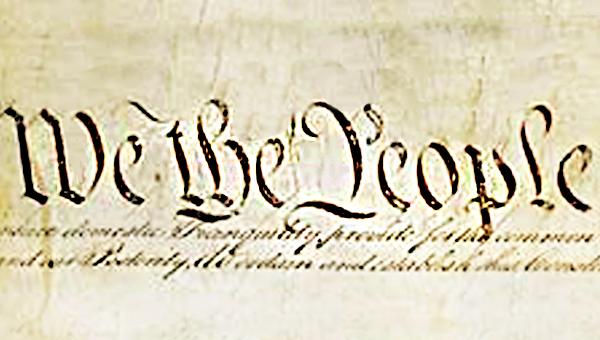
The study of constitutional law is among the most exciting parts of the law because it provides for the structure and functioning of the U.S. government. In this module, Dean Ruger will address the document itself, how it has been applied over time, the history of the document, and what makes it unique. The structure of the U.S. government as a government of limited, separated powers will be explored along with the important individual rights the Constitution provides and how the U.S. Constitution compares to others around the world.

WEEK 5
Criminal Law
In this module, Professor Morse will focus on the basics of criminal law, an area of law so exciting that countless TV shows and movies have been based on it. The major aspects of criminal law will be discussed - why we impose punishment, when we impose the most punishment, and how the state proves a criminal case. Defenses to criminal charges, which are divided into justifications and excuses will also be addressed.

WEEK 6
Civil Procedure
In this module, Professor Wolff will introduce us to some of the major issues in civil procedure law. Civil procedure is the study of the rules of court that must be followed by the judge and parties in civil cases (as opposed to criminal cases – criminal procedure is a whole other area of the law, but law students learn civil procedure first because it gives the structure of typical trials). The essence of a law school civil procedure course is the study of the Federal Rules of Civil Procedure. A copy of these is linked in the syllabus for you to scan. The rules tell you how to file a lawsuit and how the court must function while it is considering a lawsuit. Professor Wolff will introduce you to the doctrinal area of procedure and will highlight some of the major modern issues in procedure law.

WEEK 7
Final Exam

Go to Class
MOOC List is learner-supported. When you buy through links on our site, we may earn an affiliate commission.

Related Courses

American Contract Law I (Coursera) Coursera
Yale University

American Contract Law I (Coursera)

American Contract Law I (along with its sister course Contracts II) provides a comprehensive overview of contract law in the United States. The course covers most of the key concepts found in a first year law school class. Each lecture is based on one or more common-law cases, integrating legal doctrines with policy discussions. The course also covers key sections from the Uniform Commercial Code (UCC), which governs the sale of goods.

May 25th 2026
5-12 Weeks
A Law Student's Toolkit (Coursera) Coursera
Yale University

A Law Student's Toolkit (Coursera)

Whether you are an advanced law student looking to review the basics, or an aspiring law student looking for head start, this course will help you build the foundation you will need to succeed in law school and beyond. This course will introduce you to terminology, concepts, and tools lawyers and legal academics use to make their arguments. It will help you follow these arguments—and make arguments of your own.

Jun 8th 2026
3 Weeks
Helping Families Avoid Negative Court Involvement Teach-Out (Coursera) Coursera
Johns Hopkins University

Helping Families Avoid Negative Court Involvement Teach-Out (Coursera)

This course will teach learners how to understand when issues can become legal issues, encourage learners to recognize legal problems early, identify possible “legal soft spots” in their own situations, and act when issues are identified to avoid them escalating. This course will also teach and encourage learners to think preventatively and provide some tools to use with an eye toward preventing future legal issues.

Jun 8th 2026
1 Week
Economic Growth and Distributive Justice Part II - Maximize Social Wellbeing (Coursera) Coursera
Tel Aviv University

Economic Growth and Distributive Justice Part II - Maximize Social Wellbeing (Coursera)

If you really care about the big questions in the economies and societies of the 21st century, such as distributive justice - namely, inequality of income or wealth, and its correlation with economic growth - this course is meant for you. The knowledge you will gain can truly change your outlook on our world.

Jun 8th 2026
5-12 Weeks
Patrick Henry: Forgotten Founder (Coursera) Coursera
University of Virginia,UVA Lifetime Learning, Patrick Henry Memorial Foundation

Patrick Henry: Forgotten Founder (Coursera)

“Give me liberty, or give me death:” Remembering Patrick Henry, the Forgotten Founder. Patrick Henry was enormously popular during the American Revolution. Even Thomas Jefferson, who over time developed a deep loathing of Henry (some would say jealousy), had to admit that “it is not now easy to say what we should have done without Patrick Henry.” Edmund Randolph, a patriot leader in his own right, explained that “It was Patrick Henry … awakening the genius of his country, and binding a band of patriots together to hurl defiance at the tyranny of so formidable a nation as Great Britain.”

Jun 1st 2026
5-12 Weeks
International Water Law (Coursera) Coursera
University of Geneva

International Water Law (Coursera)

In recent decades, international law has undergone a series of major developments in order to accommodate the many new facets of freshwater management and protection. The adoption of universal, regional and basin instruments highlights how important it is to study the evolution of international water regulations and to be able to identify the main principles in this field. This course aims to provide the necessary background to understand and examine the regulation applicable to transboundary freshwaters especially to rivers, lakes and aquifers. It presents the principles and legal standards that govern the use, sharing, management and protection of these resources.

Jun 1st 2026
5-12 Weeks
Introduction to Environmental Law and Policy (Coursera) Coursera
University of North Carolina

Introduction to Environmental Law and Policy (Coursera)

Environmental law may be the one institution standing between us and planetary exhaustion. It is also an institution that needs to be reconciled with human liberty and economic aspirations. This course considers these issues and provides a tour though existing legal regimes governing pollution, water law, endangered species, toxic substances, environmental impact analyses, and environmental risk.

Jun 12th 2026
5-12 Weeks
刑法学总论 Criminal Law (Coursera) Coursera
Peking University

刑法学总论 Criminal Law (Coursera)

刑法是规定犯罪与刑罚的法律。刑法学是研究刑法的科学,主要研究犯罪的成立条件以及刑罚的种类与适用刑法的制度等问题。本课程的主要目的是简明完整地说明现代刑法学总论的基本概念、基本理论与基本方法,包括的主要内容有刑法与刑法学的基本概念,刑罚的正当性,罪刑法定原则,刑法解释,刑法的适用范围,犯罪与犯罪构成的概念,犯罪构成的主要内容,排除犯罪的根据,犯罪的未完成状态,共同犯罪,刑罚的概念与体系,量刑制度,数罪并罚,缓刑、减刑与假释。本课程通过理论说明与案例分析对有关问题进行讲解,鼓励同学们通过刑法发展来认识刑法的生命,通过刑法比较来认识刑法的国际标准,通过确立刑法理想来追求社会的公平正义。

Jun 1st 2026
13-24 Weeks
Internet Giants: The Law and Economics of Media Platforms (Coursera) Coursera
University of Chicago

Internet Giants: The Law and Economics of Media Platforms (Coursera)

Law

This seven-week course will explore the relationship between law and technology with a strong focus on the law of the United States with some comparisons to laws around the world, especially in Europe. Tech progress is an important source of economic growth and raises broader questions about the human condition, including how culture evolves and who controls that evolution. Technology also matters in countless other ways as it often establishes the framework in which governments interact with their citizens, both in allowing speech and blocking it and in establishing exactly what the boundaries are between private life and the government. And technology itself is powerfully shaped by the laws that apply in areas as diverse as copyright, antitrust, patents, privacy, speech law and the regulation of networks.

Jun 8th 2026
5-12 Weeks
Privacy in the USA (Coursera) Coursera
EIT Digital

Privacy in the USA (Coursera)

After having followed Privacy in the Western world you have become acquainted with the overall global legal system and the origins of privacy as a concept as well as privacy as a (human) right. This course deals with the American legal system to protect privacy. In the USA privacy is protected through different legal concepts. Constitutional protection through the 4th Amendment plays a crucial role in protecting the US citizen against unjust governmental intrusion. As part of a myriad of consumer protection laws (e.g. health, financial) personal data is also protected.

Jun 8th 2026
5-12 Weeks