Revolutionary Ideas: Borders, Elections, Constitutions, Prisons (Coursera)

Offered by Rutgers University,
Revolutionary Ideas: Borders, Elections, Constitutions, Prisons (Coursera)

What is the purpose of government? Why should we have a State? What kind of State should we have? Even within a political community, there may be sharp disagreements about the role and purpose of government. Some want an active, involved government, seeing legal and political institutions as the means to solve our most pressing problems, and to help bring about peace, equality, justice, happiness, and to protect individual liberty.

Class Deals by MOOC List - Click here and see Coursera's Active Discounts, Deals, and Promo Codes.

Others want a more minimal government, motivated, perhaps, by some of the disastrous political experiments of the 20th Century, and the thought that political power is often just a step away from tyranny. In many cases, these disagreements arise out of deep philosophical disagreements.
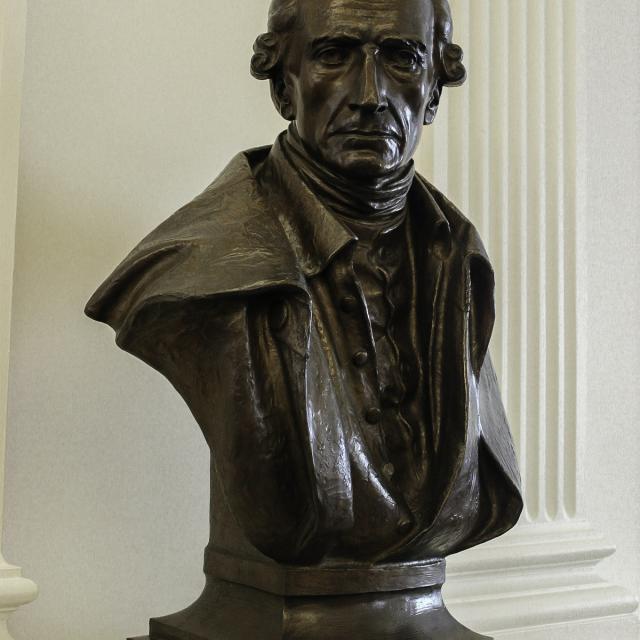
All political and legal institutions are built on foundational ideas. In this course, we will explore those ideas, taking the political institutions and political systems around us not as fixed and unquestionable, but as things to evaluate and, if necessary, to change. We will consider the ideas and arguments of some of the world’s most celebrated philosophers, including historical thinkers such as Plato, Hugo Grotius, David Hume, Thomas Jefferson, and James Madison, and more contemporary theorists such as Michelle Alexander, Kwame Anthony Appiah, Bryan Caplan, Angela Davis, Ronald Dworkin, Jon Elster, John Hart Ely, H.L.A. Hart, Michael Huemer, Andrew Rehfeld, and Jeremy Waldron.
The aim of the course is not to convince you of the correctness of any particular view or political position, but to provide you with a deeper and more philosophically-informed basis for your own views, and, perhaps, to help you better understand the views of those with whom you disagree.

Syllabus

Week 1
Introduction to Part II of the Course
An introduction to the course and to some of the fundamental problems in legal and political philosophy.

Week 2
Political Community and Borders
This unit explores the issues of how our political communities are and should be defined. What is the basis of political community? Should we be allowed to change what political community we are a part of? If so, how easily?

Week 3
Representatives, Elections, and Lotteries
This unit examines how our political community, once defined, should make law and policy. Who should get to have a say?

Week 4
Constitutions
This unit examines the role and importance of constitutions. Should we have a constitution? Why might we want one? What should be in it?

Week 5
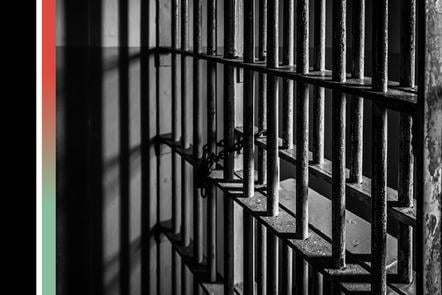
Prisons and Punishment & Conclusions
This unit considers the role of crime and punishment within a political community. What should be illegal? What should happen if people break the law?

Go to Class
MOOC List is learner-supported. When you buy through links on our site, we may earn an affiliate commission.

Related Courses

Mastering bitumen for better roads and innovative applications (Coursera) Coursera
École des Ponts ParisTech

Mastering bitumen for better roads and innovative applications (Coursera)

During the four coming weeks, best experts in bitumen will bring you their knowledge and experience to build a strong understanding of today’s realities and new perspectives on the future of bitumen. Total is the European leader on bitumen markets. Innovation has always been the key to sustainability and durability in the products they develop. Their main objective here is to share technical knowledge and experience to insure bitumen are being used in the most effective and efficient ways for their different applications in road works.

May 18th 2026
4 Weeks
International migrations: a global issue (Coursera) Coursera
Sciences Po

International migrations: a global issue (Coursera)

The world is moving, but not all opinions and governments are willing to accept this poorly understood reality. The issue affects both states and the planet, in a process of globalization and of regionalization of migrations, and raises new questions for international relations, now including the South. This course aims at improving knowledge of the subject, addressing the key issues raised by international migration, and assessing the trends of tomorrow.

Jun 1st 2026
5-12 Weeks
Scotland and Wales Vote 2016: Understanding the Devolved Elections (FutureLearn) FutureLearn
University of Edinburgh

Scotland and Wales Vote 2016: Understanding the Devolved Elections (FutureLearn)

This course will examine the issues, ideas and institutions involved in the Scottish Parliament and Welsh Assembly elections. 2016 is an exciting year for elections in the United Kingdom. Towards the end of the year we might have a referendum on the UK’s EU membership, but we definitely know that there will be elections to the Scottish Parliament and Welsh Assembly in May. Both of these institutions have a significant impact on people’s lives in Scotland and Wales: they control big public policy issues like health, education and transport.

No sessions available
4 Weeks
Citizen Politics in America: Public Opinion, Elections, Interest Groups, and the Media (edX) EdX
HarvardX,Harvard University

Citizen Politics in America: Public Opinion, Elections, Interest Groups, and the Media (edX)

Learn about the forces in American politics that seek to influence the electorate and shift the political landscape. Public opinion has a powerful yet inexact influence on elected officials. Politicians risk their careers if they ignore it, yet its power is not easy to capture nor quantify. This course will look at how political parties, campaigns, social movements, special interests, and the news media all play a role in influencing public opinion.

Self Paced
Self-Paced
An Introduction to American Law (Coursera) Coursera
University of Pennsylvania

An Introduction to American Law (Coursera)

This course will give you a glimpse into six different areas of American law: Tort Law, Contract Law, Property, Constitutional Law, Criminal Law, and Civil Procedure. You will gain insight into the complexities and dilemmas that arise from the application of law in different settings, and what is distinctive about American approaches.

May 11th 2026
5-12 Weeks
Comparative Political Systems (Coursera) Coursera
University of Naples Federico II

Comparative Political Systems (Coursera)

Comparative politics covers a wide variety of topics and themes. The course starts with the definition of the comparative method giving special emphasis to concept formation and historical and institutional approaches. The bulk of the course is devoted to the theory of coalitions and the processes of government formation, functioning, termination. Through several in-depth analyses, the course will throw light on the way democratic regimes are governed. Electoral rules will receive special attention and their impact both on citizens’ behavior and parties and the party system will be thoroughly examined.

May 11th 2026
4 Weeks
The Holocaust: The Destruction of European Jewry (Coursera) Coursera
University of California, Santa Cruz

The Holocaust: The Destruction of European Jewry (Coursera)

The Holocaust: The Destruction of European Jewry is an adaptation of an on-campus course that has been co-taught by Murray Baumgarten, Distinguished Professor of English and Comparative Literature (Literature Department), and Peter Kenez, Professor Emeritus (History Department), for over 20 years at UC Santa Cruz. In this course, you will explore the Holocaust from the overlapping perspectives of literature and history—through memoirs, historical documents, poetry, documentary footage, filmic representations, and novels.

Jun 1st 2026
5-12 Weeks
The Emergence of the Modern Middle East - Part I (Coursera) Coursera
Tel Aviv University

The Emergence of the Modern Middle East - Part I (Coursera)

This course will review the emergence of the modern Middle East from the fall of the Ottoman Empire, at the end of the First World War to the present. We will discuss the Ottoman legacy in the region and the Western imperial impact on the creation of the Arab state system. The course will review the rise and retreat of Arab nationalism, the problems of internal cohesion of the Arab states, issues of religion and state, and the evolution of Islamist politics. We will also focus on the evolution of the Arab-Israeli conflict and its impact on the region and will conclude with an in depth analysis of the “Arab Spring” by placing these contemporary revolutionary events in their historical context.

Jun 1st 2026
4 Weeks