EdX

Democratic to Authoritarian Rule (edX)

Democratic to Authoritarian Rule (edX)

Learn how countries have shifted from democracies to authoritarian societies. This event is part of Michigan’s Teach-Out Series which provides just-in-time community learning opportunities for participants around the world to come together in conversation with the U-M campus community, including faculty experts.

Class Deals by MOOC List - Click here and see EdX's Active Discounts, Deals, and Promo Codes.

How does history help us understand today’s political climate?
Political systems in many countries around the world have shifted from more democratic to more authoritarian tendencies. A deeper understanding and knowledge of this past can inform how we understand contemporary political changes.

This Teach-Out will bring together expert knowledge about democracies and the processes that erode democratic decision-making and structures. By examining historical and comparative patterns, learners will gain a better understanding of contemporary politics.

What you'll learn

  • Make better sense of political changes by thinking systematically about different kinds of impediments to democratic politics and decision making
  • Become familiar with steps through which political systems move toward greater authoritarian rule
  • Learn frameworks to assess how contemporary changes relate to democratic vs. authoritarian tendencies
  • Interact with others for greater critical appreciation of changing political structures and processes
Go to Class
MOOC List is learner-supported. When you buy through links on our site, we may earn an affiliate commission.

Related Courses

The Holocaust - An Introduction (I): Nazi Germany: Ideology, The Jews and the World (Coursera) Coursera
Tel Aviv University,Yad Vashem

The Holocaust - An Introduction (I): Nazi Germany: Ideology, The Jews and the World (Coursera)

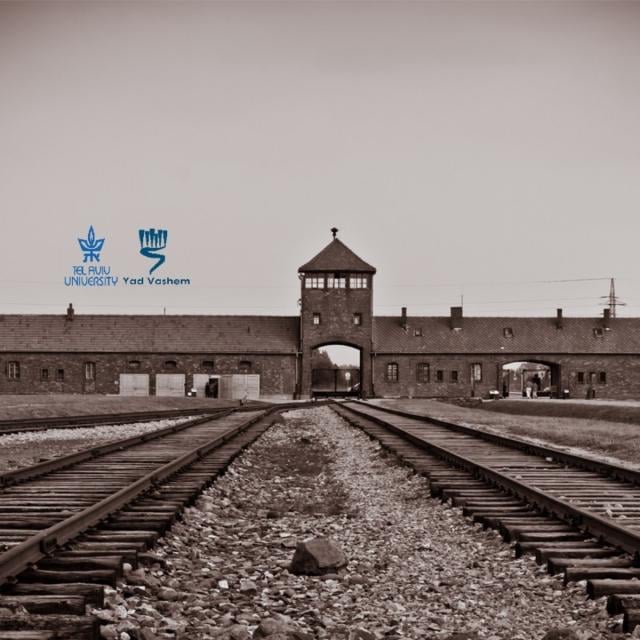
The Holocaust was an inconceivable historical event, which forever robbed Western culture of its innocence. As civilized human beings, we fail to understand how events of such horror could have taken place, and how an idea so inhumanly warped could have spread like wildfire through an entire continent, instigating the systematic annihilation of millions of Jews. This free online course was produced jointly by Tel Aviv University and Yad Vashem – the World Holocaust Remembrance Center. The course tracks the history of the Holocaust and has two parts.

Sep 20th 2026
3 Weeks
The Importance and Power of Music in our Society (Coursera) Coursera
Leiden University,University of the Arts The Hague

The Importance and Power of Music in our Society (Coursera)

Music plays an important role in our daily lives and is woven into the fabric of society. We listen to music while alone or in company, in a dance club or at home, through simple headphones or via high-end speakers, as background or as foreground, after we get up or before we go to bed. Music accompanies us when we are traveling, doing sports, shopping, working or relaxing. This omnipresence of music raises several questions: how does music affect our lives? What is the relation between the society we live in and the role, function, and position of music within that society? How is music influenced by and does music influence social, political, economic, technological, and multiple other developments?

Sep 15th 2026
4 Weeks
Citizen Politics in America: Public Opinion, Elections, Interest Groups, and the Media (edX) EdX
HarvardX,Harvard University

Citizen Politics in America: Public Opinion, Elections, Interest Groups, and the Media (edX)

Learn about the forces in American politics that seek to influence the electorate and shift the political landscape. Public opinion has a powerful yet inexact influence on elected officials. Politicians risk their careers if they ignore it, yet its power is not easy to capture nor quantify. This course will look at how political parties, campaigns, social movements, special interests, and the news media all play a role in influencing public opinion.

Self Paced
Self-Paced
Rule of Law and Democracy in Europe (edX) EdX
KU Leuven University,KULeuvenX

Rule of Law and Democracy in Europe (edX)

Critical and interdisciplinary introduction to democracy and the rule of law in the European Union (EU). Democracy and the rule of law are two of the fundamental values of the EU that are shared among the EU Member States (MS). As of late, however, they have come under increasing pressure. Not only does the Union face criticism about its own democratic and rule of law shortcomings, but it also appears to struggle to find effective responses when faced with the erosion of these values in several of its MS.

Self Paced
Self-Paced
Power, Politics, and Influence at Work (FutureLearn) FutureLearn
University of Manchester

Power, Politics, and Influence at Work (FutureLearn)

Discover the causes of global employment inequalities, how workers gain a voice through unions, and the future of work itself. Help build workers’ rights and a better future for employment and society. With the world of work in unprecedented flux, the role of workers’ rights has never been more pressing, as society grapples with issues such as how to ensure better employment equity and safety.

Self Paced
5-12 Weeks
Taiwan Law in Focus: Economy, Society and Democracy (Coursera) Coursera
National Taiwan University

Taiwan Law in Focus: Economy, Society and Democracy (Coursera)

“Taiwan Law in Focus” is the first online course provided by the College of Law, National Taiwan University. This course will give you an introduction to the legal system in Taiwan, which includes the topics of Constitution, administration law, criminal law, civil law, corporative law, and some related issues. You will learn about the brief history of Taiwan’s legal system and its transition in recent decades.

Oct 5th 2026
5-12 Weeks
Global Diplomacy: the United Nations in the World (Coursera) Coursera
University of London,SOAS University of London

Global Diplomacy: the United Nations in the World (Coursera)

The course offers a well-researched and broad-ranging primer to the United Nations system. Consisting of an introduction to the complex UN family and its history, and a series of ‘snapshots’ of key UN functions, which are used to explore important UN themes and help learners develop important analysis, communication, and policy-based skills.

Sep 28th 2026
5-12 Weeks
Luther and the West (Coursera) Coursera
Northwestern University

Luther and the West (Coursera)

In this course we will discuss the history of some ideas that have been hugely influential in the modern west and that were taken out to the rest of the world. The discussion centers on an extraordinary and historically important figure, a sixteenth century German man named Martin Luther. Luther is recognized today as the originator of many of the most significant ideas that continue to affect and shape who we as modern people are and how we see the world and ourselves for better and for worse.

Sep 21st 2026
5-12 Weeks
Moral Foundations of Politics (Coursera) Coursera
Yale University

Moral Foundations of Politics (Coursera)

When do governments deserve our allegiance, and when should they be denied it? This course explores the main answers that have been given to this question in the modern West. We start with a survey of the major political theories of the Enlightenment: Utilitarianism, Marxism, and the social contract tradition. In each case, we begin with a look at classical formulations, locating them in historical context, but then shift to the contemporary debates as they relate to politics today.

Oct 5th 2026
5-12 Weeks
Global Politics (Coursera) Coursera
University of Naples Federico II

Global Politics (Coursera)

The course explains why international studies originating from the West are currently evolving towards a planetary approach to World politics, with a particular focus on global order and local disorders. Thinking globally helps explain new linkages between changes in the natural environment (demography, climate) and transformations of institutional designs.

Sep 21st 2026
3 Weeks
The Politics of Skepticism (Coursera) Coursera
Erasmus University Rotterdam

The Politics of Skepticism (Coursera)

This is a course about the history of Skepticism from the ancient Greeks to today, with special attention to the political ramifications of questioning man's ability to know the world and himself with any certainty. We will discuss the debates raging between Plato and the Sophists, the rise of Christianity in the Roman world, and the so-called 'Skeptical Crisis' of the Renaissance as well as Pierre Bayle's Skepticism and David Hume's.

Sep 28th 2026
5-12 Weeks