Religious Transformation in Early China: the Period of Division (Coursera)

Religious Transformation in Early China: the Period of Division (Coursera)

This sequence of four courses will propose a multi-disciplinary approach to the study of Chinese cultural history conceived of as a succession of modes of rationality (philosophical, bureaucratic, and economic). The focus will be on the moments of paradigm shift from one mode of rationality to another. For each of these moments, cultural facts and artifacts—thought, literature, ritual—will be examined in relationship to changing social, political, and economic systems.

Class Deals by MOOC List - Click here and see Coursera's Active Discounts, Deals, and Promo Codes.

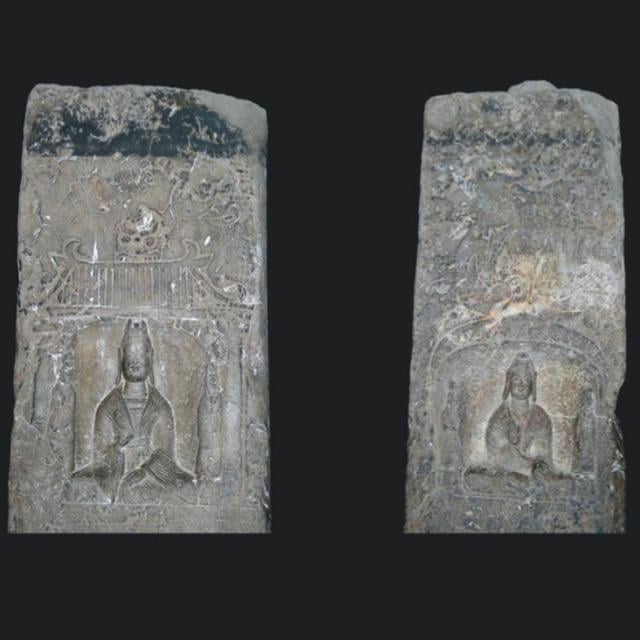
The first two courses will cover the periods of the Warring States (481-256 BCE) and the Period of Division (220-589 CE), with a brief excursion into the Han (206 BCE-220 CE). The Warring States laid the social and cultural foundations for the emergence of the imperial mode of rationality; the Period of Division saw the Buddhist “conquest” of China and the emergence of a rationality defined by the opposition of the Three Teachings to shamanism, that is, of a clear contrast between elite and popular culture.
The third and fourth courses will focus on the emergence of modern China in the Song-Yuan (960-1368) and of today’s China 1850 to the present. We will see how the modern attack on religion, redefined as "superstition", led not only to religious reform movements but also to a society in which science and the nation became the primary value systems promoted by the state.
The courses are listed below:

Syllabus

WEEK 1
MODULE 06 Religious Transformation in the Period of Division (220-589 AD)
This module presents the relationship between the elite attack on shamanism and their promotion of a cosmology that transformed medicine and laid the foundations for both self-cultivation and a bureaucratic empire.

WEEK 2
Module 07 Religious Communities
This module introduces the three kinds of new religious community that appear from the second century on: those organized around transcendents, by the Heavenly Masters, and by the Buddhists.

WEEK 3
Module 08 Rituals
This module explains how Buddhist and Daoist rituals revolutionized Chinese society and individuals. It reveals the importance of orality in Buddhism, written documents in Daoism.

WEEK 4
Module 09 Scriptures
This module explores how Buddhist and Daoist scriptures confirm the oral/aural bias of Buddhism, the written/visual bias of Daoism. We are going to learn the centrality of logic in Buddhism, of cosmology in Daoism.

WEEK 5
Module 10 Literature
This module indicates the attractiveness of key Buddhist scriptures and how Chinese poetry was transformed by Buddhism. It also shows how the “public sermons” of Buddhism contrasted with the “private records of the imagination” of Daoism.

WEEK 6
Module 11 Sacred Geography
This module is about how Daoist sacred geography is above all an exploration of the inner self and how mountains played a role both in imperial preference for Daoism and in the Buddhist “conquest” of China.

WEEK 7
Module 12 Popular Religion
This module illustrates why popular religion continued to thrive in spite of elite attacks on it, and how Buddhism and Daoism dealt with widespread fear of the spirits of the dead.

Go to Class
MOOC List is learner-supported. When you buy through links on our site, we may earn an affiliate commission.

Related Courses

Luther and the West (Coursera) Coursera
Northwestern University

Luther and the West (Coursera)

In this course we will discuss the history of some ideas that have been hugely influential in the modern west and that were taken out to the rest of the world. The discussion centers on an extraordinary and historically important figure, a sixteenth century German man named Martin Luther. Luther is recognized today as the originator of many of the most significant ideas that continue to affect and shape who we as modern people are and how we see the world and ourselves for better and for worse.

Jun 1st 2026
5-12 Weeks
The Beauty of Kunqu Opera (Coursera) Coursera
The Chinese University of Hong Kong

The Beauty of Kunqu Opera (Coursera)

This course will focus on the historical and cultural background, literary aesthetics, music, and performance of Kunqu, China’s classical opera. After viewing the lecture videos presented by scholars and renowned maestros in the field of Kunqu, students’ understanding and appreciation of Chinese performing arts, classical literature and traditional culture will be enhanced.

Jun 8th 2026
5-12 Weeks
Business Opportunities and Risks in a Globalized Economy (Coursera) Coursera
IE Business School

Business Opportunities and Risks in a Globalized Economy (Coursera)

This is the last of the three courses part of the Globalization, Economic Growth and Stability Specialization.¨Business Opportunities and Risks in a Globalized World¨ is the the 3rd and final course of the ¨Globalization, Economic Growth and Stability¨ Specialization taught by IE Business School's Professor Gayle Allard. This course is designed to help an investor, businessperson or economist approach macroeconomic, institutional and international data and derive information from the indicators that point to the types of opportunities and risks that they present.

Jun 8th 2026
5-12 Weeks
A Journey through Western Christianity: from Persecuted Faith to Global Religion (200 - 1650) (Coursera) Coursera
Yale University

A Journey through Western Christianity: from Persecuted Faith to Global Religion (200 - 1650) (Coursera)

This course follows the extraordinary development of Western Christianity from its early persecution under the Roman Empire in the third century to its global expansion with the Jesuits of the early modern world. We explore the dynamic and diverse character of a religion with an enormous cast characters. We will meet men and women who tell stories of faith as well as of violence, suppression, and division.

Jun 15th 2026
5-12 Weeks
Mandarin Chinese 3: Chinese for Beginners (Coursera) Coursera
Shanghai Jiao Tong University

Mandarin Chinese 3: Chinese for Beginners (Coursera)

Mandarin Chinese 3: Chinese for beginners is a beginner's course of Mandarin Chinese in continuation of Mandarin Chinese 2: Chinese for beginners. It uses lectures, short plays, interactive exercises and cultural tips to help learners build a fundamental capability of oral Chinese in real-life situations. At the end of the 5-lesson course, the learners will reach the following proficiency: 500 words; 60 language points; handling 15 real-life situations.

Jun 15th 2026
5-12 Weeks
More Chinese for Beginners (Coursera) Coursera
Peking University

More Chinese for Beginners (Coursera)

This is an advanced course for Chinese for beginners. Learners will expand vocabularies about personal information, daily life, food and drink, healthy, and expressions about greeting, suggestion, agreement, comparison, complaint, prohibition, experience, plan, recommendation, etc. Learners can improve their listening and speaking and know much more about Chinese social cultures.

Jun 8th 2026
5-12 Weeks
Entrepreneurship (Coursera) Coursera
The Chinese University of Hong Kong

Entrepreneurship (Coursera)

An entrepreneur is someone who is always on the lookout for problems that can be turned into opportunities and finds creative ways to leverage limited resources to reach their goals. In this course, learners will be introduced to the fundamental concepts, theories, and frameworks of entrepreneurship and learn how to apply them within the context of the world's largest market: China.

Jun 8th 2026
4 Weeks
Chinese Culture and Contemporary China (Coursera) Coursera
Nanjing University

Chinese Culture and Contemporary China (Coursera)

This course of Chinese Culture and Contemporary China will explore the foundations of Chinese civilization and the dimensions of Chinese culture. It will pay particular attention to the relationship between Chinese culture and the present-day life of the Chinese people and to the different elements of the culture which are under the present social structures, belief systems, literature, arts, customs, etc. The course aims at providing students with a deeper knowledge of Chinese culture, thus enabling them to better understand China.

Jun 1st 2026
5-12 Weeks
Selling to Chinese Consumers (Coursera) Coursera
The Chinese University of Hong Kong

Selling to Chinese Consumers (Coursera)

This course is designed to help learners sell their products, goods and services to Chinese consumers. To achieve this goal, the course will use evidence-based research in psychology, economics, legal studies and marketing to help learners understand the historical, economic and legal contexts of doing business in China and the behavioral characteristics of Chinese consumers. The course will cover topics in Chinese and global marketing, Chinese consumers, institutional and cultural influence on consumer motivation and behaviors in Chinese markets, and brand management in China.

Jun 8th 2026
4 Weeks
Science & Religion 101 (Coursera) Coursera
University of Alberta

Science & Religion 101 (Coursera)

This course examines the nature of both science and religion and attempts to explore the possible relationships between them. The primary purpose is to dispel the popular myth that science and religion are entrenched in a never-ending conflict. As a result, this course argues that if the limits of both science and religion are respected, then their relationship can be complementary.

Jun 8th 2026
5-12 Weeks
Riesgos y oportunidades empresariales en una economía globalizada (Coursera) Coursera
IE Business School

Riesgos y oportunidades empresariales en una economía globalizada (Coursera)

Oportunidades y riesgos empresariales en un mundo globalizado» es el tercer y último curso de la especialización «Globalización, crecimiento económico y estabilidad» impartido por la profesora de IE Business School Gayle Allard. En este curso, los alumnos aprovecharán los conocimientos y la teoría de sus dos cursos anteriores y los aplicarán a los eventos que actualmente suceden en el mundo. Además, puede funcionar como curso independiente para quienes quieran saber cómo afectan los factores macroeconómicos a las economías, los gobiernos y los ciudadanos en diversos países.

Jun 15th 2026
5-12 Weeks
In Search for the Origins of Korean Philosophy (Coursera) Coursera
Sungkyunkwan University - SKKU

In Search for the Origins of Korean Philosophy (Coursera)

This course will give you an insight into the formative years of “Korean” culture and thought and uncover together who were the earliest people we could describe as being “Korean.” Korea is unique, but not of a single origin. Through this course, you will rediscover “Korea” today as a unique linguistic-cultural continuum. And from this, you may gain a deeper understanding of yourself by acknowledging the various factors that have influenced you to form your mature identity.

Jun 15th 2026
5-12 Weeks