Soul Beliefs: Causes and Consequences - Unit 1: Historical Foundations (Coursera)

Offered by Rutgers University,
Soul Beliefs: Causes and Consequences - Unit 1: Historical Foundations (Coursera)

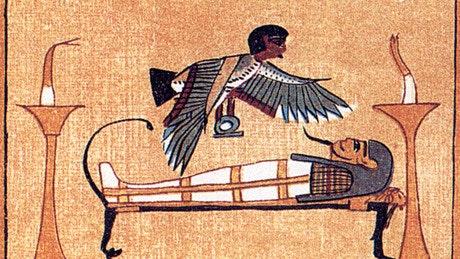
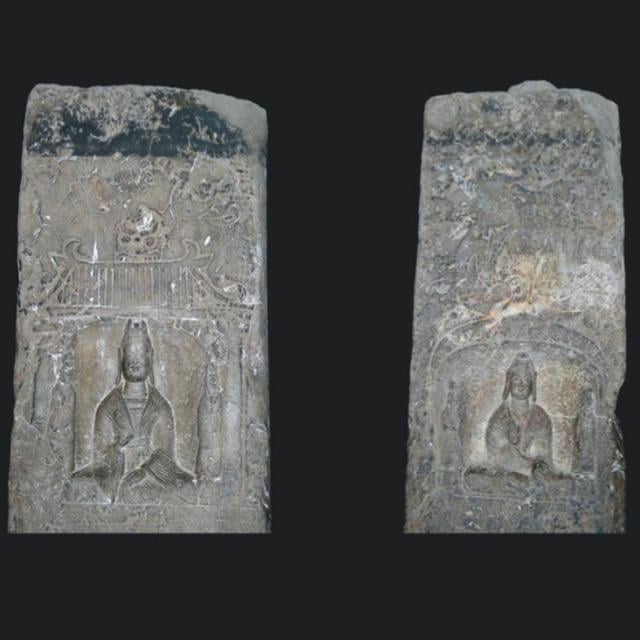
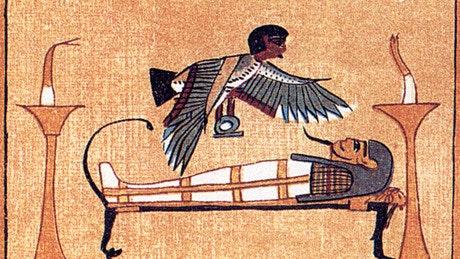
Throughout history, the vast majority of people around the globe have believed they have, however defined, a “soul.” While the question of whether the soul exists cannot be answered by science, what we can study are the causes and consequences of various beliefs about the soul and its prospects of surviving the death of the body. Why are soul and afterlife beliefs so common in human history? Are there adaptive advantages to assuming souls exist?

Class Deals by MOOC List - Click here and see Coursera's Active Discounts, Deals, and Promo Codes.

Are there brain structures that have been shaped by environmental pressures that provide the foundation of body/mind dualism that is such a prominent feature of many religions? How do these beliefs shape the worldviews of different cultures and our collective lives? What is the role of competing afterlife beliefs in religion, science, politics, and war? This course explores several facets of this relatively unexplored but profoundly important aspect of human thought and behavior.
The course consists mainly of 70 to 80 minute lectures, typically broken up into 3 segments, recorded from a course offered by Rutgers University School of Arts and Sciences. These videos include slides and some embedded video clips. Most lectures are accompanied by slides used during the lecture, also including recommended reading assignment which may provide additional opportunities to reflect on your studies.
Due to the lengthiness of this class and natural progression, the online course has been separated into 3 units, this is Unit 1.

Syllabus

WEEK 1: Introduction to the Course
WEEK 2: What I was Told to Believe
WEEK 3: Historical Foundations of Soul Beliefs #1
WEEK 4: Historical Foundations of Soul Beliefs #2
WEEK 5: Historical Foundations of Soul Beliefs #3
WEEK 6: Functions of Religion in Ancient & Modern Times
WEEK 7: Reactions to Scientific Evidence
WEEK 8: Religions Under Attack
WEEK 9: Big Ideas & Big Controversies
WEEK 10: Darwin's Dangerous Idea
WEEK 11: The Mind-Body Problem

Go to Class
MOOC List is learner-supported. When you buy through links on our site, we may earn an affiliate commission.

Related Courses

Luther and the West (Coursera) Coursera
Northwestern University

Luther and the West (Coursera)

In this course we will discuss the history of some ideas that have been hugely influential in the modern west and that were taken out to the rest of the world. The discussion centers on an extraordinary and historically important figure, a sixteenth century German man named Martin Luther. Luther is recognized today as the originator of many of the most significant ideas that continue to affect and shape who we as modern people are and how we see the world and ourselves for better and for worse.

Jul 27th 2026
5-12 Weeks
The Politics of Skepticism (Coursera) Coursera
Erasmus University Rotterdam

The Politics of Skepticism (Coursera)

This is a course about the history of Skepticism from the ancient Greeks to today, with special attention to the political ramifications of questioning man's ability to know the world and himself with any certainty. We will discuss the debates raging between Plato and the Sophists, the rise of Christianity in the Roman world, and the so-called 'Skeptical Crisis' of the Renaissance as well as Pierre Bayle's Skepticism and David Hume's.

Aug 3rd 2026
5-12 Weeks
Curanderismo: Traditional Healing of the Mind, Energy & Spirit (Coursera) Coursera
University of New Mexico

Curanderismo: Traditional Healing of the Mind, Energy & Spirit (Coursera)

As the third of four courses on Curanderismo, the art of Hispanic/Latino traditional medicine, this course focuses specifically on traditional healing of mind, energy and spirit. As an educational and cultural platform, this course will share a number of traditional body therapies. Trained traditional healers will share their knowledge of cleansings from different cultures such as spiritual, energetic and Tonalli Cleansing.

Aug 3rd 2026
5-12 Weeks
Religious Transformation in Early China: the Period of Division (Coursera) Coursera
The Chinese University of Hong Kong

Religious Transformation in Early China: the Period of Division (Coursera)

This sequence of four courses will propose a multi-disciplinary approach to the study of Chinese cultural history conceived of as a succession of modes of rationality (philosophical, bureaucratic, and economic). The focus will be on the moments of paradigm shift from one mode of rationality to another. For each of these moments, cultural facts and artifacts—thought, literature, ritual—will be examined in relationship to changing social, political, and economic systems.

Aug 10th 2026
5-12 Weeks
Love as a Force for Social Justice (Coursera) Coursera
Stanford University

Love as a Force for Social Justice (Coursera)

This course will explore the concept of agape love (compassion/kindness) as a force for social justice and action and as the inspiration for service and the application of knowledge to positive social change. Biological, psychological, religious, and social perspectives of love will be discussed, drawing on the expertise of people from a variety of disciplines.

Jul 27th 2026
5-12 Weeks
The Emergence of the Modern Middle East - Part II (Coursera) Coursera
Tel Aviv University

The Emergence of the Modern Middle East - Part II (Coursera)

This course will discuss the developments in the Middle East from the early 20th century to the present. It will discuss the rise and retreat of Arab nationalism, the problems of internal cohesion of the Arab states, issues of religion and state, and the evolution of Islamist politics. It will also focus on the evolution of the Arab-Israeli conflict and its impact on the region and will conclude with an in depth analysis of the “Arab Spring” by placing these contemporary revolutionary events in their historical context.

Aug 10th 2026
5-12 Weeks
Mind Control: Managing Your Mental Health During COVID-19 (Coursera) Coursera
University of Toronto

Mind Control: Managing Your Mental Health During COVID-19 (Coursera)

Never in the history of humanity have so many people been feeling intense anxiety related to COVID-19 and the world it will leave in its wake. The intent of this course is to give you a deeper understanding of the anxiety reaction as it relates to various aspects of our current life, ranging from our consumption of news to the way we talk to our children about this. I will also give you clear strategies for managing and, in fact, turning off the anxiety response at least for short periods.

Aug 10th 2026
4 Weeks
Chemerinsky on Constitutional Law - Individual Rights and Liberties (Coursera) Coursera
University of California, Irvine

Chemerinsky on Constitutional Law - Individual Rights and Liberties (Coursera)

Chemerinsky on Constitutional Law: Individual Rights and Liberties will highlight the construction and interpretation of the U.S. Constitution through the centuries with an emphasis on protections of individual liberties and the evolution of equal protection. You'll learn the history behind the Constitution, cases that formed important precedent, and how changes in interpretation have been dependent on shifts in cultural and political climate as well as the composition of the Supreme Court.

Aug 10th 2026
5-12 Weeks
Violences et religions (Coursera) Coursera
University of Geneva

Violences et religions (Coursera)

La question « violences et religions » est d’actualité, et pas seulement depuis les attentats d’Al-Qaïda ou de Daech. Pour bien la comprendre, ce cours propose de prendre du recul et de l’envisager sous un angle historique et comparatiste. Le domaine concerné étant l’espace euro-méditerranéen, ce sont essentiellement le christianisme et l’islam qui seront traités (quelques séquences sont également consacrées au judaïsme).

Aug 10th 2026
5-12 Weeks
Introduction to Philosophy (Coursera) Coursera
University of Edinburgh

Introduction to Philosophy (Coursera)

This course will introduce you to some of the main areas of research in contemporary philosophy. Each module a different philosopher will talk you through some of the most important questions and issues in their area of expertise. We’ll begin by trying to understand what philosophy is – what are its characteristic aims and methods, and how does it differ from other subjects? Then we’ll spend the rest of the course gaining an introductory overview of several different areas of philosophy.

Aug 10th 2026
5-12 Weeks
The Worldview of Thomas Berry: The Flourishing of the Earth Community (Coursera) Coursera
Yale University

The Worldview of Thomas Berry: The Flourishing of the Earth Community (Coursera)

Thomas Berry (1914-2009) was a historian of world religions and an early voice awakening moral sensibilities to the environmental crisis. He is known for articulating a “new story” of the universe that explores the implications of the evolutionary sciences and cultural traditions for creating a flourishing future. This course investigates Berry’s life and thought in relation to the Journey of the Universe project.

Aug 17th 2026
5-12 Weeks
Christian Virtues for Spiritual Growth (Coursera) Coursera
Duke University

Christian Virtues for Spiritual Growth (Coursera)

This Duke Divinity+ course is for all those who seek to cultivate their interior lives and to develop a way of thinking about ethics inspired by Christian tradition. In this course, renowned theologian Stanley Hauerwas reflects on the significance of specific virtues for understanding what it means to be a Christian. He examines the meaning and significance of four key virtues—kindness, hope, humility, and generosity—and their importance to living a good life.

Aug 17th 2026
4 Weeks