Chimpanzee Behavior and Conservation (Coursera)

Offered by Duke University,
Chimpanzee Behavior and Conservation (Coursera)

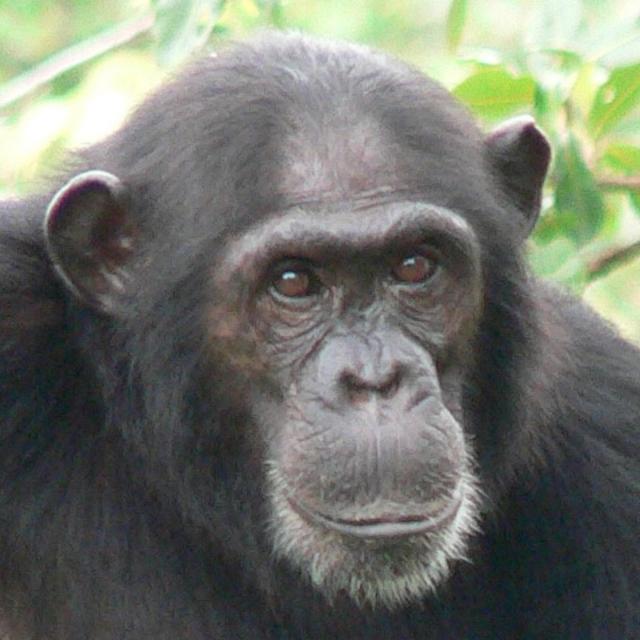
Chimpanzees are one of our closest living relatives, yet almost nothing was known about their behavior in the wild until Jane Goodall started her groundbreaking study of the chimpanzees of Gombe, Tanzania in 1960. This study continues today, following the same chimpanzee families that Jane Goodall first encountered over 55 years ago. Guided by three course instructors who have lived and worked with the Gombe chimpanzees, you will learn how Goodall’s early discoveries changed our view of human uniqueness.

Class Deals by MOOC List - Click here and see Coursera's Active Discounts, Deals, and Promo Codes.

By completing the course, you will gain a new appreciation of the deep similarities between chimpanzees and humans in intelligence, tool use, hunting, personality and social relationships, as well as some key differences. You will learn how chimpanzees interact with their environment and how their behavior is influenced by ecology, as well as the severe conservation challenges they face today. And you will employ your new knowledge of chimpanzees to construct a persuasive argument for their protection. This course is open to everyone interested in learning more about these fascinating and complex beings. Knowledge of high-school level biology is beneficial but not required. Please keep in mind, however, that the content of this course will cover all aspects of chimpanzee life, including scientific discussion of sexual and aggressive behaviors.

Syllabus

WEEK 1
Introduction
Welcome! We are glad you chose to join us to learn more about chimpanzees. We are looking forward to sharing what we've learned while we have studied chimpanzees. Please watch our welcome video to get started.
The Early Days
For this week, learners will experience the adventure and risks that Jane Goodall undertook in launching her research at Gombe. Learners will be able to recognize why it's important to study chimpanzees and the kinds of research questions we can ask by studying them. Learners will be able to identify different techniques used to collect the different kinds of data necessary to answer the research questions. Additionally, learners will be able to identify the range of chimpanzee populations across Africa and the structure of chimpanzee communities.

WEEK 2
Early Life and Mother-Infant Bonds
In this week, learners will understand key similarities and differences in birth and motherhood in chimpanzees and humans and will be able to list and explain major development milestones in infant and juvenile chimpanzees. Additionally, learners will be able to classify types of infant play and recognize the value of play for chimpanzee development.

WEEK 3
Making a Living in the Forest
Upon completion of this week's materials, learners will be able to create a framework to outline a typical day in the life of a chimpanzee. This includes being able to identify important food sources for chimpanzees and being able to relate differences in diet to changes in behavior. Learners will also be able to hypothesize about the cognitive skills required for chimpanzees to forage and hunt successfully.

WEEK 4
Social Lives and Relationships
In this week, learners will be able to identify the types of competitive and friendly behavior that chimpanzees demonstrate between and within groups. They will appreciate the importance of dominance hierarchies and how these are determined and be able to evaluate the importance of close social bonds for chimpanzees. Learners will also be able to identify both male and female mating strategies, including female sexual swellings and when they occur. Additionally, by the end of this week learners will be able to explain why there can be conflict between males and females over mating and why inbreeding is worse for females than males.

WEEK 5
Protecting Chimpanzees
In this week, learners will be able to identify and describe threats to chimpanzee populations and evaluate the role that captive chimpanzees play in chimpanzee conservation. Learners should also be able to make an effective argument against the use of chimpanzees in entertainment in terms of effects on conservation efforts and attitude, as well as assess the importance of education and human wellness in conservation outcomes. Lastly, learners should be inspired to contribute to the goal of chimpanzee conservation through actions and outreach.

Go to Class
MOOC List is learner-supported. When you buy through links on our site, we may earn an affiliate commission.

Related Courses

Zoologia (edX) EdX
University of Naples Federico II,FedericaX

Zoologia (edX)

Comprendere gli animali e i sistemi naturali, attraverso il filo conduttore dell’evoluzione. Un viaggio da percorrere con l’entusiasmo di un bambino e la professionalità di uno studioso. La zoologia è la conoscenza degli animali, i nostri coinquilini. Ci sono centinaia di specie animali che interagiscono insieme a noi in una relazione di comunità o ecosistema. Questo corso di Zoologia è una passeggiata nei temi propri della materia come elemento culturale essenziale per il biologo, il naturalista e chiunque si occupi della vita.

Self Paced
Self-Paced
South Asian Religions & Ecology (Coursera) Coursera
Yale University

South Asian Religions & Ecology (Coursera)

At first glance the fields of religion and ecology may seem and unlikely pairing, but a deeper consideration reveals the two have a great deal to contribute to one another and are indeed inextricably linked. Religions recognize the unity and interdependence of humans with nature. Ecological sciences affirm this deep interconnection with the natural world. This partnership can inspire work for the wellbeing of the Earth community

Sep 14th 2026
5-12 Weeks
Chicken Behaviour and Welfare (Coursera) Coursera
University of Edinburgh

Chicken Behaviour and Welfare (Coursera)

This course explains the general principles of chicken behaviour and welfare, and the behavioural and physiological indicators that can be used to assess welfare in chickens kept in hobby flocks through to commercial farms. The focus is primarily on laying hens and meat chickens (broilers) although many of the principles are relevant to other types of poultry. The course is likely to be of interest to people who own chickens as pets or keep a small hobby flock, commercial egg and chicken meat producers, veterinarians and vet nurses.

Oct 5th 2026
5-12 Weeks
Research Methods in Psychology: Using Animal Models to Understand Human Behaviour (FutureLearn) FutureLearn
University of Padova

Research Methods in Psychology: Using Animal Models to Understand Human Behaviour (FutureLearn)

Learn how animal models can help us learn about human psychology, cognitive skills, and the neurobiology of learning and memory. Discover how animal research has helped us understand how we perceive and learn. Did you know that we can learn a lot about humans through animal research? Animal models derived from invertebrates have helped us to understand the neurobiology of learning and memory. From cats, we have learned how visual experience informs the human visual system, and recent research has identified fish as a promising model to understand the genetic bases of learning disabilities such as dyscalculia!

Self Paced
4 Weeks
Invitation to Ex-Noguchi Room: Preservation and Utilization of Cultural Properties in Universities (FutureLearn) FutureLearn
Keio University

Invitation to Ex-Noguchi Room: Preservation and Utilization of Cultural Properties in Universities (FutureLearn)

Learn how to preserve, restore and utilize cultural properties in universities—a case study from Keio University, Tokyo. In this course, we will examine how to bring attention to cultural properties in a university, preserve and utilize them. The course focuses on the ‘Ex-Noguchi Room’ as a case study, which is a cultural property of Keio University in Tokyo. The space and what its contents are no longer in thier original state due to the partial reconstruction.

Self Paced
2 Weeks
The Big Stuff: Evolution and Ecology (Coursera) Coursera
University of Colorado Boulder

The Big Stuff: Evolution and Ecology (Coursera)

In this course, we will explore how evolution works to generate new species, the wide variety of life on earth. We will also touch on the importance of biodiversity for the overall health of our planet, and for our well being as humans. Then we will discuss ecology and the interconnectedness of life and touch on one big ecological issue in today’s society, conservation.

Sep 21st 2026
4 Weeks
Introduction to Biology: Ecology (Coursera) Coursera
Rice University

Introduction to Biology: Ecology (Coursera)

Ecology is all about connections. In this course, we’ll see how interdependent every living thing is and how people are impacting the natural world. Like all sciences, ecology isn’t just a list of known facts– it’s also a process. I love telling stories, and I’ve included many stories about how we’ve come to know what we know about ecology through observations and experiments.

Sep 14th 2026
4 Weeks
Tropical Forest Landscapes 101: Conservation & Restoration (Coursera) Coursera
Yale University

Tropical Forest Landscapes 101: Conservation & Restoration (Coursera)

Conserving and restoring tropical forest landscapes offers an opportunity to address pressing environmental and social challenges. Effective conservation and restoration initiatives support multiple objectives, including ecosystem functioning, climate change mitigation and adaptation, food security, and economic growth.

Sep 28th 2026
5-12 Weeks
Paleontology: Ancient Marine Reptiles (Coursera) Coursera
University of Alberta

Paleontology: Ancient Marine Reptiles (Coursera)

Paleontology: Ancient Marine Reptiles is a four-lesson course teaching a comprehensive overview of the evolutionary changes that occur when air-breathing terrestrial animals return to water. This course examines the diversity, adaptations, convergence, and phylogenetic relationships of extinct marine reptiles. Students will explore three major groups of marine reptiles: ichthyosaurs, plesiosaurs, and mosasaurs.

Sep 30th 2026
4 Weeks
Primate Conservation (Coursera) Coursera
University of Colorado Boulder

Primate Conservation (Coursera)

We are presently facing a potential extinction crisis for the order Primates (and many other life forms). In this course we will learn about threats to primate conservation globally. We will be using the, “Primates in Peril: The World’s 25 Most Endangered Primates 2018-2020” by Schwitzer et al (2019) as a basis for the discussion of global primate populations.

Sep 28th 2026
5-12 Weeks