EdX

Sharks! (edX)

Sharks! (edX)

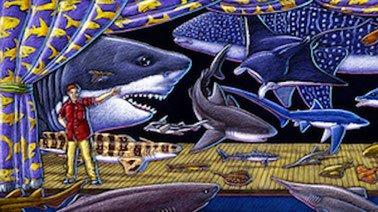
Learn about the most fascinating animals on Earth, their sophisticated senses and how sharks and their relatives have impacted human history and culture. Did you know that you can track some sharks’ movements on Twitter? Or that the scales on their skin have influenced the way humans design boats, planes, and even swimsuits? Or that sharks have more senses than humans?

Class Deals by MOOC List - Click here and see EdX's Active Discounts, Deals, and Promo Codes.

In this biology course, you will learn how scientists study sharks. You will join researchers on location in labs, aquariums, and oceans across the globe to learn about the biodiversity, biology, and conservation of sharks, rays, and chimaeras.

In this activity‑rich course, you’ll track movements of a wild shark, observe shark habitats and behavior, and dig deep into the fossil record. You will also examine topics in the functional anatomy, sensory biology, reproduction, behavior, and ecology of many of the 1,200 living species.
This is an exciting time to be a shark biologist. An explosion of new research methods and technologies are leading to a surprising world of discovery. We’ll introduce new, as well as traditional techniques, for classifying sharks, understanding behavior, and unraveling the mysteries of shark evolution. You’ll be invited to explore global shark populations and consider shark-human interactions and their impacts on history and culture.
You’ll be rewarded by your ability to see virtually any animal with new eyes. Practice thinking like a biologist while honing critical skills that can lead to broader observations about the ongoing history of life on Earth.

What you'll learn:

  • Habitats and distributions of sharks from around the world.
  • Evolutionary history and relationships of sharks and allies.
  • Functional anatomy of swimming, breathing, and eating.
  • Aspects of sensory biology, reproduction, and behavior.
  • Ecological roles of sharks.
  • Historical and cultural aspects of shark-human interactions.
  • The impacts of human behavior on shark populations.
  • How biology can inform conservation efforts.

Syllabus

Week 1: The Big Picture - Biodiversity and Evolution
Week 2: Miracles of Evolution - Functional Morphology and Physiology
Week 3: Thinking Like a Shark - Brains and Behavior
Week 4: Sharks in the World - Human Interactions, Ecology, and Conservation
Go to Class
MOOC List is learner-supported. When you buy through links on our site, we may earn an affiliate commission.

Related Courses

Religious Symbols of the World (edX) EdX
Seoul National University,SNUx

Religious Symbols of the World (edX)

This course is the third and final course in the series following “Understanding Religious Symbolism” and “Myths, Rituals, and Cosmos.” Through the theories and patterns that you learned in these three courses, I hope that you will be able to interpret the various religious phenomena in different cultures, and through this gain a better understanding of culture and human beings.

Self Paced
Self-Paced
Essential Human Biology: Cells and Tissues (edX) EdX
University of Adelaide,AdelaideX

Essential Human Biology: Cells and Tissues (edX)

An introduction to the human body's most fundamental building blocks and their behaviours in health and disease. Are you preparing for a health-related career, or planning to study in the health sciences? Perhaps you're just keen to learn more about the wonders of the human body? Our bodies are amazing but complex biological machines. This course will provide you with an outstanding foundation of knowledge in human anatomy and physiology.

Self Paced
Self-Paced
Exploring Psychology's Core Concepts | 走进心理学 (edX) EdX
Tsinghua University,TsinghuaX

Exploring Psychology's Core Concepts | 走进心理学 (edX)

How do you interpretThe Da Vinci Code? Isa sleepwalker aware of themselves? Is language before the mind or the contrary? This course will answer these questions and more with psychology theories. How to decipher the Da Vinci Code? Does a person know that he is sleepwalking? Which came first, language or thought? This course will use the latest and coolest psychological theories to answer these questions.

Self Paced
Self-Paced
The Chemistry of Life (edX) EdX
Kyoto University,KyotoUx

The Chemistry of Life (edX)

Learn how to generate ideas at the interface between chemistry and biology. Chemistry and biology are traditionally taught as separate subjects at the high school level, where students memorize fundamental scientific principles that are universally accepted. However, at the university level and in industry, we learn that science is not as simple as we once thought. We are constantly confronted by questions about the unknown and required to use creative, integrated approaches to solve these problems.

Self Paced
Self-Paced
Super-Earths And Life (edX) EdX
HarvardX,Harvard University

Super-Earths And Life (edX)

Learn about the Earth, life, and how we can search for life elsewhere in the universe. Are we alone in this universe? What new information and observations on exoplanets have we discovered? In the past decade, astronomers have made incredible advances in the discovery of planets outside our solar system. Thirty years ago, we knew only of the planets in our own solar system. Now we know of thousands circling nearby stars.

Self Paced
Self-Paced
Pathways to Public Health (edX) EdX
George Washington University

Pathways to Public Health (edX)

Pathways to Public Health provides learners with a working knowledge of the issues public health professionals are striving to address every day. You will meet public health specialists who focus on dimensions of health relating to: the environment, family and community, personal behaviors and decision making, health services delivery and access, and utilizing data to both identify the underlying causes of disease, and to track and control the spread of disease.

Self Paced
Self-Paced
Principles of Biochemistry (edX) EdX
HarvardX,Harvard University

Principles of Biochemistry (edX)

This introduction to biochemistry explores the molecules of life, starting at simple building blocks and culminating in complex metabolism. Principles of Biochemistry integrates an introduction to the structure of macromolecules and a biochemical approach to cellular function. Topics addressing protein function will include enzyme kinetics, the characterization of major metabolic pathways and their interconnection into tightly regulated networks, and the manipulation of enzymes and pathways with mutations or drugs.

Self Paced
Self-Paced
Innovate & Regulate: Drug Research, Costs, Clinical Trials & Approval (edX) EdX
Davidson College,DavidsonX

Innovate & Regulate: Drug Research, Costs, Clinical Trials & Approval (edX)

At some point in their life, essentially everyone needs to use medication for some type of disease treatment or cure. While medications offer great benefits, the cost of drugs, especially new drugs, and the lack of treatment for some diseases can raise questions about business activity behind the creation of new drugs. Better understanding of how drugs are discovered and developed as well as the legal and regulatory factors that affect the industry can help one better recognize both the shortcomings and opportunities faced by the drug industry at large.

Self Paced
Self-Paced
Salmon, People, and Place (edX) EdX
University of Alaska Fairbanks,AlaskaX

Salmon, People, and Place (edX)

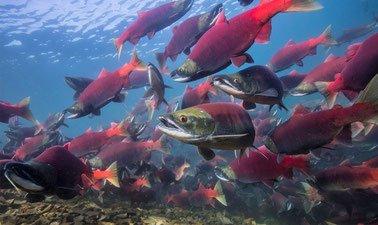
This course explores the relationships between salmon and people with an emphasis on the special ties of salmon to Indigenous peoples and to Alaska Natives in particular. No wild animal has more profoundly influenced the cultures and well-being of societies in North America than salmon. Salmon and people have been entwined in a relationship for millennia. This six-week course is an exploration and celebration of this relationship, as well as an examination of the current major issues, including habitat alterations, climate change, and management actions currently straining the relationship between salmon and salmon-dependent people.

Self Paced
Self-Paced
Irrigation Efficiency: more food with less water (edX) EdX
KU Leuven University,KULeuvenX

Irrigation Efficiency: more food with less water (edX)

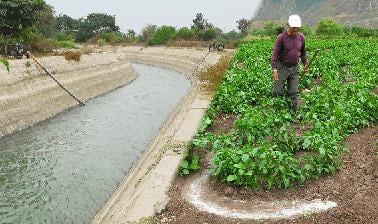
Learn to improve the efficiency of different irrigation system components over varying scales in order to extract less water from our resources while producing more food. How can we meet the demands of our ever hungrier and thirstier world? Irrigation water uses 70% of the fresh water extraction worldwide to produce 40% of the food.

Self Paced
Self-Paced