Primate Conservation (Coursera)

Primate Conservation (Coursera)

We are presently facing a potential extinction crisis for the order Primates (and many other life forms). In this course we will learn about threats to primate conservation globally. We will be using the, “Primates in Peril: The World’s 25 Most Endangered Primates 2018-2020” by Schwitzer et al (2019) as a basis for the discussion of global primate populations.

Class Deals by MOOC List - Click here and see Coursera's Active Discounts, Deals, and Promo Codes.

We will investigate conservation status, threats to conservations, success and failures within protecting our closest evolutionary cousins.
What You Will Learn

  • Identify conservation threats to Primates globally
  • Understand and identify conservation threat categories
  • Recognize threats to primate conservation across the areas where non-human primates live (Central/South America, Asia, and Africa)
  • Relate environmental changes to primate conservation

Syllabus

WEEK 1
Introduction to Conservation & Conservation Concerns
In the first module, I will introduce myself and begin defining the Order Primates. Many people have a ‘love’ of ‘monkeys’ without really understanding how incredibly diverse our Order is! This module starts with a definition of primates and then shows where the current radiation of primates still live.

WEEK 2
How We Define Threats
This module will begin by introducing the IUCN (International Union for the Conservation of Nature), the IUCN RedList, and how species are designated in threat categories. We will also discuss different types of threats to primates globally.

WEEK 3
Exploring Primates throughout Various Regions
In this module, we will focus on the Top 25 Most Endangered Primates list. We will go region to region to learn about the primates and the threats they face toward the possibility of extinction.

WEEK 4
Conservation Organizations
This module will address conservation organizations in multiple contexts. We will learn about 'in situ' and 'ex situ' conservation methodology. Finally, we will look at a number of conservation organizations and think about ways that the public can get involved.

WEEK 5
Case Study: Vietnam
Vietnam is home to an incredible diversity of primates. There are currently 25 species and subspecies living in this tropical country (Covert et al., 2017). In this module, we will discuss the diversity of primates, threats to conservation, and the groups that are helping to conserve these animals (and landscapes!).


Go to Class
MOOC List is learner-supported. When you buy through links on our site, we may earn an affiliate commission.

Related Courses

Introduction to EdTech (Coursera) Coursera
EDHEC Business School

Introduction to EdTech (Coursera)

Co-developed by Supercharger Ventures and EDHEC Business School. EdTech, short for Education Technology, is one of the most exciting sectors in the economy today poised to re-shape how education systems work and how people learn around the world. Introduction to EdTech MOOC is designed to explore EdTech fundamentals and build the foundational knowledge for educators, institutions, entrepreneurs and governments to appreciate the impact and potential of new tools, technologies, business models and learning methods in education.

Oct 12th 2026
4 Weeks
THINK GLOBAL: TEACHERS TRAINING COURSE (IDP-ICE) (Coursera) Coursera
University of Barcelona

THINK GLOBAL: TEACHERS TRAINING COURSE (IDP-ICE) (Coursera)

A group of seven European partners from Catalonia, Belgium, and Wales worked together on the Erasmus+ funded ‘Think Global’ project on global competence. The project seeks to address the following research question through development and piloting of practical classroom activities: What is global competence, and how can it be learned effectively?

Oct 12th 2026
5-12 Weeks
Training and Learning Programs for Volunteer Community Health Workers (Coursera) Coursera
Johns Hopkins University

Training and Learning Programs for Volunteer Community Health Workers (Coursera)

Volunteer community health workers (CHWs) are a major strategy for increasing access to and coverage of basic health interventions. Our village health worker training course reviews the process of training and continuing education of CHWs as an important component of involving communities in their own health service delivery. Participants will be guided through the steps of planning training and continuing education activities for village volunteers. The course draws on real-life examples from community-directed onchocerciasis control, village health worker programs, community case management efforts, peer educators programs and patent medicine vendor training programs, to name a few.

Oct 12th 2026
5-12 Weeks
Educating Deaf Children: Becoming an Empowered Teacher (Coursera) Coursera
University of Cape Town

Educating Deaf Children: Becoming an Empowered Teacher (Coursera)

Many Deaf children around the world still leave school functionally illiterate. In some cases there is no allowance made for education of Deaf children at all. This 4 week course provides you with invaluable knowledge and skills about teaching Deaf children. You will learn about the importance of Deaf culture and community, the need for a language rich environment for the Deaf child from as young as possible, and that having access to sign language can help Deaf children academically, emotionally, and socially.

Oct 12th 2026
4 Weeks
Basics of Inclusive Design for Online Education (Coursera) Coursera
University of Colorado Boulder

Basics of Inclusive Design for Online Education (Coursera)

This course provides instruction and strategies to support you in developing a course that is inclusive to students with a wide range of abilities, including students with disabilities. We cover effective practices to increase inclusion and avoid some of the common accessibility issues that can arise in an online course.

Oct 12th 2026
5-12 Weeks
Assessing Achievement with the ELL in Mind (Coursera) Coursera
Arizona State University

Assessing Achievement with the ELL in Mind (Coursera)

In this course, you will learn how to design assessments around the needs of your ELL students and their language level. You will learn how to incorporate language and content requirements for both formative and summative assessment types. You will learn to assess your ELL students through the use of project and task-based assignments.

Oct 5th 2026
5-12 Weeks
Assessment in Higher Education: Professional Development for Teachers (Coursera) Coursera
Erasmus University Rotterdam

Assessment in Higher Education: Professional Development for Teachers (Coursera)

Are you a teacher in higher education wanting to get the best out of your students and assessments? Then on behalf of Risbo, Erasmus University Rotterdam, we would like to welcome you to this MOOC on Assessment in Higher Education. In this MOOC we will guide you through the different phases of preparing, creating and evaluating the assessments in your course.

Oct 12th 2026
5-12 Weeks
Teaching LGBTQ+ Health (Coursera) Coursera
Stanford University

Teaching LGBTQ+ Health (Coursera)

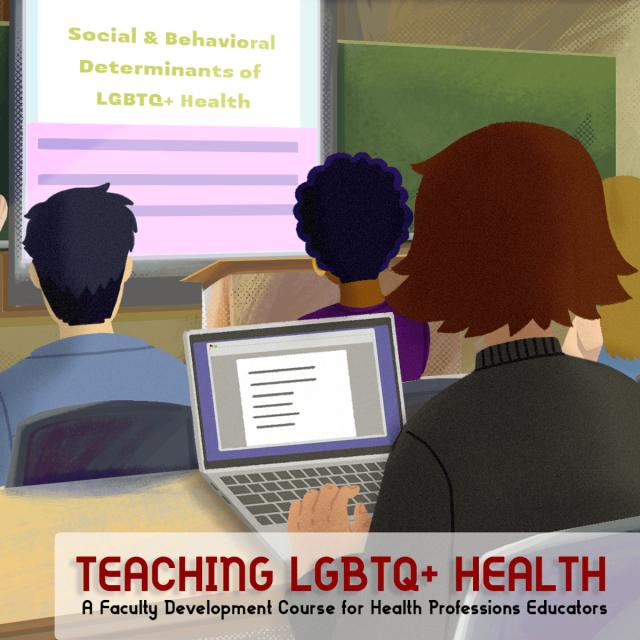
This curriculum is designed for faculty members and health professions educators. The course goals are to improve your knowledge, teaching skills, and attitudes pertaining to the provision of health care to LGBTQ+ patients.e.g. This is primarily aimed at first- and second-year undergraduates interested in engineering or science, along with high school students and professionals with an interest in programming.

Oct 12th 2026
2 Weeks
Inclusive Online Teaching Teach-Out (Coursera) Coursera
Johns Hopkins University

Inclusive Online Teaching Teach-Out (Coursera)

In this course, higher education faculty will examine students’ barriers to learning, including unconscious bias, physical impairments, and lack of motivation. Participants will explore and discuss how inclusive pedagogy and Universal Design for Learning (UDL) can help to address those barriers and improve student learning outcomes.

Oct 5th 2026
2 Weeks
Formación docente basada en la práctica para desarrollar habilidades del siglo XXI (Coursera) Coursera
Pontificia Universidad Católica de Chile

Formación docente basada en la práctica para desarrollar habilidades del siglo XXI (Coursera)

El curso presenta, en primer lugar, las habilidades del siglo XXI y su relevancia para la formación docente con el fin de preparar docentes para la sociedad del conocimiento, capaces de pensar de manera crítica y creativa y con habilidades de comunicación y colaboración para promover oportunidades de aprendizaje equitativas y de calidad en los contextos escolares. En segundo lugar, se discute sobre el enfoque basado en la práctica para la formación docente y la necesidad de ofrecer andamiajes que les permitan a los docentes aprender a poner en acto prácticas generativas complejas que requieren conocimientos especializados.

Oct 12th 2026
5-12 Weeks
e-Learning Ecologies: Innovative Approaches to Teaching and Learning for the Digital Age (Coursera) Coursera
University of Illinois at Urbana-Champaign

e-Learning Ecologies: Innovative Approaches to Teaching and Learning for the Digital Age (Coursera)

For three decades and longer we have heard educators and technologists making a case for the transformative power of technology in learning. However, despite the rhetoric, in many ways and at most institutional sites, education is still relatively untouched by technology. Even when technologies are introduced, the changes sometimes seem insignificant and the results seem disappointing. If the print textbook is replaced by an e-book, do the social relations of knowledge and learning necessarily change at all or for the better?

Oct 5th 2026
4 Weeks
Critical Thinking Skills for University Success (Coursera) Coursera
The University of Sydney

Critical Thinking Skills for University Success (Coursera)

In this course, you will learn how to develop your Critical Thinking Skills to help you achieve success in your university studies. After completing this course, you will be able to: 1. Use critical thinking and argumentation in university contexts to improve academic results ; 2. Understand the importance and function of critical thinking in academic culture ; 3. Use a variety of thinking tools to improve critical thinking ; 4. Identify types of argument, and bias within arguments, in order to better evaluate the strength of arguments; 5. Use evidence to support claims in arguments ; 6. Apply critical thinking and argumentation to real world problems and issues

Oct 5th 2026
5-12 Weeks