¡¿Cómo?! ¿Química en mi casa? (Coursera)

¡¿Cómo?! ¿Química en mi casa? (Coursera)

En este curso, el participante conocerá una buena parte de la química que lo rodea y tendrá elementos para saber que la química no es tan mala como nos quieren hacer creer.

Class Deals by MOOC List - Click here and see Coursera's Active Discounts, Deals, and Promo Codes.

Syllabus

WEEK 1
El baño
El baño es el lugar más limpio de nuestra casa pero, ¿te has preguntado cómo limpian los jabones?, ¿por qué es distinto el jabón para manos del shampoo para el cabello? Aquí aprenderemos sobre eso y, de pasada, ya que casi siempre el botiquín se encuentra allí, hablaremos un poco de medicamentos, del más popular: la aspirina, así como del de mayor impacto social: la píldora anticonceptiva.

WEEK 2
Sala y habitaciones
La sala está llena de muebles, cortinas y cuadros coloridos. Es hora de conocer un poco acerca de cómo se componen las distintas telas que utilizamos, desde las naturales hasta las sintéticas.
Aquí hablaremos de cómo la química llena nuestro mundo de color, ya sea en recubrimientos protectores, en los estampados de telas, o en las obras de arte que se crean sobre distintas superficies.

WEEK 3
La cocina
Debemos reconocer que la cocina es un enorme laboratorio de química a nuestro servicio.
Aquí aprenderemos sobre la manera en que la química genera esos deliciosos aromas que inundan nuestros sentidos cuando cocinamos, independientemente del alimento de que se trate. También hablaremos sobre métodos de conservación antiguos y modernos que nos permiten tener alimentos durante más tiempo, para que lleguen a más personas.

WEEK 4
El basurero
Aquí aprenderemos que hay cosas que la química nos permite hacer para reducir la cantidad de basura que llega a los basureros. Veremos cómo se trabaja el reciclaje y la recuperación de materiales. Conoceremos cómo se puede transformar la basura orgánica en fertilizante o en gas para alimentar cocinas, calderas y calentadores. Por último, veremos qué hacer con residuos como baterías o pesticidas, para ayudar a conservar el medio ambiente.

Go to Class
MOOC List is learner-supported. When you buy through links on our site, we may earn an affiliate commission.

Related Courses

The Science of Gastronomy (Coursera) Coursera
The Hong Kong University of Science and Technology - HKUST

The Science of Gastronomy (Coursera)

This course introduces a number of basic scientific principles underpinning the methodology of cooking, food preparation and the enjoyment of food. All topics covered have a strong basis in biology, chemistry, and physics application. Among others, they include the consumption of cooked food, the physiological and evolutionary implication of the senses, geographic and cultural influences on food, and the rationale behind food preparation. We will also discuss issues such as coupling of senses to improve sense stimulation; altering flavor by chemical means; and modification of the coloration to improve the appearance of dishes. Following the video demonstrations of the scientific principles of cooking, you will learn to recognize the key ingredients and their combinations for preparing good healthy food.

Oct 27th 2026
5-12 Weeks
Introduction to Petroleum Engineering (Coursera) Coursera
Tomsk Polytechnic University,E-Learning Development Fund

Introduction to Petroleum Engineering (Coursera)

In this course, you will learn such concepts as oil and gas production, reservoir energy and forces, petroleum deposit drainage, development systems, well operation techniques and much more. Each participant in the course will develop an understanding of field life cycle and interdisciplinary approach to petroleum field development and operation.

Aug 1st 2022
5-12 Weeks
Materials Data Sciences and Informatics (Coursera) Coursera
Georgia Institute of Technology

Materials Data Sciences and Informatics (Coursera)

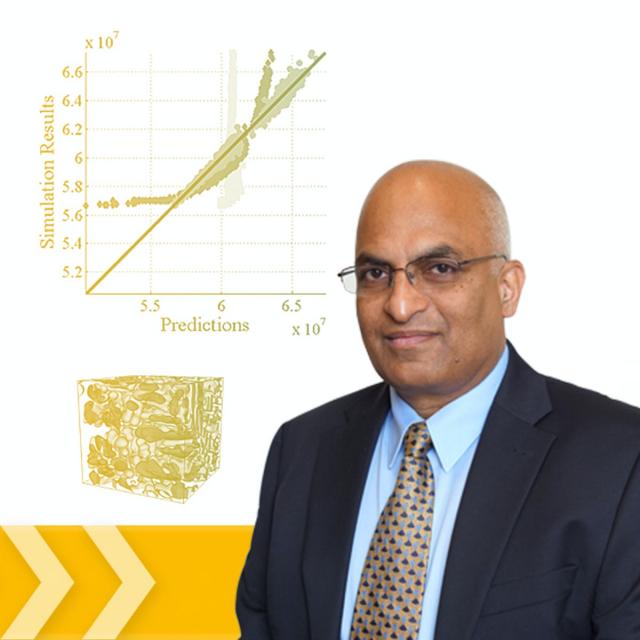
This course aims to provide a succinct overview of the emerging discipline of Materials Informatics at the intersection of materials science, computational science, and information science. Attention is drawn to specific opportunities afforded by this new field in accelerating materials development and deployment efforts.

Nov 2nd 2026
5-12 Weeks
Introduction to Molecular Spectroscopy (Coursera) Coursera
University of Manchester

Introduction to Molecular Spectroscopy (Coursera)

The course introduces the three key spectroscopic methods used by chemists and biochemists to analyse the molecular and electronic structure of atoms and molecules. These are UV/Visible , Infra-red (IR) and Nuclear Magnetic Resonance (NMR) spectroscopies. The content is presented using short focussed and interactive screencast presentations accompanied by formative quizzes to probe understanding of the key concepts presented. Numerous exercises are provided to facilitate mastery of each topic. A unique virtual spectroscopic laboratory is made available to enable students to measure and analyse spectra online. Assessment is via summative quizzes completed during the course period.

Nov 2nd 2026
4 Weeks
Reasoning Across the Disciplines (Coursera) Coursera
University of North Carolina

Reasoning Across the Disciplines (Coursera)

Critical reasoning skills are a key success factor for students entering their first year of college. They must be able to think logically and form arguments. This course, designed with incoming college freshmen in mind but open to anyone, provides an essential grounding in critical reasoning skills. Faculty from multiple disciplines at the University of North Carolina at Chapel Hill offer guidance on applying critical thinking skills in the context of specific disciplines. By developing these skills, students will learn more, enjoy their courses more, and experience greater academic success.

Nov 2nd 2026
5-12 Weeks
Una aproximación a la química del carbono (Coursera) Coursera
Universidad Nacional Autónoma de México

Una aproximación a la química del carbono (Coursera)

En este curso, ofrecido por la UNAM, conocerás cómo se forman los compuestos orgánicos y sus propiedades físicas generales, desde la composición del petróleo hasta la obtención de hidrocarburos y los diferentes grupos funcionales. Comprenderás la estructura química de los diferentes hidrocarburos y grupos funcionales, así como las reacciones características que los distinguen. Reconocerás la importancia y el impacto ambiental del petróleo y los materiales poliméricos.

Nov 2nd 2026
5-12 Weeks
Beer Quality: Foam (Coursera) Coursera
University of California, Davis

Beer Quality: Foam (Coursera)

As it is one of the most distinctive qualities of beer, achieving the perfect foam is a precise art. In this course, you’ll learn how foam affects the quality of beer. Designed for brewers of all skill levels, this online course is part of a comprehensive series where "The Pope of Foam”, Charlie Bamforth, guides you through the key markers of beer quality: flavor, foam, color/clarity, freshness and quality systems.

Nov 2nd 2026
4 Weeks
Thermodynamique : applications (Coursera) Coursera
École Polytechnique Fédérale de Lausanne

Thermodynamique : applications (Coursera)

Ce cours complète le MOOC « Thermodynamique : fondements » qui vous permettra de mettre en application les concepts fondamentaux de la thermodynamique. Pour atteindre cet objectif, le Professeur J.-Ph. Ansermet de l’Ecole Polytechnique Fédérale de Lausanne s’est entouré d’experts et de spécialistes des différents domaines d’application provenant de diverses institutions partenaires du réseau RESCIF. Vous pourrez ainsi voir l’usage de la thermodynamique en chimie, en ingénierie et en physique.

Oct 26th 2026
5-12 Weeks
General Chemistry: Concept Development and Application (Coursera) Coursera
Rice University

General Chemistry: Concept Development and Application (Coursera)

This course will cover the topics of a full year, two semester General Chemistry course. We will use a free on-line textbook, Concept Development Studies in Chemistry, available via Rice’s Connexions project. The fundamental concepts in the course will be introduced via the Concept Development Approach developed at Rice University. In this approach, we will develop the concepts you need to know from experimental observations and scientific reasoning rather than simply telling you the concepts and then asking you to simply memorize or apply them.

Nov 2nd 2026
5-12 Weeks
Beer Quality: Freshness (Coursera) Coursera
University of California, Davis

Beer Quality: Freshness (Coursera)

In this third course of the Beer Quality Series on beer freshness, led by distinguished professor Charles Bamforth, Ph.D, you will learn about beer flavor preconceptions, expectations, and causes of flavor instability. You'll also learn about the science of flavor change and the study and process impacts of flavor stability. In addition, you will review light instability and how it can lead to skunking.

Nov 2nd 2026
4 Weeks
Biology Everywhere Foundations (Coursera) Coursera
University of Colorado Boulder

Biology Everywhere Foundations (Coursera)

In this course, we will explore the nature of science and biology. We will discuss what the “biology everywhere” philosophy means and the history of the “biology everywhere” project. We will also discuss what science (and biology) are as a discipline of inquiry and how chemistry is foundational to understanding biology.

Nov 2nd 2026
4 Weeks
Nanotechnology and Nanosensors, Part 1 (Coursera) Coursera
Technion - Israel Institute of Technology

Nanotechnology and Nanosensors, Part 1 (Coursera)

Nanotechnology and nanosensors are broad, interdisciplinary areas that encompass (bio)chemistry, physics, biology, materials science, electrical engineering and more. The present course will provide a survey on some of the fundamental principles behind nanotechnology and nanomaterials and their vital role in novel sensing properties and applications. The course will discuss interesting interdisciplinary scientific and engineering knowledge at the nanoscale to understand fundamental physical differences at the nanosensors.

Nov 2nd 2026
5-12 Weeks