Thermodynamique : applications (Coursera)

Thermodynamique : applications (Coursera)

Ce cours complète le MOOC « Thermodynamique : fondements » qui vous permettra de mettre en application les concepts fondamentaux de la thermodynamique. Pour atteindre cet objectif, le Professeur J.-Ph. Ansermet de l’Ecole Polytechnique Fédérale de Lausanne s’est entouré d’experts et de spécialistes des différents domaines d’application provenant de diverses institutions partenaires du réseau RESCIF. Vous pourrez ainsi voir l’usage de la thermodynamique en chimie, en ingénierie et en physique.

Class Deals by MOOC List - Click here and see Coursera's Active Discounts, Deals, and Promo Codes.

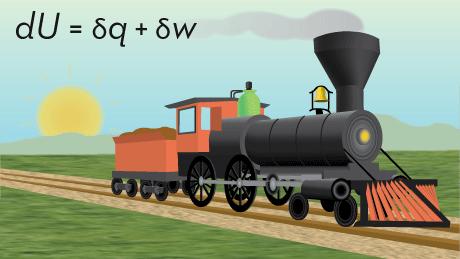
L’objectif du cours est la compréhension et la capacité de mise en application des concepts fondamentaux de la thermodynamique. Après la présentation du premier et deuxième principe de la thermodynamique, l’exposé abordera les questions d’irréversibilité ainsi que les potentiels thermodynamiques.
Après l’établissement de ces bases conceptuelles qui font l’objet de la première partie, leurs applications à l’ingénierie tels que les transferts thermiques, la calorimétrie et les transitions de phases, seront traitées. Ensuite le point de vue de la chimie sera présenté pour aborder la conversion de l’énergie chimique en électricité.
Finalement, des sujets plus avancés sont abordés, à savoir les cycles thermodynamiques, les machines thermiques, les concepts de thermodynamique adaptés au milieu continu et finalement les processus irréversibles.
Le professeur J.-Ph. Ansermet qui est l’instigateur de ce cours est entouré d’experts et de spécialistes des différents domaines d’application, enseignant la thermodynamique dans diverses institutions partenaires du réseau RESCIF. Ce sont : le Professeur Michael Grätzel et le docteur Sylvain Brechet de l’EPFL, les Professeurs Paul Ekam, Théophile Mband, Marthe Boyomo et André Talla de l’ENSP de Yaoundé, le professeur Miltiadis Papalexandris de UCL à Louvain, le Professeur Etienne Robert du Polytechnique de Montréal et le Professeur Marwan Brouche de l’Université St-Joseph de Beyrouth.

Syllabus

WEEK 1
Calorimétrie - Ekam - ENSP Yaoundé
Dans ce chapitre, le professeur Paul Ekam de l'Institut Polytechnique de Yaoundé au Cameroun présente la manière dont on modélise les échanges infinitésimaux de chaleur. Ceux-ci sont fonction de plusieurs variables d'état reliées par des coefficients appelés coefficients calorimétriques. Les potentiels thermodynamiques permettent ensuite de déterminer des relations entre ces coefficients. Finalement ces coefficients sont appliqués dans le cas d'un gaz parfait pour calculer les échanges de travail et de chaleur pour les processus standard (isotherme, adiabatique et isochore).

WEEK 2
Transitions de phase - Boyomo - ENSP Yaoundé
Dans ce chapitre, le docteur Marthe Boyomo de l'Institut Polytechnique de Yaoundé au Cameroun présente les éléments de base de la théorie des transitions de phase, c'est-à-dire des variations abruptes de l'état de la matière. La première partie traite de la stabilité de ces états. La deuxième partie traite des transitions dites de premier ordre. Dans la troisième partie, ceci est illustré par l'exemple de la transition liquide-vapeur en utilisant le modèle de van der Walls.

WEEK 3
Thermodynamique et réactions chimiques - Mbang - ENSP Yaoundé
Dans ce chapitre, le docteur Théophile Mbang de l'Institut Polytechnique de Yaoundé au Cameroun applique les concepts de la thermodynamique pour modéliser la dynamique des réactions chimiques. Il introduit l'avancement d'une réaction chimique et définit l'enthalpie et l'énergie libre de Gibbs d'une réaction chimique. Il discute aussi la loi de Hess et la loi d'action de masse.

WEEK 4
Electro-chimie - Graetzel - EPFL Lausanne
Dans ce chapitre le professeur M. Graetzel de l'Ecole Polytechnique Fédérale de Lausanne en Suisse applique les concepts de la thermodynamique à l'électrochimie. Les outils de base de la thermodynamique permettent de modéliser les fonctionnement des batteries, ainsi que celui des piles à combustibles. Le cas d'une pile à concentration est abordé en exercice. La généralisation du potentiel chimique en électrochimie est le potentiel électrochimique qui rend notamment comptes des interactions électrostatiques entre des ions.

WEEK 5
Propriétés thermodynamiques des fluides - Talla - ENSP Yaoundé
Dans ce chapitre le professeur André Talla de l'Institut Polytechnique de Yaoundé au Cameroun applique les concepts de la thermodynamique à des fluides. Il décrit en particulier des processus isothermes, adiabatiques, isochores et isobares. En considérant un cycle thermodynamique ditherme (constitué de deux isothermes) il définit la notion de rendement et celle d'efficacité.

WEEK 6
Machines thermiques - Robert - Ecole Polytechnique de Montreal
Dans ce chapitre, le professeur Etienne Robert de l'École Polytechnique de Montréal au Canada discute les applications techniques des cycles thermodynamiques. Il explique le fonctionnement du moteur à combustion, des turbine à gaz et des pompes thermiques.

WEEK 7
Transferts thermiques - Brouche & Maatouk - USJ Beyrouth
Dans ce chapitre le Docteur Marwan Brouche et le Docteur Chantal Maatouk de l'université Saint-Josèphe à Beyrouth au Liban traitent des transferts de chaleur par convection, conduction et radiation. Ils discutent notamment l'équation de la chaleur.

WEEK 8
Milieux continus - Papalexandis - UCL Louvain
Dans ce chapitre, le professeur Miltiadis Papalexandris de l'Université Catholique de Louvain en Belgique développe une description locale de la thermodynamique où les systèmes locaux sont à l’équilibre. Cela lui permet de définir les champs intensifs "température", "pression" et "potentiel thermodynamique". En suivant cette approche, il détermine notamment les équations qui localement gouvernent la thermostatique, la thermodynamique des processus réversibles et celle des processus irréversibles.

WEEK 9
Processus irréversibles - Papalexandis - UCL Louvain
Dans ce chapitre, le professeur Miltiadis Papalexandris de l'Université Catholique de Louvain en Belgique applique la thermodynamique des milieux continus pour modéliser les processus irréversibles. Ces processus sont décrits par des relations linéaires entre les courants généralisés et les forces généralisées qui décrivent des lois et des effets physiques. Comme exemple, il présente entre autres les lois d’Ohm, de Fick et de Fourier, et les effets Hall, Seebeck et Joule.
Go to Class
MOOC List is learner-supported. When you buy through links on our site, we may earn an affiliate commission.

Related Courses

Beer Quality: Flavor (Coursera) Coursera
University of California, Davis

Beer Quality: Flavor (Coursera)

In this second course of the Beer Quality Series, you will learn about factors influencing the perception of flavor and the molecules that influence flavor. We also review methods of evaluating and measuring flavor, as well as methods of modifying flavor.

Jun 1st 2026
4 Weeks
Biology Everywhere Foundations (Coursera) Coursera
University of Colorado Boulder

Biology Everywhere Foundations (Coursera)

In this course, we will explore the nature of science and biology. We will discuss what the “biology everywhere” philosophy means and the history of the “biology everywhere” project. We will also discuss what science (and biology) are as a discipline of inquiry and how chemistry is foundational to understanding biology.

Jun 1st 2026
4 Weeks
Material Processing (Coursera) Coursera
Georgia Institute of Technology

Material Processing (Coursera)

Have you ever wondered why ceramics are hard and brittle while metals tend to be ductile? Why some materials conduct heat or electricity while others are insulators? Why adding just a small amount of carbon to iron results in an alloy that is so much stronger than the base metal? In this course, you will learn how a material’s properties are determined by the microstructure of the material, which is in turn determined by composition and the processing that the material has undergone.

May 25th 2026
2 Weeks
Fundamentals of Macroscopic and Microscopic Thermodynamics (Coursera) Coursera
University of Colorado Boulder

Fundamentals of Macroscopic and Microscopic Thermodynamics (Coursera)

Course 1 first explores the basics of both macroscopic and microscopic thermodynamics from a postulatory point of view. In this view, the meaning of temperature, thermodynamic pressure and chemical potential are especially clear and easy to understand. In addition, the development of the Fundamental Relation and its various transformations leads to a clear path to property relations and to the concept of ensembles needed to understand the relationship between atomic and molecular structural properties and macroscopic properties.

May 25th 2026
3 Weeks
Energy Harvesting (Coursera) Coursera
Sungkyunkwan University - SKKU

Energy Harvesting (Coursera)

Joining this course presents opportunity to learn about energy harvesting that refers to a technology that converts the energy discarded in our daily lives into useful electrical energy that we can use. As we all know, most of low-power electronics, such as remote sensors, are driven by batteries. However, even when it comes to long-lasting batteries, they face an issue that is a regular replacement. It can turn out to be costly as there are hundreds of sensors in remote locations.

May 18th 2026
4 Weeks
Mastering bitumen for better roads and innovative applications (Coursera) Coursera
École des Ponts ParisTech

Mastering bitumen for better roads and innovative applications (Coursera)

During the four coming weeks, best experts in bitumen will bring you their knowledge and experience to build a strong understanding of today’s realities and new perspectives on the future of bitumen. Total is the European leader on bitumen markets. Innovation has always been the key to sustainability and durability in the products they develop. Their main objective here is to share technical knowledge and experience to insure bitumen are being used in the most effective and efficient ways for their different applications in road works.

May 18th 2026
4 Weeks
Chemical Hazards: Toxicology & Reactivity (Coursera) Coursera
University of California, Davis

Chemical Hazards: Toxicology & Reactivity (Coursera)

This course aims to provide process safety experience for engineers, particularly relevant to chemical engineering but applicable to any field involving process operations. This course introduces you to the important, practical, value-added skills and information that will aid your career, or preparation for a career, in chemical process engineering.

May 25th 2026
4 Weeks
The Science of Gastronomy (Coursera) Coursera
The Hong Kong University of Science and Technology - HKUST

The Science of Gastronomy (Coursera)

This course introduces a number of basic scientific principles underpinning the methodology of cooking, food preparation and the enjoyment of food. All topics covered have a strong basis in biology, chemistry, and physics application. Among others, they include the consumption of cooked food, the physiological and evolutionary implication of the senses, geographic and cultural influences on food, and the rationale behind food preparation. We will also discuss issues such as coupling of senses to improve sense stimulation; altering flavor by chemical means; and modification of the coloration to improve the appearance of dishes. Following the video demonstrations of the scientific principles of cooking, you will learn to recognize the key ingredients and their combinations for preparing good healthy food.

May 12th 2026
5-12 Weeks
Iniciándome en la Química (Coursera) Coursera
Universidad Autónoma Metropolitana

Iniciándome en la Química (Coursera)

En este curso aprenderás los conocimientos básicos de química general que te permitirán tener una mejor comprensión del estudio de la química, así como de la naturaleza. A lo largo del curso aprenderás la clasificación de la materia y sus propiedades, las teorías atómicas, la clasificación periódica, los tipos de enlaces y nomenclatura inorgánica.

May 25th 2026
4 Weeks
Beer Quality: Foam (Coursera) Coursera
University of California, Davis

Beer Quality: Foam (Coursera)

As it is one of the most distinctive qualities of beer, achieving the perfect foam is a precise art. In this course, you’ll learn how foam affects the quality of beer. Designed for brewers of all skill levels, this online course is part of a comprehensive series where "The Pope of Foam”, Charlie Bamforth, guides you through the key markers of beer quality: flavor, foam, color/clarity, freshness and quality systems.

Jun 1st 2026
4 Weeks
Introduction to Thermodynamics: Transferring Energy from Here to There (Coursera) Coursera
University of Michigan

Introduction to Thermodynamics: Transferring Energy from Here to There (Coursera)

This course provides an introduction to the most powerful engineering principles you will ever learn - Thermodynamics: the science of transferring energy from one place or form to another place or form. We will introduce the tools you need to analyze energy systems from solar panels, to engines, to insulated coffee mugs. More specifically, we will cover the topics of mass and energy conservation principles; first law analysis of control mass and control volume systems; properties and behavior of pure substances; and applications to thermodynamic systems operating at steady state conditions.

Jun 1st 2026
5-12 Weeks