Material Processing (Coursera)

Material Processing (Coursera)

Have you ever wondered why ceramics are hard and brittle while metals tend to be ductile? Why some materials conduct heat or electricity while others are insulators? Why adding just a small amount of carbon to iron results in an alloy that is so much stronger than the base metal? In this course, you will learn how a material’s properties are determined by the microstructure of the material, which is in turn determined by composition and the processing that the material has undergone.

Class Deals by MOOC List - Click here and see Coursera's Active Discounts, Deals, and Promo Codes.

This is the second of three Coursera courses that mirror the Introduction to Materials Science class that is taken by most engineering undergrads at Georgia Tech. The aim of the course is to help students better understand the engineering materials that are used in the world around them. This first section covers the fundamentals of materials science including atomic structure and bonding, crystal structure, atomic and microscopic defects, and noncrystalline materials such as glasses, rubbers, and polymers.

Syllabus

WEEK 1
Phase Diagrams and Phase Equilibria
This course picks up with an overview of basic thermodynamics and kinetics as they pertain to the processing of crystalline materials. The first module deals with phase diagrams - charts that tell us how a material will behave given a certain set of variables such as temperature, pressure, and composition. You will learn how to interpret common and complex phase diagrams and how to extract useful information from them.

WEEK 2
Kinetics of Structural Transformations
If thermodynamics, which we covered in the previous module, tells us how a material wants to change, then kinetics tells us how and how quickly that transformation occurs. This module starts by explaining the driving force for phase transformations. We will cover the nucleation and growth of precipitates, solidification, and sintering. Finally, there are a number of lessons which apply all that has been covered in the course to understanding carbon steels.
Go to Class
MOOC List is learner-supported. When you buy through links on our site, we may earn an affiliate commission.

Related Courses

Energy Harvesting (Coursera) Coursera
Sungkyunkwan University - SKKU

Energy Harvesting (Coursera)

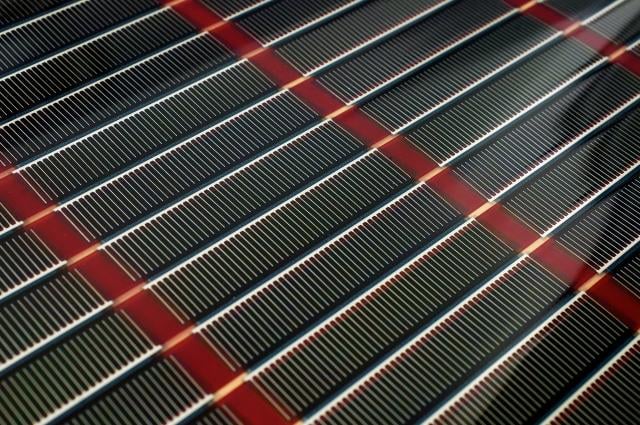
Joining this course presents opportunity to learn about energy harvesting that refers to a technology that converts the energy discarded in our daily lives into useful electrical energy that we can use. As we all know, most of low-power electronics, such as remote sensors, are driven by batteries. However, even when it comes to long-lasting batteries, they face an issue that is a regular replacement. It can turn out to be costly as there are hundreds of sensors in remote locations.

Aug 10th 2026
4 Weeks
Materials Science: 10 Things Every Engineer Should Know (Coursera) Coursera
University of California, Davis

Materials Science: 10 Things Every Engineer Should Know (Coursera)

We explore “10 things” that range from the menu of materials available to engineers in their profession to the many mechanical and electrical properties of materials important to their use in various engineering fields. We also discuss the principles behind the manufacturing of those materials. By the end of the course, you will be able to: recognize the important aspects of the materials used in modern engineering applications; explain the underlying principle of materials science: “structure leads to properties,”; identify the role of thermally activated processes in many of these important “things” – as illustrated by the Arrhenius relationship; relate each of these topics to issues that have arisen (or potentially could arise) in your life and work.

Aug 3rd 2026
5-12 Weeks
Chemical Engineering Thermodynamics 1 (Coursera) Coursera
Korea Advanced Institute of Science and Technology - KAIST

Chemical Engineering Thermodynamics 1 (Coursera)

An appreciation of thermodynamics is required to become a chemical and biomolecular engineer. Thermodynamics can assess the viability of a process and is one of the curriculum's most essential topics. The principles are utilized in following engineering courses (kinetics, mass transfer, design, materials) and are applicable to numerous engineering disciplines. The increased emphasis on energy usage and transformation as a result of rising demand, diminishing supply, and global warming necessitates that the engineers who will tackle these issues have a firm grasp of thermodynamics.

Aug 3rd 2026
5-12 Weeks
Dense Gases, Liquids and Solids (Coursera) Coursera
University of Colorado Boulder

Dense Gases, Liquids and Solids (Coursera)

Course 4 of Statistical Thermodynamics addresses dense gases, liquids, and solids. As the density of a gas is increased, intermolecular forces begin to affect behavior. For small departures from ideal gas behavior, known as the dense gas limit, one can estimate the change in properties using the concept of a configuration integral, a modification to the partition function.

Aug 3rd 2026
4 Weeks
Mechanics of Materials I: Fundamentals of Stress & Strain and Axial Loading (Coursera) Coursera
Georgia Institute of Technology

Mechanics of Materials I: Fundamentals of Stress & Strain and Axial Loading (Coursera)

This course explores the topic of solid objects subjected to stress and strain. The methods taught in the course are used to predict the response of engineering structures to various types of loading, and to analyze the vulnerability of these structures to various failure modes. Axial loading with be the focus in this course.

Aug 17th 2026
5-12 Weeks
Particle Dynamics (Coursera) Coursera
Korea Advanced Institute of Science and Technology - KAIST

Particle Dynamics (Coursera)

This course teaches dynamics, one of the basic mechanics subjects of Mechanical Engineering. Students would be able to organize their knowledge about force and motion, work-energy, impulse-momentum in view of Newton's 2nd law and its integration over time and displacement. The Engineering Dynamics consists of two parts: particle dynamics and rigid body dynamics.

Aug 17th 2026
13-24 Weeks
The Finite Element Method for Problems in Physics (Coursera) Coursera
University of Michigan

The Finite Element Method for Problems in Physics (Coursera)

This course is an introduction to the finite element method as applicable to a range of problems in physics and engineering sciences. The treatment is mathematical, but only for the purpose of clarifying the formulation. The emphasis is on coding up the formulations in a modern, open-source environment that can be expanded to other applications, subsequently.

Aug 10th 2026
13-24 Weeks
Ferrous Technology II (Coursera) Coursera
Pohang University of Science and Technology - POSTECH

Ferrous Technology II (Coursera)

Steel, ever-evolving material, has been the most preeminent of all materials since it can provide wide range of properties that can meet ever-changing requirements. In this course, we explore both fundamental and technical issues related to steels, including iron and steelmaking, microstructure and phase transformation, and their properties and applications.

Aug 3rd 2026
5-12 Weeks
Fundamentals of waves and vibrations (Coursera) Coursera
École Polytechnique

Fundamentals of waves and vibrations (Coursera)

Waves are everywhere. On water of course, but also in the air as you hear a plane, and under your feet during an earthquake certainly. Vibrations, too, are everywhere In your bike as you go over a bump, in you guitar as you play, and of course in your smartphone. You can guess that there is something in common behind all this. This is exactly the purpose of this course !

Aug 3rd 2026
5-12 Weeks
Mastering Statics (Coursera) Coursera
The Hong Kong University of Science and Technology - HKUST

Mastering Statics (Coursera)

Statics is the most fundamental course in Mechanics. In this course, you will learn the conditions under which an object or a structure subjected to time-invariant (static) forces is in equilibrium - i.e. the conditions under which it remains stationary or moves with a constant velocity-. You will also learn how to calculate the reaction forces as well as the internal forces experienced throughout the structure so that later you can properly design and size the foundation and the members of the structure to assure the structure’s safety and serviceability.

Aug 10th 2026
5-12 Weeks
Physics 101 - Rotational Motion and Gravitation (Coursera) Coursera
Rice University

Physics 101 - Rotational Motion and Gravitation (Coursera)

This course serves as an introduction to the physics of rotational motion and gravitation. Upon completion, learners will have an understanding of how mathematical laws and conservation principles describe the motions and interactions of objects all around us. They will gain experience in solving physics problems with tools such as graphical analysis, algebra, vector analysis, and calculus.

Aug 3rd 2026
4 Weeks