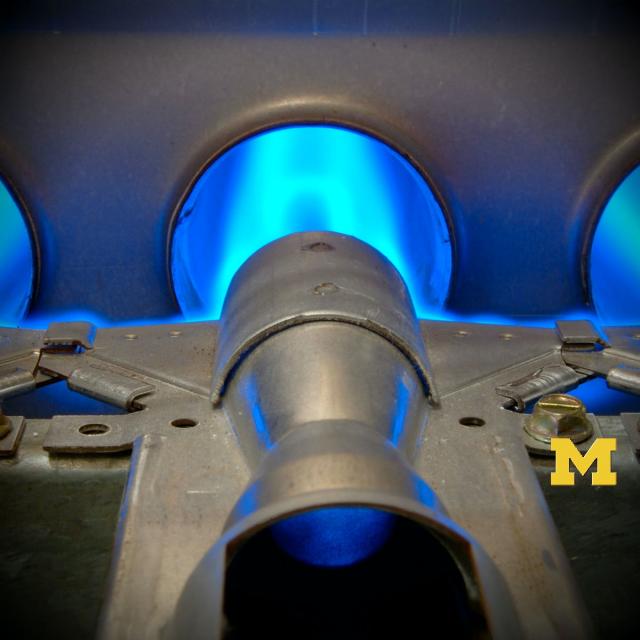
Introduction to Thermodynamics: Transferring Energy from Here to There (Coursera)

Introduction to Thermodynamics: Transferring Energy from Here to There (Coursera)

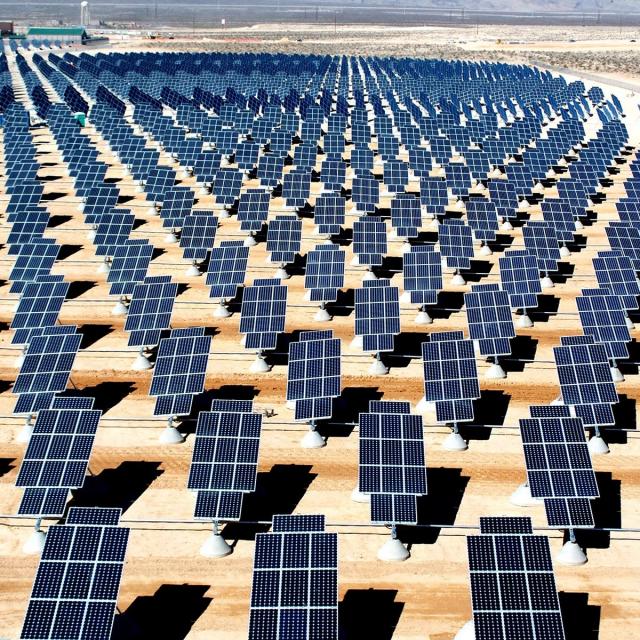
This course provides an introduction to the most powerful engineering principles you will ever learn - Thermodynamics: the science of transferring energy from one place or form to another place or form. We will introduce the tools you need to analyze energy systems from solar panels, to engines, to insulated coffee mugs. More specifically, we will cover the topics of mass and energy conservation principles; first law analysis of control mass and control volume systems; properties and behavior of pure substances; and applications to thermodynamic systems operating at steady state conditions.

Class Deals by MOOC List - Click here and see Coursera's Active Discounts, Deals, and Promo Codes.

Course Format
The class consists of lecture videos, which average 8 to 12 minutes in length. The videos include integrated In-Video Quiz questions. There are also quizzes at the end of each section, which include problems to practice your analytical skills that are not part of video lectures. There are no exams.
If you follow the suggested deadlines, lectures and quizzes will each take approximately ~3 hours per week each, for a total of ~6 hours per week.
Suggested Reading: Fundamentals of Thermodynamics

Syllabus

WEEK 1
In this module, we frame the context of energy and power supply and demand around the world. You will learn that understanding and correctly using units are critical skills for successfully analyzing energy systems. It is also important to be able to identify and categorize systems as “open” or “closed” and “steady state” or “transient”. Thermodynamics is a topic that is very notation intense, but the notation is very helpful as a check on our assumptions and our mathematics. Additionally, in this module we will refresh our understanding of some common thermodynamic properties.

WEEK 2
In this module, we will get started with the fundamental definitions for energy transfer, including the definitions of work transfer and heat transfer. We will also show (by example) how state diagrams are valuable for explaining energy transfer processes. Then, we have all the tools we need to define the 1st Law of Thermodynamics also called the Conservation of Energy. Your second assignment will emphasize these principles and skills.

WEEK 3
In this module, we introduce our first abstract concepts of thermodynamics properties – including the specific heats, internal energy, and enthalpy. It will take some time for you to become familiar with what these properties represent and how we use these properties. For example, internal energy and enthalpy are related to temperature and pressure, but they are two distinct thermodynamic properties. One of the hardest concepts of thermodynamics is relating the independent thermodynamic properties to each other. We have to become experts at these state relations in order to be successful in our analysis of energy systems. There are several common approximations, including the ideal gas model, which we will use in this class. The key to determining thermodynamic properties is practice, practice, practice! Do as many examples as you can.

WEEK 4
In this module we introduce the combined application of the Conservation of Mass and the Conservation of Energy for system analysis. We also review the common assumptions for typical energy transfer devices, like heat exchangers, pumps and turbines. Together these components will form the basis for all power plants used around the world.

WEEK 5
In this module, we tackle some of the most difficult systems to analyze – transient or time-varying systems. Any system where the energy transfer changes as a function of time requires transient analysis. Not only are these difficult problems to analyze, they are also difficult systems to design and interrogate. Some important transient problems include the start-up of a gas turbine or an internal combustion engine. Such transients are becoming more integral to the electrical power grid due to the introduction of more renewable power sources which are also more intermittent. These are very relevant and timely topics for the stationary power sector.

WEEK 6
In this module, we introduce some of the concepts of the Second Law of Thermodynamics. We will only discuss a small fraction of the vast material that falls under the topic of the Second Law. I encourage you to explore beyond our course material for very interesting discussions on the outcomes of the Second Law which include entropy, the absolute temperature scale and Carnot cycles. The most important aspect for our class, is that the Second Law provides a basis for defining the theoretical maximums and minimums for processes. Using these limits, we can define device and system efficiencies. We demonstrate these limits with examples of basic power plants. A good “take-home” exercise is to apply these limits to some of the devices and systems you see every day around you.

WEEK 7
In this module we focus on in-depth analysis of a Rankine power plant. The Rankine power plant is the fundamental design for stationary power generation when the working fluid is water (or steam) and the energy carrier is nuclear, coal, gas, or thermal solar power. We also learn that conventional power plants generate a lot of waste heat! Co-generation is a great way to use that waste heat. Can you think of a few ways you might capture waste heat and use it productively? Then you might have your next environmentally sustainable business venture!

WEEK 8
In this module, we have a brief discussion of energy carriers – including fossil fuels and battery materials. These lectures highlight the thermodynamic properties of these energy carriers and storage materials that make these systems so attractive and at the same time, so difficult to replace. As this is our last module of the course, I hope you have enjoyed this Introduction to Thermodynamics and that you have learned some new skills. Good luck on all your adventures in energy systems!,
Go to Class
MOOC List is learner-supported. When you buy through links on our site, we may earn an affiliate commission.

Related Courses

Contemporary Biology (Coursera) Coursera
University of North Texas

Contemporary Biology (Coursera)

This course is an introduction to biology as it applies to our everyday life. Learners will explore the interplay between science and self through a personalized case study of themselves and their environment. By the end of the course, learners will be able to recognize the interactions among natural phenomena and the implications of the scientific principles behind the physical world and their experiences living in it.

Aug 17th 2026
4 Weeks
Politics and Economics of International Energy (Coursera) Coursera
Sciences Po

Politics and Economics of International Energy (Coursera)

Energy issues have always been important in international relations, but in recent years may have become even more important than in the past due to the widespread awareness of existing limits to energy sources and negative climate impacts. The course discusses global trends in energy consumption and production, various available scenarios for potential developments in the coming decades, the availability of oil reserves and the evolution of the oil industry.

Aug 10th 2026
5-12 Weeks
Conceptos y Herramientas para la Física Universitaria (Coursera) Coursera
Tecnológico de Monterrey

Conceptos y Herramientas para la Física Universitaria (Coursera)

Este curso provee al estudiante con conceptos y herramientas matemáticas para modelar problemas en física, que al aplicar podrá enfrentar con éxito los cursos de física universitarios. Así pues, la filosofía de este curso consiste en cubrir temas conceptuales relativos a la Física y desarrollar tu capacidad de aprender y aplicarlos en tu vida profesional.

Aug 17th 2026
5-12 Weeks
From the Big Bang to Dark Energy (Coursera) Coursera
The University of Tokyo

From the Big Bang to Dark Energy (Coursera)

We have learned a lot recently about how the Universe evolved in 13.7 billion years since the Big Bang. More than 80% of matter in the Universe is mysterious Dark Matter, which made stars and galaxies to form. The newly discovered Higgs-boson became frozen into the Universe a trillionth of a second after the Big Bang and brought order to the Universe.

Aug 10th 2026
4 Weeks
Astro 101: Black Holes (Coursera) Coursera
University of Alberta

Astro 101: Black Holes (Coursera)

What is a black hole? Do they really exist? How do they form? How are they related to stars? What would happen if you fell into one? How do you see a black hole if they emit no light? What’s the difference between a black hole and a really dark star? Could a particle accelerator create a black hole? Can a black hole also be a worm hole or a time machine? In Astro 101: Black Holes, you will explore the concepts behind black holes. Using the theme of black holes, you will learn the basic ideas of astronomy, relativity, and quantum physics.

Aug 17th 2026
5-12 Weeks
Rigid Body Dynamics (Coursera) Coursera
Korea Advanced Institute of Science and Technology - KAIST

Rigid Body Dynamics (Coursera)

This course teaches dynamics, one of the basic mechanics subjects of Mechanical Engineering. Students would be able to organize their knowledge about force and motion, work-energy, impulse-momentum in view of Newton's 2nd law and its integration over time and displacement. The Engineering Dynamics consists of two parts: particle dynamics and rigid body dynamics. This is the second part of the dynamics: rigid body dynamics.

Aug 17th 2026
13-24 Weeks
Engineering Systems in Motion: Dynamics of Particles and Bodies in 2D Motion (Coursera) Coursera
Georgia Institute of Technology

Engineering Systems in Motion: Dynamics of Particles and Bodies in 2D Motion (Coursera)

This course is an introduction to the study of bodies in motion as applied to engineering systems and structures. We will study the dynamics of particle motion and bodies in rigid planar (2D) motion. This will consist of both the kinematics and kinetics of motion. Kinematics deals with the geometrical aspects of motion describing position, velocity, and acceleration, all as a function of time. Kinetics is the study of forces acting on these bodies and how it affects their motion.

Aug 10th 2026
5-12 Weeks
Electric Utilities Fundamentals and Future (Coursera) Coursera
University of Colorado System

Electric Utilities Fundamentals and Future (Coursera)

The approach of this course is truly unique in how it approaches and engages learners. It looks at the electric utility industry, which has remained critical to our quality of life, health and comfort from the eyes of numerous industry experts through on-location interviews, compelling visuals, and animation. You will benefit from having the inside track because you see some behind-the-scenes information not covered in news stories, social media or even if we are in the business ourselves.

Aug 17th 2026
5-12 Weeks
Particle Physics: an Introduction (Coursera) Coursera
University of Geneva

Particle Physics: an Introduction (Coursera)

This course introduces you to subatomic physics, i.e. the physics of nuclei and particles. More specifically, the following questions are addressed: What are the concepts of particle physics and how are they implemented?; What are the properties of atomic nuclei and how can one use them?; How does one accelerate and detect particles and measure their properties?; What does one learn from particle reactions at high energies and particle decays?; How do electromagnetic interactions work and how can one use them?; How do strong interactions work and why are they difficult to understand?; How do weak interactions work and why are they so special?; What is the mass of objects at the subatomic level and how does the Higgs boson intervene?; How does one search for new phenomena beyond the known ones?; What can one learn from particle physics concerning astrophysics and the Universe as a whole?

Aug 10th 2026
5-12 Weeks