Introduction to Petroleum Engineering (Coursera)

Introduction to Petroleum Engineering (Coursera)

In this course, you will learn such concepts as oil and gas production, reservoir energy and forces, petroleum deposit drainage, development systems, well operation techniques and much more. Each participant in the course will develop an understanding of field life cycle and interdisciplinary approach to petroleum field development and operation.

Class Deals by MOOC List - Click here and see Coursera's Active Discounts, Deals, and Promo Codes.

Throughout the course, we will address the following topical areas:
• History of oil and gas application, international petroleum reserves.
• Fundamentals of Petroleum Geology: rock cycle; oil, gas and water deposits; oil and gas composition; oil generation; prospecting for oil and gas fields.
• Major exploration techniques, seismic methods, well testing; basics of reservoir engineering and modelling.
• Basics of well drilling and production.
What You Will Learn

  • Analyse and apply theoretical knowledge in the area of petroleum geology, reservoir engineering and production technology
  • Describe major exploration and production techniques and processes
  • Distinguish between major enhanced oil and gas recovery techniques
  • Understand application areas of petrochemical products

Syllabus

WEEK 1
Introduction: petroleum in our life
This module serves as a basic introduction to the petroleum industry. You will learn about the history of oil discovery and production, as well as its very first use cases. The module highlights the geographical distribution of hydrocarbons, the structure of the petroleum industry, price formation, and current trends and challenges that face oil and gas companies around the globe.

WEEK 2
Petroleum geology
This module invites you to learn about petroleum field development and what geologists need to know. Before we are able to produce oil, we need to find a field with sufficient hydrocarbon reserves. To determine whether a given area has any commercial petroleum deposits, it is important to know the rock cycle and various types of sedimentary rocks, understand how oil and gas fields are formed, estimate and analyse reservoir properties.

WEEK 3
Exploration Geophysics. Well Logging. Well Testing
This module gives you a basic overview of exploration geophysics, petrophysics, and well testing. You will learn about different methods and techniques geologists and geophysicists use to build maps and study rock outcrops, determine reservoir properties, and find out whether it contains oil and gas.

WEEK 4
Reservoir Engineering
This module describes the main field development stages, which form the complete field life cycle. You will learn about the difference between geological and hydrodynamic models, what recovery methods exist, what well patterns are, and how to use waterflooding. This new knowledge will help you to predict a reservoir’s behavior in response to various development scenarios.

WEEK 5
Drilling
This module provides a general description of the well construction process, which is the essential part of oil or gas field development. You will get to know major drilling-related terms and procedures, learn different types of wells and equipment used to assemble drilling rigs, extract oil from underground reservoirs, and make a well ready for production. This process could be rather challenging, thus you will also gain a basic understanding of drilling complications.

WEEK 6
Production Technology
This module describes the techniques petroleum engineers use to extract hydrocarbons from an underground reservoir and keep the flow of formation fluid steady up to the surface. You will also learn about various lift methods and types of equipment, understand the difference between gas and oil well operations, as well as the ways of production from multiple formations with only one well.

WEEK 7
Enhanced Recovery Techniques
This module is dedicated to reservoir stimulation operations that restore and improve well performance. You will learn how to select wells for stimulation, what techniques to choose, how to perform hydraulic fracturing and acidizing. These skills will help you to control the field development process and keep the desired oil production rate.

WEEK 8
Exam
Go to Class
MOOC List is learner-supported. When you buy through links on our site, we may earn an affiliate commission.

Related Courses

Nanotechnology and Nanosensors, Part 2 (Coursera) Coursera
Technion - Israel Institute of Technology

Nanotechnology and Nanosensors, Part 2 (Coursera)

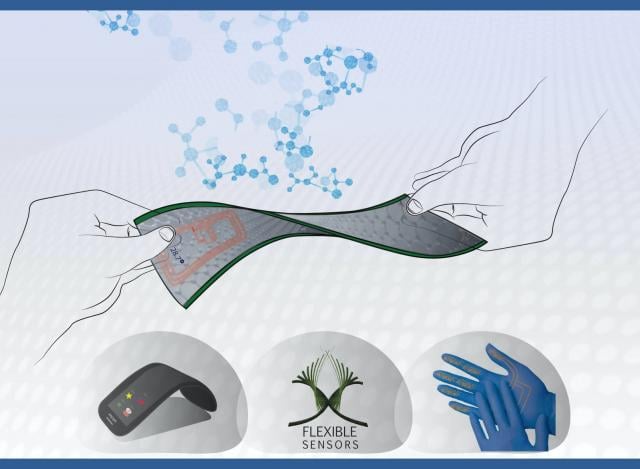
Learn about novel sensing tools that make use of nanotechnology to screen, detect and monitor various events in personal or professional life. Together, we will lay the groundwork for infinite innovative applications, starting from diagnosis and treatments of diseases, continuing with quality control of goods and environmental aspects, and ending with monitoring security issues.

Aug 10th 2026
5-12 Weeks
Introduction to Physical Chemistry (Coursera) Coursera
University of Manchester

Introduction to Physical Chemistry (Coursera)

Chemical reactions underpin the production of pretty much everything in our modern world. But, what is the driving force behind reactions? Why do some reactions occur over geological time scales whilst others are so fast that we need femtosecond-pulsed lasers to study them? Ultimately, what is going on at the atomic level? Discover the answers to such fundamental questions and more on this course in introductory physical chemistry.

Jul 27th 2026
5-12 Weeks
Fundamentals of Macroscopic and Microscopic Thermodynamics (Coursera) Coursera
University of Colorado Boulder

Fundamentals of Macroscopic and Microscopic Thermodynamics (Coursera)

Course 1 first explores the basics of both macroscopic and microscopic thermodynamics from a postulatory point of view. In this view, the meaning of temperature, thermodynamic pressure and chemical potential are especially clear and easy to understand. In addition, the development of the Fundamental Relation and its various transformations leads to a clear path to property relations and to the concept of ensembles needed to understand the relationship between atomic and molecular structural properties and macroscopic properties.

Aug 3rd 2026
3 Weeks
Ebola: Essential knowledge for health professionals (Coursera) Coursera
University of Amsterdam,Universiteit Utrecht

Ebola: Essential knowledge for health professionals (Coursera)

March 2014 marked the starting point of the largest outbreak of Ebola virus disease in history. Although the disease seems to be on a decrease, we are not there yet and new outbreaks will surely emerge. New efforts to combat the outbreak are necessary. This is why we developed this online course about Ebola, targeted at health professionals across the world. In this course you will cover the fundamental knowledge any health professional should have with expected or confirmed cases or a general interest in the Ebola disease.

Jul 27th 2026
5-12 Weeks
Introduction to High-Throughput Materials Development (Coursera) Coursera
Georgia Institute of Technology

Introduction to High-Throughput Materials Development (Coursera)

This course is an introduction to high-throughput experimental methods that accelerate the discovery and development of new materials. This course is an introduction to high-throughput experimental methods that accelerate the discovery and development of new materials. It is well recognized that the discovery of new materials is the key to solving many technological problems faced by industry and society. These problems include energy production and utilization, carbon capture, tissue engineering, and sustainable materials production, among many others. This course will introduce the learner to a remarkable new approach to materials discovery and characterization: high-throughput materials development (HTMD).

Aug 3rd 2026
5-12 Weeks
Chemical Biology (Coursera) Coursera
University of Geneva

Chemical Biology (Coursera)

Chemical biology is a burgeoning field that has rapidly risen to prominence. This surge of interest has been fuelled by chemical biology’s applicability to understanding critical processes in live cells or model organisms in real time. This success has arisen because chemical biology straddles a nexus between chemistry, biology, and physics. Thus, chemical biology can harness rapid chemistry to observe or perturb biological processes, that are in turn reported using physical assays, all in an otherwise unperturbed living entity. Although its boundaries are endless, the multidisciplinary nature of chemical biology can make the field seem daunting; we beg to differ! Here, we deconstruct chemical biology into its core components, and repackage the material.

Aug 3rd 2026
5-12 Weeks
Reasoning Across the Disciplines (Coursera) Coursera
University of North Carolina

Reasoning Across the Disciplines (Coursera)

Critical reasoning skills are a key success factor for students entering their first year of college. They must be able to think logically and form arguments. This course, designed with incoming college freshmen in mind but open to anyone, provides an essential grounding in critical reasoning skills. Faculty from multiple disciplines at the University of North Carolina at Chapel Hill offer guidance on applying critical thinking skills in the context of specific disciplines. By developing these skills, students will learn more, enjoy their courses more, and experience greater academic success.

Aug 10th 2026
5-12 Weeks
Introduction to Molecular Spectroscopy (Coursera) Coursera
University of Manchester

Introduction to Molecular Spectroscopy (Coursera)

The course introduces the three key spectroscopic methods used by chemists and biochemists to analyse the molecular and electronic structure of atoms and molecules. These are UV/Visible , Infra-red (IR) and Nuclear Magnetic Resonance (NMR) spectroscopies. The content is presented using short focussed and interactive screencast presentations accompanied by formative quizzes to probe understanding of the key concepts presented. Numerous exercises are provided to facilitate mastery of each topic. A unique virtual spectroscopic laboratory is made available to enable students to measure and analyse spectra online. Assessment is via summative quizzes completed during the course period.

Aug 10th 2026
4 Weeks
Planet Earth ... and You! (Coursera) Coursera
University of Illinois at Urbana-Champaign

Planet Earth ... and You! (Coursera)

Earthquakes, volcanoes, mountain building, ice ages, landslides, floods, life evolution, plate motions—all of these phenomena have interacted over the vast expanses of deep time to sculpt the dynamic planet that we live on today. Planet Earth presents an overview of several aspects of our home, from a geological perspective. We begin with earthquakes—what they are, what causes them, what effects they have, and what we can do about them. We will emphasize that plate tectonics—the grand unifying theory of geology—explains how the map of our planet's surface has changed radically over geologic time, and why present-day geologic activity—including a variety of devastating natural disasters such as earthquakes—occur where they do. We consider volcanoes, types of eruptions, and typical rocks found there.

Jul 27th 2026
5-12 Weeks
Materials Data Sciences and Informatics (Coursera) Coursera
Georgia Institute of Technology

Materials Data Sciences and Informatics (Coursera)

This course aims to provide a succinct overview of the emerging discipline of Materials Informatics at the intersection of materials science, computational science, and information science. Attention is drawn to specific opportunities afforded by this new field in accelerating materials development and deployment efforts.

Aug 10th 2026
5-12 Weeks