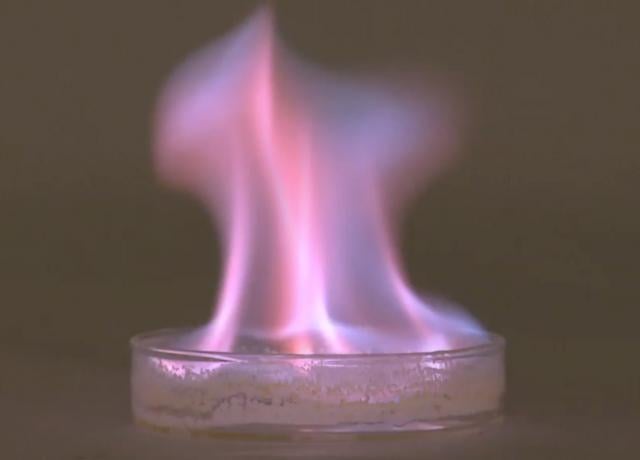
Introduction to Chemistry: Structures and Solutions (Coursera)

Offered by Duke University,
Introduction to Chemistry: Structures and Solutions (Coursera)

This is an introductory course for students with limited background in chemistry; basic concepts such as atomic and molecular structure, solutions, phases of matter, and quantitative problem solving will be emphasized with the goal of preparing students for further study in chemistry.

Class Deals by MOOC List - Click here and see Coursera's Active Discounts, Deals, and Promo Codes.

Suggested Reading:

Syllabus

WEEK 1
Review Videos (I)
Welcome! Over the eight weeks of the Introduction to Chemistry: Structures and Solutions course, we will begin discussions about the electronic structure of the atom, structures of molecules, phases of matter, and solutions. This week, we included some basic concept videos in Chemistry. These come from the partner course called Introduction to Chemistry: Reactions and Ratios. You can technically start with either course, but when these courses were originally designed, the Reactions and Ratios content came first, and you might find it helpful to complete that course before this course. If you are not familiar with the concepts of physical change v.s. chemical change, or significant figure and scientific notations, then please begin by reviewing video “Introduction”. I hope you enjoy this week's materials!
Light
We will cover introduction to light, Bohr model of the hydrogen atom, atomic orbitals, electron configurations, valence versus core electrons. Don’t forget to use this week’s discussion forum for any questions and discussions.

WEEK 2
Quantum Number, Lewis Dot Structure
Welcome to week 2! This week we will introduce quantum numbers, more information about periodicity, chemical bonding concepts including Lewis dot structures, resonance, bond order. Continue using the discussion forum for any questions, concerns, discussions, and suggestions. We value your feedback very much! I hope you already found out how we captured the course logo from Colored Flames. Wasn't that fun to watch? Kudos to those of you who browsed the course, watched videos, submitted exercises, and/or posted on the discussion forum! Keep the great work going please.

WEEK 3
Formal Charge, VSEPR Theory, Hybridization
Welcome to week 3! This week includes introduction to the octet rule and expanded octets, formal chargevalence shell electron pair repulsion (VSEPR) theory, sigma and pi bonds, hybridization of the main group elements, and introduction to molecular shapes.I hope you enjoyed the last two weeks of learning chemistry. Great work on watching videos, posting on the discussion forum and submitting your exercises!

WEEK 4
Phases of Matter, Gas Laws
Welcome to week 4! This week we will discuss phases of matter, the importance of thermal energy, ideal gas law calculations, kinetic molecular theory of gases. Hope you will enjoy! We are at the midway point in the course! As a group you have been watching videos, completing quizzes, and/or actively discussing chemistry on the forums, so please accept our compliments on your hard work so far in the course.

WEEK 5
Intermolecular Forces and Phase Changes
Welcome to week 5! This week we will examine the phases of matter more closely, looking at concepts such as intermolecular forces and thermal energy. We will also practice calculations of energetics such as those requiring enthalpies of phase transitions. Finally, we will introduce concepts in metal bonding and solid lattices. We made a few illustrative demonstrations for your viewing pleasure; I hope that these are helpful! Remember to continue posting any questions, concerns and suggestions to the discussion forum. Also help your peers out on the forum to build a beneficial learning community together!

WEEK 6
Solutions
Welcome to week 6! We have reached the last week of video lectures and exercises for the course! Are you ready to make the final push through the rest of the material? After that, you should be ready to tackle the final exam which opens next week. I have enjoyed working on this course; and I hope you have too! This week, we will first release a couple of review videos related to solution and solubility from Introduction to Chemistry: Reactions and Ratios. Please review these important concepts before starting Lesson Two - Solutions. Then we will start with a review of dissolution and covers some concentration units. This is accompanied by solution-related demonstrations and another bonus interview with a chemist who also works at Duke. The interviews were conceived and filmed by Abdul Latif, an undergraduate in the humanities who is interested in the history of chemistry and how people choose their professions. Enjoy!

WEEK 7
Strengthen Your Understanding
Congratulations on making through to the final week of the course! For many of you it was not an easy journey for the past six weeks with dozens of videos, exercises, problem sets, and forum discussions. I am proud of all of you! The last components of the course - final exam opens this week. Please use it as a chance to apply what you have learned from the course. There are two parts (timed, 90 minutes for each part) in the final exam. You are encouraged to review all course lectures, exercises, and problem sets before attempting the Final exam. Please feel welcome to use a calculator, scratch paper, simple periodic table, and the reference materials we provided in the course. Good luck with your final exam!
Go to Class
MOOC List is learner-supported. When you buy through links on our site, we may earn an affiliate commission.

Related Courses

Understanding Modern Physics II: Quantum Mechanics and Atoms (Coursera) Coursera
The Hong Kong University of Science and Technology - HKUST

Understanding Modern Physics II: Quantum Mechanics and Atoms (Coursera)

The 20th century was known as the century of physics. In the past 120 years, concepts such as space, time, energy, entropy and particles were understood to much deeper levels. New paradigms of thinking such as relativity and quantum mechanics emerged. This course is the second course in the Understanding Modern Physics series, which covers an introduction to quantum mechanics, atomic physics and quantum information.

Aug 3rd 2026
4 Weeks
General Chemistry: Concept Development and Application (Coursera) Coursera
Rice University

General Chemistry: Concept Development and Application (Coursera)

This course will cover the topics of a full year, two semester General Chemistry course. We will use a free on-line textbook, Concept Development Studies in Chemistry, available via Rice’s Connexions project. The fundamental concepts in the course will be introduced via the Concept Development Approach developed at Rice University. In this approach, we will develop the concepts you need to know from experimental observations and scientific reasoning rather than simply telling you the concepts and then asking you to simply memorize or apply them.

Jul 27th 2026
5-12 Weeks
Chemical Engineering Thermodynamics 2 (Coursera) Coursera
Korea Advanced Institute of Science and Technology - KAIST

Chemical Engineering Thermodynamics 2 (Coursera)

An appreciation of thermodynamics is required to become a chemical and biomolecular engineer. Thermodynamics can assess the viability of a process and is one of the curriculum's most essential topics. The principles are utilized in following engineering courses (kinetics, mass transfer, design, materials) and are applicable to numerous engineering disciplines. The increased emphasis on energy usage and transformation as a result of rising demand, diminishing supply, and global warming necessitates that the engineers who will tackle these issues have a firm grasp of thermodynamics.

Aug 3rd 2026
5-12 Weeks
Introduction to Forensic Science (Coursera) Coursera
Nanyang Technological University

Introduction to Forensic Science (Coursera)

We have all seen forensic scientists in TV shows, but how do they really work? What is the science behind their work? The course aims to explain the scientific principles and techniques behind the work of forensic scientists and will be illustrated with numerous case studies from Singapore and around the world.

Aug 24th 2026
5-12 Weeks
Nanotechnology and Nanosensors, Part 1 (Coursera) Coursera
Technion - Israel Institute of Technology

Nanotechnology and Nanosensors, Part 1 (Coursera)

Nanotechnology and nanosensors are broad, interdisciplinary areas that encompass (bio)chemistry, physics, biology, materials science, electrical engineering and more. The present course will provide a survey on some of the fundamental principles behind nanotechnology and nanomaterials and their vital role in novel sensing properties and applications. The course will discuss interesting interdisciplinary scientific and engineering knowledge at the nanoscale to understand fundamental physical differences at the nanosensors.

Aug 10th 2026
5-12 Weeks
Fundamentals of Macroscopic and Microscopic Thermodynamics (Coursera) Coursera
University of Colorado Boulder

Fundamentals of Macroscopic and Microscopic Thermodynamics (Coursera)

Course 1 first explores the basics of both macroscopic and microscopic thermodynamics from a postulatory point of view. In this view, the meaning of temperature, thermodynamic pressure and chemical potential are especially clear and easy to understand. In addition, the development of the Fundamental Relation and its various transformations leads to a clear path to property relations and to the concept of ensembles needed to understand the relationship between atomic and molecular structural properties and macroscopic properties.

Aug 3rd 2026
3 Weeks
Thermodynamique : fondements (Coursera) Coursera
École Polytechnique Fédérale de Lausanne

Thermodynamique : fondements (Coursera)

Ce cours vous apportera une compréhension des concepts fondamentaux de la thermodynamique du point de vue de la physique, de la chimie et de l’ingénierie. Il est scindé un deux MOOCs. Dans la première partie, le Professeur J.-Ph. Ansermet de l’EPFL et son collaborateur le Dr. Sylvain Bréchet ont rassemblé en quatre leçons tous les principes fondamentaux de la thermodynamique. La deuxième partie du MOOC illustre l’approche thermodynamique par une série d’applications présentées par des spécialistes provenant de diverses institutions partenaires du réseau RESCIF.

Aug 17th 2026
4 Weeks
Chemistry (Coursera) Coursera
University of Kentucky

Chemistry (Coursera)

This course is designed to cover subjects in advanced high school chemistry courses, correlating to the standard topics as established by the American Chemical Society. This course is a precursor to the Advanced Chemistry Coursera course. Areas that are covered include atomic structure, periodic trends, compounds, reactions and stoichiometry, bonding, and thermochemistry.

Jul 27th 2026
5-12 Weeks
Más que química (Coursera) Coursera
Universidad Nacional de Colombia

Más que química (Coursera)

El objeto de la química, como disciplina científica, se enfoca en el estudio de la materia y de los cambios que ésta experimenta. En tanto disciplina científica, a la que se le atribuye la reputación de ser una ciencia complicada y aburrida. Esta reputación, bastante inmerecida, obedece al poco conocimiento que se tiene sobre ella y sobre sus enormes posibilidades de aplicación en el mundo científico, en diferentes campos de la industria y la producción, así como en la vida cotidiana.

Aug 10th 2026
5-12 Weeks
Statistical Thermodynamics: Molecules to Machines (Coursera) Coursera
Carnegie Mellon University

Statistical Thermodynamics: Molecules to Machines (Coursera)

Modern engineering research focuses on designing new materials and processes at the molecular level. Statistical thermodynamics provides the formalism for understanding how molecular interactions lead to the observed collective behavior at the macroscale. This course will develop a molecular-level understanding of key thermodynamic quantities like heat, work, free energy and entropy. These concepts will be applied in understanding several important engineering and biological applications.

Aug 9th 2026
5-12 Weeks
Photography Techniques: Light, Content, and Sharing (Coursera) Coursera
Michigan State University

Photography Techniques: Light, Content, and Sharing (Coursera)

Welcome to Course FOUR! In Modules 1-4 you will cover the final elements of the Specialization necessary to round out this introduction to the fundamentals of Photography, and prepare you for creating your own exciting project in the Capstone! You have come a long way since the beginning of this journey from Smartphone Basics to DSLR and Beyond. Just think of all the information you have absorbed and put to use in your assignments and quizzes, and the confidence you have gained that you CAN control the camera to make pictures you are proud to share.

Jul 27th 2026
4 Weeks