An Introduction to the U.S. Food System: Perspectives from Public Health (Coursera)

An Introduction to the U.S. Food System: Perspectives from Public Health (Coursera)

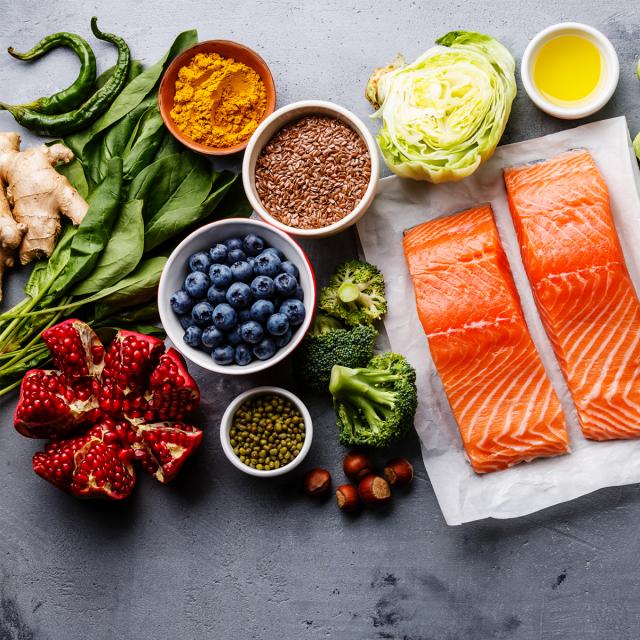
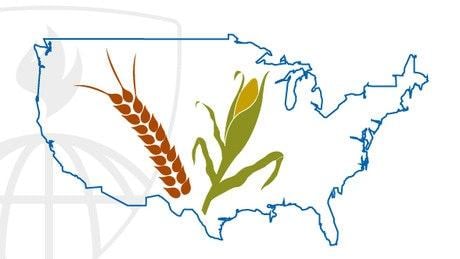
A food system encompasses the activities, people and resources involved in getting food from field to plate. Along the way, it intersects with aspects of public health, equity and the environment. In this course, we will provide a brief introduction to the U.S. food system and how food production practices and what we choose to eat impacts the world in which we live. Through several case studies, we will discuss some key historical and political factors that have helped shape the current food system and consider alternative approaches from farm to fork.

Class Deals by MOOC List - Click here and see Coursera's Active Discounts, Deals, and Promo Codes.

The course will be led by a team of faculty and staff from the Johns Hopkins Center for a Livable Future. Guest lecturers will include experts from a variety of disciplines, including public health and agriculture.

Syllabus

WEEK 1
Is Climate Change Vindicating Malthus? Food Security and the Right to Food
Welcome to our short course on the U.S. food system. In this first series of lectures, we dig into the very important concepts of food systems, food security and intergenerational equity and begin to explore what we eat, how that food is produced, and how our dietary choices impact our health and the health of the planet. This broad overview lecture lays the foundation for the rest of the course.

WEEK 2
Food System Sustainability and Resilience
This lesson expands on the concepts of food system sustainability and resilience, and describes strategies that could dramatically improve the food system and the ability of future generations to feed themselves.

WEEK 3
Ecological Perspectives on Food Production
The 1938 USDA Yearbook of Agriculture stated, “Essentially, all life depends upon the soil ... There can be no life without soil and no soil without life; they have evolved together”. In this module, we will take a very brief look at the importance of methods of food production for sustainability, resilience, food security and health.

WEEK 4
Food Animal Production and Public Health
We will now examine the livestock and seafood industries, which we have touched on in previous modules as a key driver of the global food system. As incomes rise around the world, so too does the global collective appetite for meat. Some of our greatest challenges and debates of the 21st century are rooted in the rising demand for animal protein in an era of dwindling resources and climate change. NOTE: This lecture refers to other lectures offered in this or related full for-credit courses at the Bloomberg School of Public Health.

WEEK 5
Food and Farm Policy Perspectives
In the next set of lectures, we begin to explore food and farm policy, a huge and complex topic. Roni Neff returns with an overview of the history and content of the current farm bill and why it really should be called a ‘food bill’, considering the magnitude of its impact on public health. Then Mark Winne will share his experiences as an advocate for community food security and regional food systems here in the U.S. For those of you interested in the international perspective of food policy, we have provided in the readings list a link to a terrific talk by Olivier deSchutter, the former UN special rapporteur on the Right to Food.

WEEK 6
Improving Food Systems: Stories from the Field
In this final module of the course you will hear from real people working to build a healthier, more sustainable food system. First, Michael Heller of Clagett Farm in Maryland will share his farming philosophy and how he links his farm to the local community near Washington DC. Then you’ll hear about Meatless Monday as an example of using health communication campaigns to change the food system from the demand-side. The optional Honors lesson includes two short films produced by CLF showcasing projects and people around the U.S. that are improving the food system from field to plate.


Go to Class
MOOC List is learner-supported. When you buy through links on our site, we may earn an affiliate commission.

Related Courses

Public Involvement in Research (Coursera) Coursera
Imperial College London

Public Involvement in Research (Coursera)

This course focuses on participatory approaches in research, known as 'public involvement' in the UK. You'll specifically, consider why citizens and patients would be involved in research and explore participatory approaches across and within the research cycle in more detail, diving into questions such as: What kinds of participation can be undertaken at each of the 7 stages of the cycle? How can you utilise participation in research? What examples of using participatory approaches exist in research?

Jun 3rd 2026
4 Weeks
Systems Science and Obesity (Coursera) Coursera
Johns Hopkins University

Systems Science and Obesity (Coursera)

Systems science has been instrumental in breaking new scientific ground in diverse fields such as meteorology, engineering and decision analysis. However, it is just beginning to impact public health. This seminar is designed to introduce students to basic tools of theory building and data analysis in systems science and to apply those tools to better understand the obesity epidemic in human populations.

Jun 1st 2026
4 Weeks
Instructional Methods in Health Professions Education (Coursera) Coursera
University of Michigan

Instructional Methods in Health Professions Education (Coursera)

This course provides those involved in educating members of the health professions an asynchronous, interdisciplinary, and interactive way to obtain, expand, and improve their teaching skills. These skills can then be applied within their own professional context, with a variety of learners, extending across many stages.

Jun 1st 2026
5-12 Weeks
Dairy Production and Management (Coursera) Coursera
Pennsylvania State University

Dairy Production and Management (Coursera)

With the world's first MOOOOO-C, you will gain a broad and comprehensive understanding of all aspects of dairy management such as genetics, nutrition, reproduction, animal health, farm economics, and sustainability of dairy production systems. There's something here for everyone whether you are just looking for the basics or have years of experience in the dairy industry.

Jun 1st 2026
5-12 Weeks
Global Health at the Human-Animal-Ecosystem Interface (Coursera) Coursera
University of Geneva

Global Health at the Human-Animal-Ecosystem Interface (Coursera)

The University of Geneva, Institute Pasteur, University of Montreal and Centre Virchow-Villermé/University Paris Descartes welcome you to this new MOOC on "Global Health at the Human-Animal-Ecosystem Interface"! Over the next 5 weeks, you will explore and learn about some of the major and current Global Health Challenges at the Human-Animal-Ecosystem Interface: zoonotic emerging infections (e.g. Ebola, Nipah, MERS, Avian Influenza), antimicrobial resistance, neglected tropical diseases (e.g. rabies, leishmaniasis, zoonotic TB), snakebite and other human-animal conflicts etc.

Jun 1st 2026
5-12 Weeks
In the footsteps of Zika… approaching the unknown (Coursera) Coursera
University of Geneva

In the footsteps of Zika… approaching the unknown (Coursera)

Welcome to this on-demand MOOC “In the footsteps of Zika… approaching the unknown”. This MOOC has been produced by Université de Genève Institut Pasteur, Université Paris Descartes and Centre Virchow-Villermé. With the help of the intervention of faculty members and international experts, we will explore together the recent Zika phenomenon, a previously rare benign virus that recently turned unexpectedly into the limelight when on the 1st of February 2016 it was declared by the WHO as a Public Health Emergency of International Concern.

Jun 1st 2026
5-12 Weeks
Health Coaching Conversations (Coursera) Coursera
Imperial College London

Health Coaching Conversations (Coursera)

Are you a healthcare practitioner or student in a healthcare field? Do you want to learn how to have more empowering conversations with your patients and support them to take control of their own health and wellbeing? Are you looking for a course to start learning these skills that also fits with your busy life? If so, this is the course for you!

Jun 3rd 2026
4 Weeks
International Women's Health and Human Rights (Coursera) Coursera
Stanford University

International Women's Health and Human Rights (Coursera)

This course focuses on women’s health and human rights issues from infancy through old age, including information about positive interventions relating to those issues. Learners are encouraged to interact with each other through interactive discussions. It is important to us that this course be available to all learners. We encourage you to apply for Coursera's financial aid (see link to left) if the cost of the course certificate is difficult for you to afford. Please note that you may view all materials in this course, and participate in it, without purchasing a certificate.

Jun 1st 2026
5-12 Weeks
Villes africaines: Environnement et enjeux de développement durable (Coursera) Coursera
École Polytechnique Fédérale de Lausanne

Villes africaines: Environnement et enjeux de développement durable (Coursera)

Le cours propose une lecture de l’environnement urbain en Afrique à travers les thématiques les plus pertinentes pour mesurer le niveau de développement d’un pays : eau et vie urbaine, assainissement (eaux usées et pluviales), gestion des déchets solides, agriculture urbaine. Après avoir analysé les différents enjeux de celles-ci, nous aborderons les liens entre environnement urbain et santé.

Jun 1st 2026
5-12 Weeks
Guided Imagery (Coursera) Coursera
University of Minnesota

Guided Imagery (Coursera)

In this course, you will learn how you can use imagery and imagery interventions to help with symptom management and healing, as well as to enhance overall health and wellbeing. You will experience a variety of imagery interventions and evaluate how they might be helpful in providing relief or enhancing quality of life.

Jun 3rd 2026
5-12 Weeks
Ebola : Vaincre ensemble ! (Coursera) Coursera
University of Geneva

Ebola : Vaincre ensemble ! (Coursera)

Il s’agit d’un MOOC sur la crise internationale sur Ebola partie d’Afrique de l’Ouest en 2014 ; d’une durée de 5 semaines, où interviendront plus de 30 professeurs des universités, chercheurs, responsables politiques, autorités sanitaires nationales et internationales, membres d’ONGs, et autres acteurs d’Europe et d’Afrique sur plus de 60 séquences vidéos. Les thèmes abordés se dérouleront selon une séquence hebdomadaire décrite ci-dessous (section « plan du cours »).

Jun 1st 2026
5-12 Weeks