Easing the burden of obesity, diabetes and cardiovascular disease (Coursera)

Easing the burden of obesity, diabetes and cardiovascular disease (Coursera)

This course is multidisciplinary in nature, and aims to equip the global audience of interested lay people, people with chronic disease, public health researchers, health clinicians, students, administrators, and researchers to reflect on the overall impact of the burden of chronic disease. It shows how all chronic diseases (obesity, diabetes, cardiovascular disease, chronic obstructive pulmonary disease, and cancer) are related by a set of common causes, and that such diseases should be tackled, not individually, but as part of a complex system, with interrelated contributing factors. These factors are genetic, environmental, psychological, economic, social, developmental, and media related.

Class Deals by MOOC List - Click here and see Coursera's Active Discounts, Deals, and Promo Codes.

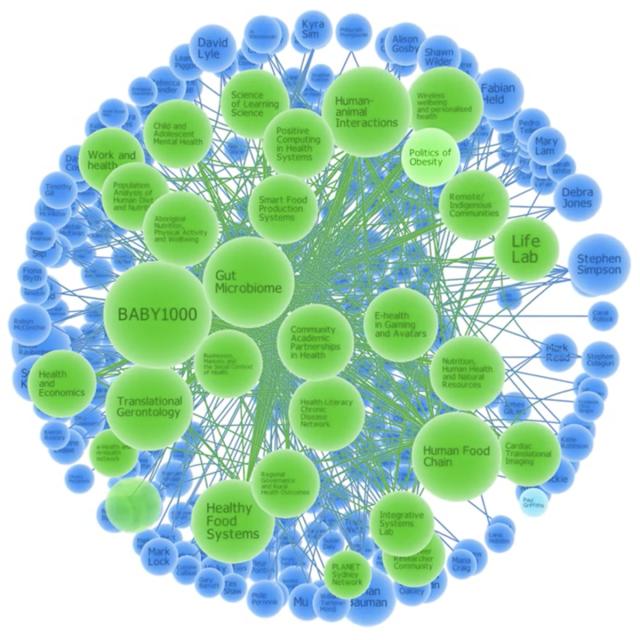
The Charles Perkins Centre at the University of Sydney is a unique interdisciplinary education and research hub which seeks solutions to chronic disease through a complex systems approach. Academics in many disciplines (in Science and Medicine, but also in Architecture, Humanities, Law etc) work in a collaborative fashion to produce novel solutions to the problems of chronic disease. All contributors and participants in this course are members of the Charles Perkins Centre and will speak from the unique interdisciplinary perspective that this Centre affords.
The course will describe a complex systems approach as the most productive way to ease the burden of chronic disease. It then describes these diseases in detail, their risk factors, and the environmental and biological factors that have led to the current epidemic of obesity, diabetes and cardiovascular disease. Finally, the solutions – and more importantly the process for finding solutions- is the subject of the last module. No one approach by itself can ever be the answer, and certainly not a simple diet and exercise approach.
The entire Chronic Disease Course consists of 5 modules and takes about 5 weeks to complete. Completion certificates are issued on the basis of participation in all 6 modules.
What You Will Learn

  • How the Charles Perkins Centre recruits interdisciplinary teams to ease the burden of chronic disease
  • How a complex systems approach is necessary to provide solutions to a complex problem
  • The fundamentals of chronic disease research and where it is heading
  • The biggest risk factors for chronic disease and their global incidence
  • The biological, genetic, social, regulatory, and other influences that have inflated these risk factors
  • How to provide solutions globally for the reduction of chronic disease

Syllabus

WEEK 1
Module 1 – Setting the Scene
This module looks at the impact of the increasing incidence globally of non-communicable, or chronic, diseases and how the Charles Perkins Centre is developing a new approach to this complex challenge.

WEEK 2
Module 2 - The Big Non-Communicable Diseases
This module outlines the five major non-communicable diseases, Obesity, Diabetes, Cardiovascular Disease, Chronic Obstructive Pulmonary Disease and Cancer, and the many risk factors that they share.

WEEK 3
Module 3 - The key risk factors for chronic disease
In this module we look more closely at the main risk factors for the non-communicable diseases and at the impact our modern environment is having on the global burden of these preventable diseases.

WEEK 4
Module 4 - How did we get here?
This module will provide an overview of the main factors in our biology, our environment, our food production systems, and our human psychology that have made us susceptible to the chronic disease health crisis.

WEEK 5
Module 5 - Solutions
In this module we will consider in detail the complex challenges of finding solutions to chronic diseases and how these could be brought together in developing a systems approach to address these major chronic diseases and the threat they pose to individual and population health.

WEEK 6
Wrapping up
This module gives you time to complete your final assignment and to reflect on what you have learned in the course.

Go to Class
MOOC List is learner-supported. When you buy through links on our site, we may earn an affiliate commission.

Related Courses

Global Health Policy (Coursera) Coursera
The University of Tokyo

Global Health Policy (Coursera)

In this course, learners will become familiar with principles and theories of global health problems, and major challenges and controversies in improving global population health as well as practical applications of quantitative methods to analyze and interpret issues and challenges for policy. Topics will include health and foreign policy, health governance, acute disease surveillance, non-communicable diseases, burden of disease, universal health coverage, health systems strengthening, health financing, and human resources for health and ageing.

Sep 7th 2026
4 Weeks
Introduction to Systems Biology (Coursera) Coursera
Icahn School of Medicine at Mount Sinai

Introduction to Systems Biology (Coursera)

This course will introduce the student to contemporary Systems Biology focused on mammalian cells, their constituents and their functions. Biology is moving from molecular to modular. As our knowledge of our genome and gene expression deepens and we develop lists of molecules (proteins, lipids, ions) involved in cellular processes, we need to understand how these molecules interact with each other to form modules that act as discrete functional systems.

Sep 7th 2026
5-12 Weeks
Mind Control: Managing Your Mental Health During COVID-19 (Coursera) Coursera
University of Toronto

Mind Control: Managing Your Mental Health During COVID-19 (Coursera)

Never in the history of humanity have so many people been feeling intense anxiety related to COVID-19 and the world it will leave in its wake. The intent of this course is to give you a deeper understanding of the anxiety reaction as it relates to various aspects of our current life, ranging from our consumption of news to the way we talk to our children about this. I will also give you clear strategies for managing and, in fact, turning off the anxiety response at least for short periods.

Sep 7th 2026
4 Weeks
Discover Best Practice Farming for a Sustainable 2050 (Coursera) Coursera
University of Western Australia

Discover Best Practice Farming for a Sustainable 2050 (Coursera)

The Discover Best Practice Farming for a Sustainable 2050 Course is based on a clear vision: imagine best practice farming for 2050, start to implement these strategies now, all the while making sure it will still be profitable. At UWA we're doing just that with the Future Farm 2050 Project, set on a mixed-enterprise farm in Western Australia and we want you to learn how it can be done in your part of the world.

Sep 7th 2026
5-12 Weeks
Lymphoedema: Monitoring & Intervention After Breast Cancer (Coursera) Coursera
Macquarie University

Lymphoedema: Monitoring & Intervention After Breast Cancer (Coursera)

Lymphoedema following breast cancer treatment is a poorly understood and under-researched condition which can significantly impact physical and psychological function, reduce quality of life and result in substantial cost burdens to both patients and the healthcare system. In these interactive modules we will cover an introduction to lymphoedema, lymphatic physiology and anatomy, assessment and treatment, as well as utilise case studies to understand the prospective surveillance and early intervention model of care in breast cancer rehabilitation.

Sep 7th 2026
4 Weeks
Myocardial Infarction (Coursera) Coursera
University of Zurich

Myocardial Infarction (Coursera)

Cardiovascular diseases are – according to the (World Health Organization (WHO) – the number one cause of death globally. Myocardial infarction (heart attack) is the most prominent under the Cardiovascular diseases. In Switzerland alone, the risk to develop a coronary heart disease during life time is around 25% for men and 18% for women. Most cardiovascular diseases can be prevented by addressing behavioral risk factors, the understanding of these risk factors, their mechanisms and impact on the cardiovascular system.

Sep 14th 2026
5-12 Weeks
La Solución del Conflicto Ético (Coursera) Coursera
Universidad Nacional Autónoma de México

La Solución del Conflicto Ético (Coursera)

En este curso los participantes lograrán identificar y tomar decisiones sobre casos clínicos con conflictos éticos en el área de la salud por medio de la aplicación del razonamiento ético desde una perspectiva universal y considerando los aspectos médicos y éticos, el marco jurídico y la decisión ética.

Sep 7th 2026
5-12 Weeks
Foundations of Healthcare Systems Engineering (Coursera) Coursera
Johns Hopkins University

Foundations of Healthcare Systems Engineering (Coursera)

Through dynamic video lectures and practical application questions, you will learn about the Foundations of Healthcare Systems Engineering. In this course you will learn about the current lack of synchronized, efficient, and integrated healthcare systems, which are some of the drivers for improvements to healthcare delivery.

Sep 7th 2026
4 Weeks
Acute and Chronic Rhinosinusitis: A Comprehensive Review (Coursera) Coursera
Icahn School of Medicine at Mount Sinai

Acute and Chronic Rhinosinusitis: A Comprehensive Review (Coursera)

This course is designed to inform primary care physicians and general otolaryngologists about the differences between acute and chronic rhinosinusitis and how to distinguish and treat them. It is also applicable to individuals who wish to broaden their knowledge and vernacular about this disease process, especially those who may suffer from this condition.

Sep 7th 2026
5-12 Weeks
Air Pollution – a Global Threat to our Health (Coursera) Coursera
University of Copenhagen

Air Pollution – a Global Threat to our Health (Coursera)

We all have to breathe to live. But the air we breathe is polluted both outdoors and indoors. Each year, this pollution costs 7 million lives across the globe – and a lot of suffering. 1 in 8 deaths is due to air pollution. This course will provide you with an introduction to the most recent research in the field of health effects of air pollution as well as a broader understanding of sources and spread of air pollution and what we should do about it.

Sep 7th 2026
3 Weeks
Engineering Life: Synbio, Bioethics & Public Policy (Coursera) Coursera
Johns Hopkins University

Engineering Life: Synbio, Bioethics & Public Policy (Coursera)

Synbio is a diverse field with diverse applications, and the different contexts (e.g., gain-of-function research, biofuels) raise different ethical and governance challenges. The objective of this course is to increase learners’ awareness and understanding of ethical and policy/governance issues that arise in the design, conduct and application of synthetic biology. The course will begin with a short history of recombinant DNA technology and how governance of that science developed and evolved, and progress through a series of areas of application of synbio.

Sep 7th 2026
5-12 Weeks