HPV-Associated Oral and Throat Cancer: What You Need to Know (Coursera)

HPV-Associated Oral and Throat Cancer: What You Need to Know (Coursera)

This course, offered by the Department of Otolaryngology – Head and Neck Surgery at the Icahn School of Medicine at Mount Sinai, is designed to inform primary care physicians and otolaryngologists (general and head and neck surgeons), as well as medical students, residents, nurses, physician assistants, medical assistants, about HPV-associated oral and throat cancers. It is also applicable to individuals who wish to broaden their knowledge and vernacular about this disease process, especially those who may have been diagnosed with HPV and/or HPV-associated oropharyngeal cancers.

Class Deals by MOOC List - Click here and see Coursera's Active Discounts, Deals, and Promo Codes.

The course has been divided into four modules, each of which is followed by multiple choice questions to help attendees further understand this condition.
The primary objective of this course is to provide physicians with a thorough understanding of how to better diagnose and treat patients who have HPV-related oral and throat cancers.

Syllabus

WEEK 1
CME Information and Accreditation
Introduction

WEEK 2
Module I: HPV-associated Throat Cancer: An Epidemic
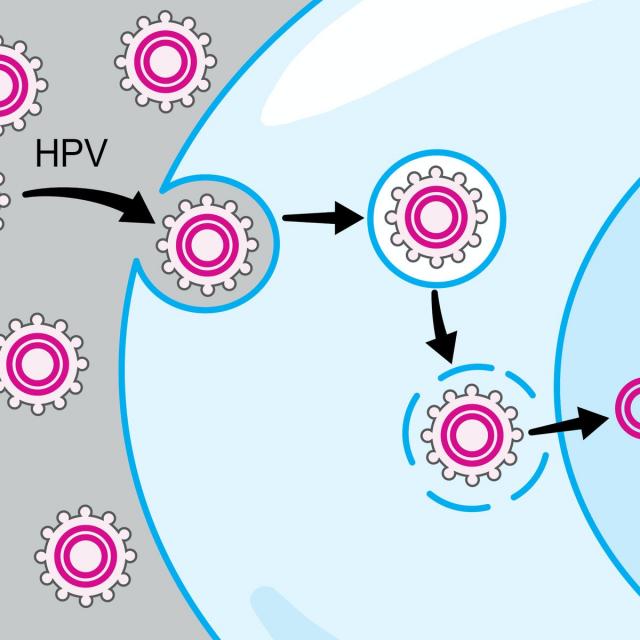
This module describes the nature of the Human Papillomavirus and the effect of a viral infection. The module explains the emerging epidemic and its impact on the development of throat cancer. The module concludes with the current state of population awareness and the impact that erroneous information can have on the spread of disease and the risk of malignancy.

WEEK 3
Module II: HPV Risk Factors and Clinical Presentation
This module describes the risk factors associated with transmission of HPV and the development of HPV-associated cancer. We will review how the virus is transmitted and malignant transformation. We will also explore the clinical presentation of HPV-associated throat cancer, early signs, and the clinical manifestations of advanced disease.

WEEK 4
Module III: Management of HPV-associated Oropharyngeal Cancer
This module describes options for treating oropharyngeal throat cancer and the advantages and disadvantages of each option. In this module, we discuss the indications and contraindications for treatment.

WEEK 5
Module IV: Prevention, Vaccination, and the Horizon
This module describes nature of HPV infection and techniques for preventing infection. This module reviews the nature of the HPV vaccine and its effectiveness. We also review indications for vaccination and commonly asked questions.
Activity Evaluation
All learners are urged to complete an evaluation. Your comments are essential for improving the effectiveness of Icahn School of Medicine at Mount Sinai’s continuing medical education activities.

Go to Class
MOOC List is learner-supported. When you buy through links on our site, we may earn an affiliate commission.

Related Courses

Life, Health and Radiation (Coursera) Coursera
The University of Sydney

Life, Health and Radiation (Coursera)

Radiation is all around us - without it we wouldn’t exist. Yet the word has become synonymous with danger, death and disaster. This MOOC will allow the world to see radiation in a new light, to expose its benefits as well as its risks. X-ray radiation, for example, is a scientific and medical discovery that has improved or prolonged billions of lives. Most of us have had an X-ray at some point in our life, at the Dentist, in a hospital or clinic. Yet few people really understand what X-rays are or where they come from.

Aug 17th 2026
5-12 Weeks
Childbirth: A Global Perspective (Coursera) Coursera
Emory University

Childbirth: A Global Perspective (Coursera)

This course will review challenges for maternal and newborn health in the developing world, where a great many women and babies are suffering from complications during pregnancy, childbirth, and the days following birth. Themes covered include the epidemiology of maternal and newborn mortality and morbidity, relevant issues for the global health workforce, community-based interventions to improve maternal and newborn health and survival, and sociocultural dynamics surrounding birth.

Aug 24th 2026
5-12 Weeks
Preventing Chronic Pain: A Human Systems Approach (Coursera) Coursera
University of Minnesota

Preventing Chronic Pain: A Human Systems Approach (Coursera)

Chronic pain is at epidemic levels and has become the highest-cost condition in health care. This course uses both creative and experiential learning to better understand chronic pain conditions and how they can be prevented through self-management in our cognitive, behavioral, physical, emotional, spiritual, social, and environmental realms.

Aug 17th 2026
5-12 Weeks
Stories of Infection (Coursera) Coursera
Stanford University

Stories of Infection (Coursera)

This course introduces learners to a variety of infectious diseases using a patient-centered, story-based approach. Through illustrated, short videos, learners will follow the course of each patient’s illness, from initial presentation to resolution. Integrating the relevant microbiology, pathophysiology and immunology, this course aims to engage and entice the learner towards future studies in microbiology, immunology and infectious diseases.

Aug 17th 2026
5-12 Weeks
eHealth: More than just an electronic record (Coursera) Coursera
The University of Sydney

eHealth: More than just an electronic record (Coursera)

The MOOC, "eHealth: More than just an electronic record!", is multidisciplinary in nature, and aims to equip the global audience of health clinicians, students, managers, administrators, and researchers to reflect on the overall impact of eHealth on the integration of care. It explores the breadth of technology application, current and emerging trends, and showcases both local and international eHealth practice and research.

Aug 17th 2026
5-12 Weeks
Evidence-based Toxicology (Coursera) Coursera
Johns Hopkins University

Evidence-based Toxicology (Coursera)

Welcome to the Evidence-based Toxicology (EBT) course. In medicine and healthcare, evidence-based medicine has revolutionized the way that information is evaluated transparently and objectively. Over the past ten years, a movement in North America and Europe has attempted to translate this revolution to the field of toxicology.

Aug 17th 2026
5-12 Weeks
Clinical Kidney, Pancreas and Islet Transplantation (Coursera) Coursera
Leiden University,Leiden University Medical Center

Clinical Kidney, Pancreas and Islet Transplantation (Coursera)

Kidney transplantation is a major advance of modern medicine which provides high-quality of life for patients with end-stage renal disease. What used to be an experimental, risky, and very limited treatment option more than 50 years ago is now routinely performed in many countries worldwide. The number of renal transplants is expected to rise sharply in the next decade since the proportion of patients with end stage renal disease is increasing.

Aug 17th 2026
4 Weeks
Diabetes - a Global Challenge (Coursera) Coursera
University of Copenhagen

Diabetes - a Global Challenge (Coursera)

Diabetes and obesity are growing health problems in rich and poor countries alike. With this course you will get updated on cutting-edge diabetes and obesity research including biological, genetic and clinical aspects as well as prevention and epidemiology of diabetes and obesity. All lectures are provided by high-profile scientists from one the world's leading universities in diabetes research.

Aug 17th 2026
5-12 Weeks
Disease Screening in Public Health (Coursera) Coursera
University of Geneva

Disease Screening in Public Health (Coursera)

Current and future public health is characterized by the increase of chronic and degenerative diseases, corresponding to the worldwide ageing of the population. The increasing prevalence of these conditions together with the long incubation period of the chronic diseases and the restless technological innovations, offer new opportunities to develop strategies for early diagnosis.

Aug 17th 2026
5-12 Weeks
Case Studies in Personalized Medicine (Coursera) Coursera
Vanderbilt University

Case Studies in Personalized Medicine (Coursera)

Learn how advances in biomedicine hold the potential to revolutionize drug development, drug treatments, and disease prevention: where are we now, and what does the future hold? This course will present short primers in genetics and mechanisms underlying variability in drug responses. A series of case studies will be used to illustrate principles of how genetics are being brought to bear on refining diagnoses and on personalizing treatment in rare and common diseases. The ethical and operational issues around how to implement large scale genomic sequencing in clinical practice will be addressed.

Aug 17th 2026
5-12 Weeks